

More news on this day
Travelers across China are facing fresh disruption as a wave of short-notice flight cancellations by major carriers, including China Southern and several international airlines, ripples through key hubs in Beijing, Shanghai, Guangzhou, Chengdu, Shenzhen, Chongqing and Hangzhou, affecting both domestic links and long-haul connections.
Targeted Cancellations Hit China’s Busiest Travel Corridors
New schedule adjustments filed this week show more than a dozen flights scrubbed across China’s core aviation network, with China Southern, Air China, China Eastern, Hainan Airlines and several smaller domestic carriers paring back services on selected routes. While the overall system remains operational, the targeted cuts are heavily concentrated on high-demand corridors linking major inland cities with coastal hubs and onward international gateways.
Routes into and out of Beijing Capital, Shanghai Pudong, Guangzhou Baiyun and Chengdu Tianfu have been among the most affected, alongside growing disruption at Shenzhen Baoan, Chongqing Jiangbei and Hangzhou Xiaoshan. Travelers booked on early morning and late-night departures, traditionally used to maximize aircraft utilization, are bearing the brunt as airlines consolidate loads onto fewer mid-day flights.
The latest changes follow a pattern seen throughout February, where carriers have quietly trimmed frequencies on underperforming rotations while maintaining flagship trunk services. For passengers on the wrong side of a cancellation, however, this strategic recalibration translates into long queues at rebooking counters, unexpected overnight stays and missed onward connections to both domestic and overseas destinations.
International Links From China Face Knock-On Disruptions
Although most of the newly canceled services are domestic or regional, their impact is cascading onto a range of long-haul and regional international routes. Airlines are relying on China’s mega-hubs as the primary transfer points for Europe, North America, Southeast Asia and Oceania. When a feeder leg into Beijing, Shanghai, Guangzhou or Chengdu is pulled, passengers often lose their entire itinerary and must be reprotected on limited alternative options.
Recent days have seen sporadic disruptions on services linking China with major destinations in Europe and Southeast Asia, as tight aircraft rotation schedules leave little slack to absorb operational hiccups. Travelers heading from second tier cities to international destinations via Shanghai or Guangzhou report having to accept long detours, including rerouting through alternative hubs or even overnighting en route.
Foreign carriers operating into Chinese hubs are also feeling the strain. When domestic feed is reduced, load factors on some international sectors become less predictable, prompting occasional tactical cancellations or upgauging and downgauging of aircraft types. This has left some passengers facing last-minute seat reassignments, changes in cabin class availability and shifting departure times, particularly on heavily booked weekend services.
Why Airlines Are Cutting: Demand, Operations and Policy
Industry analysts point to a mix of commercial, operational and regulatory factors behind the latest round of cancellations. Demand on certain domestic and regional routes has softened compared with peak holiday periods, making it more cost effective for airlines to consolidate passengers onto fewer flights rather than operate half-empty aircraft. Rising fuel costs and currency pressures are only sharpening the focus on route profitability.
Operational challenges are another key driver. Mainland carriers continue to contend with tight aircraft availability, particularly on newer widebody types used interchangeably on long domestic and international services. Any unscheduled maintenance event can force a rapid reshuffle of rotations, with less critical flights cut to keep core routes running. Weather related disruptions earlier in the month have also created lingering knock-on effects in crew and aircraft positioning.
On top of this, evolving airspace management and slot constraints at Beijing, Shanghai and Shenzhen give airlines limited room to add extra recovery flights when things go wrong. Instead, carriers are increasingly opting to preemptively streamline their schedules, accepting short-term inconvenience for passengers in exchange for a more reliable overall operation.
What Affected Passengers Are Experiencing on the Ground
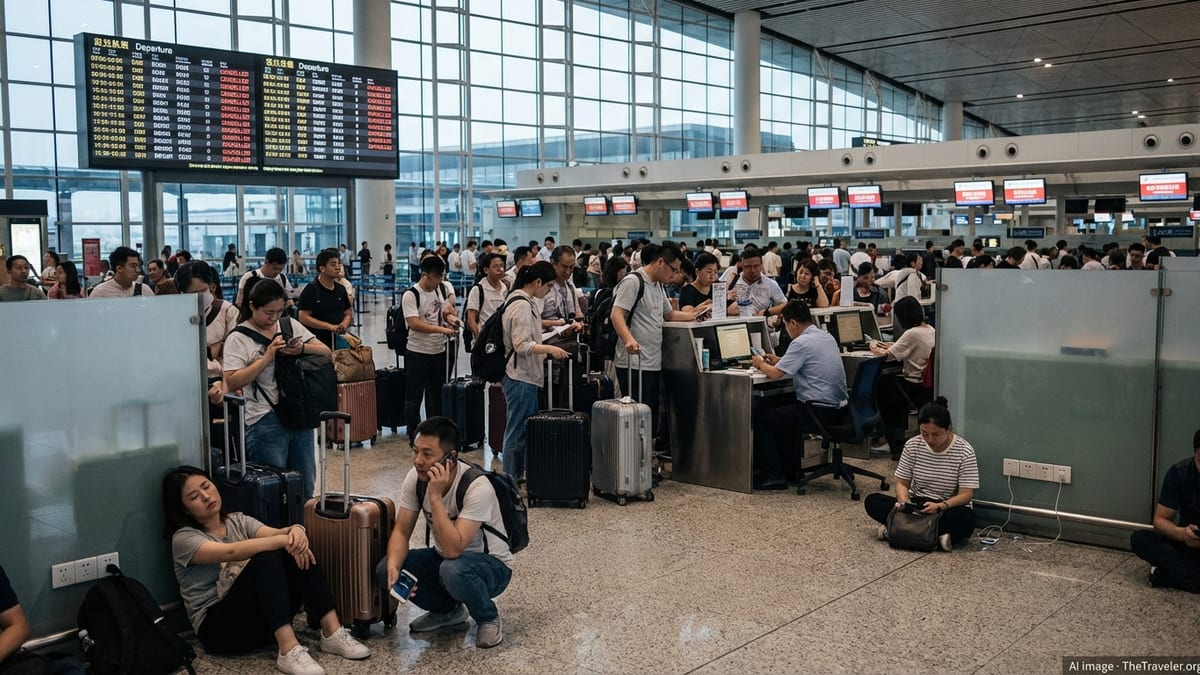
At major airports across China, travelers have described crowded check in halls and customer service desks as they seek rebooking options. With only a handful of flights canceled at each airport, the disruption can appear modest on departure boards, yet each lost rotation may strand hundreds of passengers, especially on popular routes linking western and central China to coastal hubs.
Families returning from holidays, corporate travelers on tight itineraries and international transit passengers are among those most affected. Some report being offered same day alternatives several hours earlier or later than their original departures, while others are pushed to the following day due to limited seat availability. Hotel and meal vouchers vary widely by carrier, leaving some travelers to shoulder unexpected costs.
Ground staff at Beijing, Shanghai and Guangzhou, already operating in a high pressure environment, are working extended shifts to manage rebooking queues and assist with itinerary changes. Airline call centers and mobile apps are seeing heightened traffic as passengers attempt to secure alternatives before arriving at the airport. In a few cases, travelers have turned to high speed rail as a last minute substitute for canceled short haul flights between major urban centers.
How to Navigate the Latest Cancellations If You Are Flying Soon
For travelers with upcoming trips to or within China, the evolving situation underscores the importance of proactive planning. Airlines are generally notifying affected passengers by email, text message or app alerts, but contact details in reservations are not always up to date, and some travelers only discover cancellations when they attempt to check in. Checking flight status repeatedly in the 24 hours before departure is becoming essential rather than optional.
Experts recommend building extra buffer time into itineraries that rely on tight domestic to international connections through Beijing, Shanghai, Guangzhou, Chengdu, Shenzhen, Chongqing or Hangzhou. Where possible, booking longer layovers or choosing earlier feeder flights may reduce the risk of misconnecting if cancellations or delays occur. Flexible tickets and comprehensive travel insurance can also offer additional protection, particularly for long haul passengers facing complex rerouting scenarios.
Passengers already in China who are affected by a short notice cancellation should head directly to their airline’s official counters or digital channels rather than relying on third party booking sites, which may be slower to process changes. Keeping boarding passes, booking confirmations and receipts for any out of pocket expenses will be crucial when claiming compensation or reimbursements later. While the current round of cancellations is limited in scale compared with past crises, it serves as a timely reminder that China’s air travel recovery remains a work in progress, and that even a handful of flights canceled at the wrong time and place can reverberate across the network.