

More news on this day
Travel plans across China have been disrupted as more than two dozen flights operated by major mainland carriers, including Air China, China Southern, China Eastern and Shenzhen Airlines, were cancelled on short notice, affecting busy routes to Beijing, Shanghai, Guangzhou, Shenzhen, Xi’an, Hangzhou and other key destinations.
Get the latest news straight to your inbox!
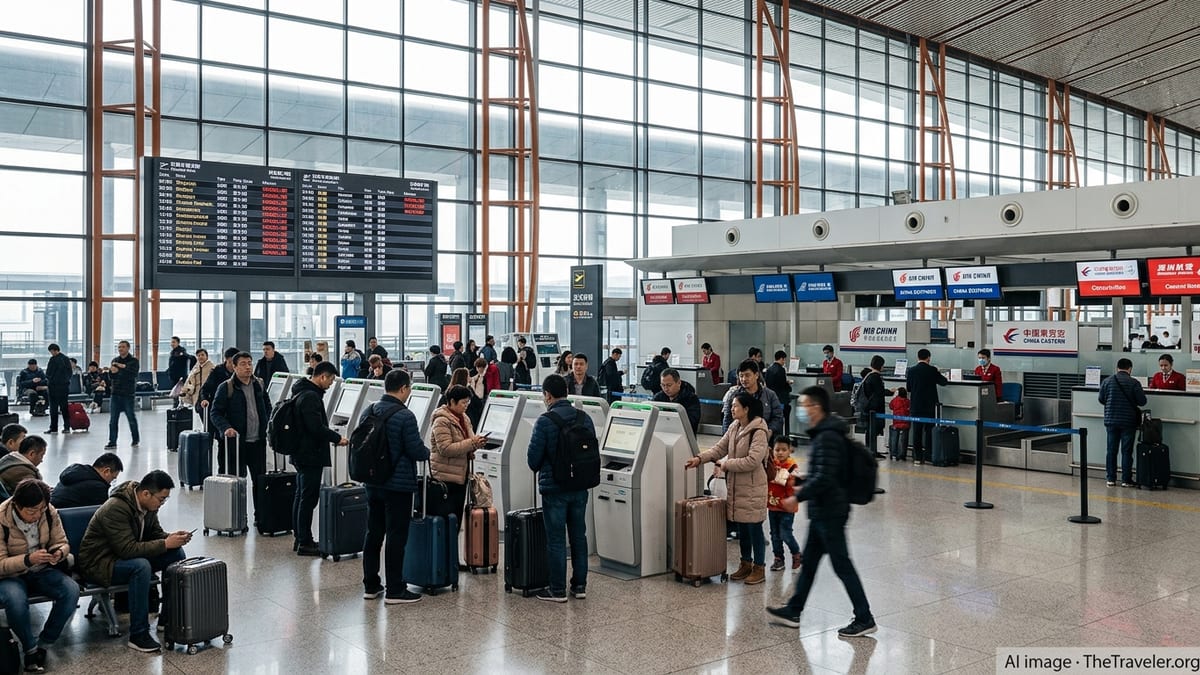
Major Chinese Carriers Trim Schedules Across Key Hubs
Publicly available airline operations data and schedule trackers indicate that over 25 flights involving Air China, China Southern, China Eastern and Shenzhen Airlines have recently been removed from schedules or cancelled outright. The adjustments span both domestic sectors within China and selected international routes, concentrating on high-demand city pairs that feed Beijing, Shanghai, Guangzhou and Shenzhen.
The cancellations include services touching the capital’s Beijing Capital and Beijing Daxing airports, Shanghai’s dual airports at Pudong and Hongqiao, as well as Guangzhou Baiyun and Shenzhen Bao’an. Additional reports highlight knock-on effects for flights linking major tourism and business centers such as Xi’an and Hangzhou, where reduced frequencies and last-minute changes have complicated trip planning.
While each airline has published its own operational updates, the overall pattern points to a tightening of capacity on certain short- and medium-haul routes rather than a full-scale suspension of traffic. Core trunk routes continue to operate, but with fewer daily options and a higher likelihood of consolidation onto remaining flights.
Tracking platforms show that, in some cases, multiple departures on the same route have been merged into a single service or shifted to different times of day. For travelers, this has translated into sudden schedule changes, rebookings and, for a subset of passengers, outright loss of a planned flight.
Domestic Travelers Face Consolidated Services and Time Changes
Domestic itineraries within China have been particularly sensitive to the wave of cancellations and consolidations. Routes between major urban centers such as Beijing, Shanghai, Guangzhou and Shenzhen typically enjoy high frequencies, but even modest schedule trims can be felt quickly because many travelers rely on tight connections and same-day transits.
Recent timetable adjustments show reductions and cancellations on select services linking coastal hubs to interior cities including Xi’an and other popular cultural destinations. Some secondary routes feeding larger airports have also seen aircraft downgauges, day‑of‑week changes or the removal of individual flight numbers, resulting in more crowded remaining services and fewer timing options.
Travelers with multi‑leg domestic journeys have reported that cancellations affecting one segment can ripple across entire itineraries, requiring rebooking of subsequent flights or rethinking travel dates. In a number of cases, passengers have been moved to later departures on the same route, extending total journey times and reducing flexibility for onward rail or bus connections.
At several large airports, operational data suggests that airlines are prioritizing peak‑demand departures while trimming less popular off‑peak services. This strategy can help carriers maintain overall capacity while improving aircraft utilization, but it leaves less room for last-minute changes and increases the risk of disruption when irregular operations occur.
International Routes Also See Targeted Cancellations
International services operated by the same Chinese carriers have not been immune. Published coverage and traveler accounts point to cancellations and schedule consolidations on links between Chinese hubs and key overseas markets, with a particular focus on flights where demand or bilateral issues have already introduced uncertainty.
Some long‑haul and regional routes involving Beijing, Shanghai and Guangzhou have seen individual flights dropped on specific dates, while others have had frequencies reduced. For affected passengers, this can mean longer layovers, rerouting via alternative hubs, or, in some cases, the need to switch to a different airline altogether when no same‑day replacement is available.
Passengers on itineraries combining domestic and international segments have been especially exposed. When an internal feeder flight to a major hub is cancelled, travelers risk missing onward long‑haul departures, prompting airlines and travel agencies to reissue tickets, reroute via different cities or shift journeys to alternative travel days. These changes can be particularly disruptive for time‑sensitive trips tied to events, tours or business meetings.
In parallel, some overseas travelers with future bookings on Chinese carriers have been monitoring schedules closely, as a pattern of rolling, route‑specific cancellations has emerged over recent weeks. While most flights continue to operate, the uncertainty has encouraged some passengers to build in longer connection times or to favor more direct itineraries where possible.
Airlines Cite Operational Adjustments as Travelers Seek Clarity
Across the affected carriers, publicly accessible statements and timetable updates describe the changes as part of broader operational adjustments and capacity management. Airlines typically adjust schedules in response to seasonal demand, aircraft availability and regulatory considerations, and the latest cancellations appear to be concentrated on routes where multiple daily services and alternative options remain.
However, the cumulative effect for travelers is significant. Short-notice cancellations and retimed flights can disrupt carefully planned itineraries, especially for those combining flights from different airlines or relying on minimum connection times. With several large carriers making adjustments at the same time, options for straightforward rebooking on equivalent departures have, in some cases, become more limited.
Information consistency has emerged as an additional challenge. Schedules displayed on third‑party booking engines, airline websites and airport information boards do not always update simultaneously, leading to confusion about whether a particular flight is still operating. In response, frequent travelers in China increasingly recommend checking booking status directly with the operating carrier and monitoring for schedule changes in the days leading up to departure.
Travel insurance and refund rules have also come into sharper focus. Many policies distinguish between voluntary changes and airline‑initiated cancellations, and passengers are paying closer attention to the conditions that determine eligibility for refunds, credits or compensation. Where rebooking is offered, some travelers have opted to accept later departures or alternative routings rather than risk losing a confirmed seat in a busy travel period.
Practical Guidance for Travelers Heading to Beijing, Shanghai and Beyond
For those planning upcoming trips involving Beijing, Shanghai, Guangzhou, Shenzhen, Xi’an, Hangzhou and other major Chinese destinations, the latest wave of cancellations underscores the importance of proactive trip management. Travelers are increasingly encouraged, by publicly shared guidance, to confirm all flight details 24 to 48 hours before departure and again on the day of travel, as further adjustments can occur at short notice.
Flexible itineraries have become a key asset. Where possible, experts writing in consumer travel media suggest booking tickets that allow date or time changes with modest penalties, and avoiding itineraries that rely on extremely tight connections, particularly when transiting between different airlines or terminals. Building in longer layovers at key hubs such as Beijing, Shanghai or Guangzhou can provide a buffer against missed connections if earlier domestic segments are disrupted.
Travelers already in China who face cancellations are making increasing use of alternative transport options. High‑speed rail links between major cities, such as those connecting Beijing, Shanghai, Guangzhou and Shenzhen, can sometimes provide a same‑day fallback when air services are disrupted, particularly on shorter routes where total journey times remain competitive.
For international visitors, one common approach is to monitor the performance of specific flight numbers over several days before departure to assess reliability trends. Some passengers are also diversifying risk by choosing carriers and routings with multiple daily frequencies on the same corridor, so that if one flight is removed or delayed, another option may still be available on the same day.