

More news on this day
Travelers heading into and within China are facing fresh disruption as more than three dozen flights operated by China Southern Airlines, China Eastern Airlines and other carriers have been cancelled or heavily adjusted on short notice, affecting key hubs including Beijing, Shanghai, Guangzhou, Chengdu, Shenzhen and Xi’an.
Get the latest news straight to your inbox!
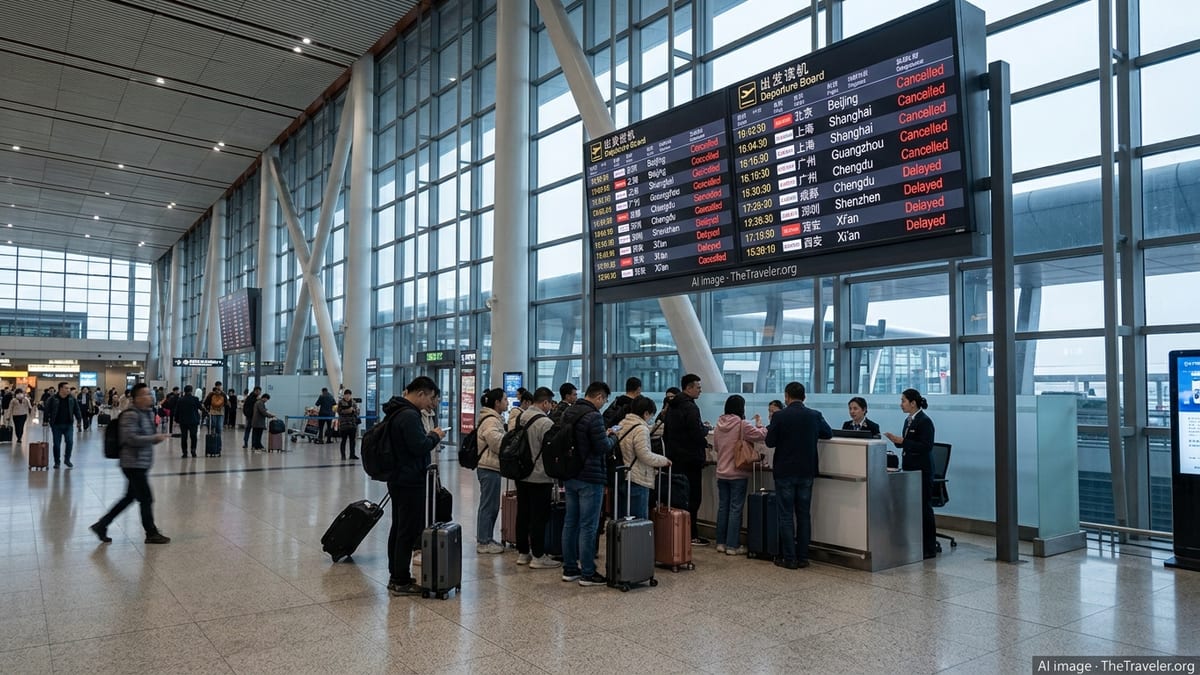
Waves of Cancellations Hit China’s Busiest Routes
Publicly available schedule data and traveler reports indicate that over the past several days, at least 38 flights involving major Chinese airlines have been cancelled or removed from sale across domestic and regional routes. The disruptions are concentrated on services operated by China Southern Airlines and China Eastern Airlines, with additional adjustments reported on flights marketed by other Chinese carriers.
The changes are affecting travel into major hubs such as Beijing Capital and Beijing Daxing, Shanghai Pudong and Hongqiao, Guangzhou Baiyun, Chengdu, Shenzhen and Xi’an. Several itineraries have seen one leg cancelled while the onward connection remains, leaving passengers needing rebooking or alternative routings at short notice.
Monitoring of reservation systems and airline notices suggests that some cancellations are being made only days or weeks before departure, with replacement flights sometimes appearing under different flight numbers or as codeshares. This pattern has led to confusion among travelers who find that previously confirmed segments no longer appear in their booking records or check in tools.
While the total number of affected flights is small compared with China’s overall schedule, the impact is magnified on trunk routes that carry large volumes of domestic and connecting international traffic. Even a few cancellations on Guangzhou Shanghai or Beijing Chengdu services can cascade into missed connections and unexpected overnight stays.
Operational and Commercial Pressures Behind the Disruptions
Airlines in China are currently juggling a combination of operational constraints and commercial decisions that appear to be driving the latest wave of cancellations. Industry analyses of Chinese carriers highlight ongoing capacity reshuffles following the rapid recovery of domestic air travel, as well as tightening margins on some international routes.
In some cases, flight cancellations and retimings appear linked to aircraft and crew utilization, with carriers consolidating lightly booked services onto fewer departures. Published aviation data on Chinese schedules has shown that airlines frequently adjust frequencies by trimming flights in off peak days while maintaining overall weekly capacity on key city pairs.
Regional diplomatic and economic developments are also influencing route structures. Earlier official statistics on flights between China and neighboring markets showed that Chinese airlines had already reduced services on certain international corridors through the first quarter of 2026, with dozens of flights per week withdrawn from schedules. Although the latest disruptions are primarily domestic, they are occurring in a context of broader recalibration of cross border flying.
Air traffic management, weather and airport congestion remain structural challenges in China’s aviation system, but current reports do not point to a single, one day nationwide incident. Instead, the pattern resembles a rolling series of schedule changes, with individual flights removed or retimed rather than a blanket ground stop across multiple airports.
Cities Most Affected: Beijing, Shanghai, Guangzhou and Regional Hubs
The heaviest concentration of reported cancellations involves flights to and from China’s tier one cities. Beijing, served by both Capital and Daxing airports, has seen multiple adjustments on services operated by China Southern, China Eastern and partner airlines, particularly on routes connecting from southern gateways such as Guangzhou and Shenzhen.
Shanghai Pudong and Hongqiao are experiencing similar volatility. Travelers holding tickets that combine long haul legs into Shanghai with domestic connections onward to cities like Guangzhou, Chengdu or Xi’an are reporting that their internal segments have been cancelled or shifted to different departure times, occasionally leaving impossible or extremely tight minimum connection windows.
Guangzhou Baiyun, a key hub for China Southern, is another focal point. Flight tracking and schedule comparison tools show that several departures between Guangzhou and regional destinations, including Osaka and other Northeast Asian cities, have been withdrawn or reassigned in recent weeks. Passengers connecting through Guangzhou to western China, such as Chengdu or Xi’an, are particularly vulnerable when one link in a multi segment itinerary is removed.
Secondary hubs such as Chengdu Tianfu and Shenzhen Bao’an are also feeling the knock on effects. When trunk flights into these cities from Beijing, Shanghai or Guangzhou are cancelled, regional spokes to smaller domestic destinations often need to be rebooked, extending total journey times and complicating logistics for both business and leisure travelers.
What Travelers Are Experiencing on the Ground
Accounts shared on travel forums show a wide range of passenger experiences. Some travelers report that when their China Southern or China Eastern flights were cancelled on short notice, they were offered free rebooking onto later departures or alternative routings on the same day, sometimes even when separate tickets were involved.
Others describe more fragmented situations in which one sector of a multi city itinerary disappeared from the booking, while the remaining segments stayed active, creating the risk of a broken journey. In these cases, passengers often discovered the change only when attempting to check in online or manage their reservations, prompting urgent calls to airline hotlines or visits to airport ticket counters.
Several travelers have noted that they did not receive clear email notifications about cancellations or schedule changes, particularly when using certain email providers or booking through third party platforms. Instead, they learned of alterations by manually checking airline apps or by seeing new flight numbers assigned to their trips.
Despite the frustrations, some reports indicate that frontline staff at major Chinese airports have been able to secure same day alternatives in many cases, especially on busy routes where carriers operate multiple frequencies. However, passengers connecting to or from international services may face longer delays or overnight stays if later domestic flights are fully booked.
Practical Advice for Upcoming Trips to China
For travelers with upcoming itineraries to Beijing, Shanghai, Guangzhou, Chengdu, Shenzhen, Xi’an or other Chinese cities, recent disruptions underscore the importance of active trip management. Regularly checking bookings on the airline’s official website or app in the days leading up to departure can help catch silent cancellations or retimings before reaching the airport.
Where possible, travelers may wish to allow longer connection times between international and domestic segments, especially if flying on separate tickets. A buffer of several hours provides additional protection if a domestic leg is retimed or replaced by a later departure. In busy hubs such as Shanghai Pudong or Guangzhou Baiyun, immigration, security and terminal transfers can add to minimum connection times even when flights operate as scheduled.
Passengers whose flights are cancelled should keep documentation such as original e tickets, boarding passes and any delay or disruption certificates issued by other airlines on connecting journeys. Public information on Chinese aviation consumer rules indicates that carriers generally offer rebooking or refunds when they cancel a flight, though specific options can depend on fare type and point of purchase.
Given that the current pattern of disruption appears to involve rolling schedule adjustments rather than a short, isolated event, monitoring conditions even after rebooking is advisable. Airlines may continue to fine tune frequencies and timings as demand patterns evolve through the spring travel period, particularly on routes linking China’s major coastal hubs with inland cities.