

More news on this day
A fresh wave of flight cancellations involving Air China, China Eastern, China Southern, Gulf Air and several partner carriers has disrupted travel across China and the Gulf region, with more than 20 services reportedly dropped on routes touching Bahrain, Lhasa, Urumqi, Shanghai, Chongqing and other key cities.
Get the latest news straight to your inbox!
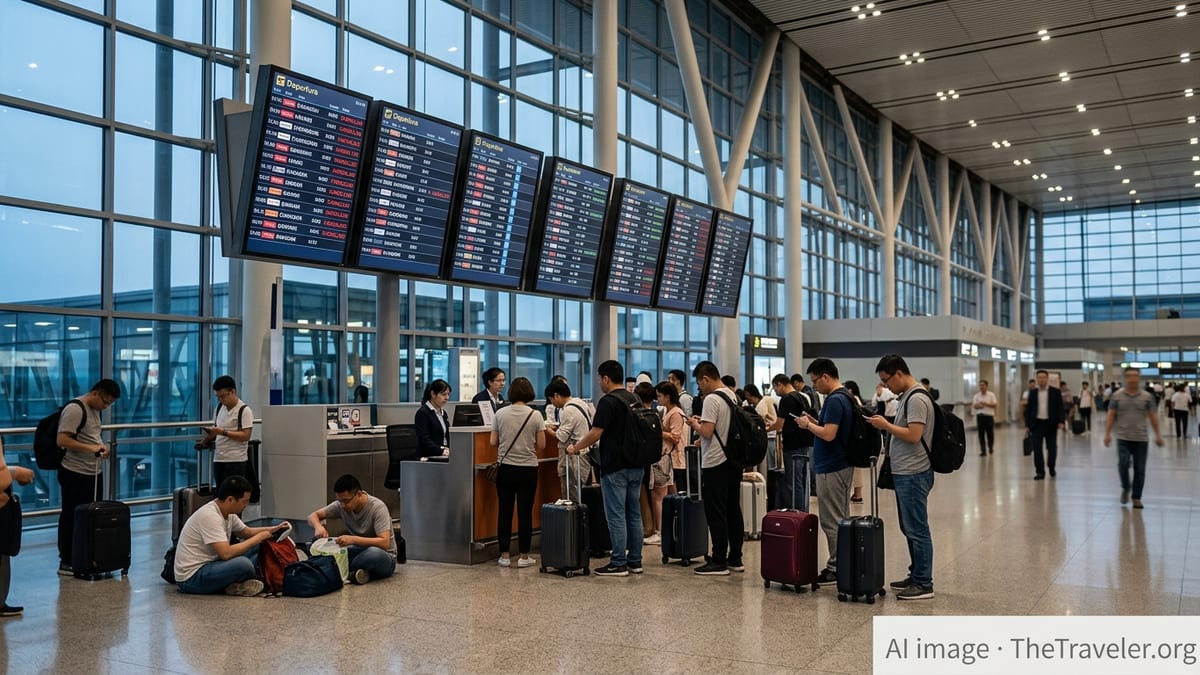
Patchwork Cancellations Hit China and Gulf Connections
Publicly available flight-tracking data and timetable updates indicate that a cluster of cancellations has emerged across multiple airlines serving China and the Gulf, including Air China, China Eastern, China Southern and Gulf Air. The affected flights span both domestic and international sectors, concentrating on long-haul and regional links that connect western China, major coastal hubs and Bahrain.
On routes involving Bahrain, adjusted schedules and temporary route suspensions have reduced connectivity between the island kingdom and several Chinese gateways. Gulf Air services that typically route via Bahrain to and from Asian destinations have been among those disrupted, with some itineraries rerouted through alternative Gulf airports or removed from booking systems for near-term travel dates.
Within China, cancellations have been most visible on services to and from interior hubs such as Urumqi, Lhasa and Chongqing, alongside high-demand corridors touching Shanghai. While many flights continue to operate, the removal of a concentrated block of departures within a short time window has created localized congestion and capacity constraints, particularly for travelers with onward international connections.
Across all carriers, the total number of impacted flights currently exceeds 20, based on combined schedule changes, airport departure boards and passenger accounts shared on online forums. The figure may fluctuate as airlines continue to adjust operations in response to regional conditions.
Operational Pressures and Regional Tensions Shape Airline Decisions
Industry analysts point to a combination of operational pressures and evolving regional security conditions as drivers behind the latest round of cancellations. Airlines operating through Gulf airspace, including Gulf Air and partner carriers carrying China-bound traffic, have already been contending with route changes, longer flight paths and crew scheduling complications related to intermittent airspace restrictions in parts of the Middle East.
For Chinese carriers, the knock-on effects of these constraints can ripple across networks, particularly where aircraft and crew are tightly scheduled between domestic and international rotations. Adjustments to one long-haul service may obligate schedule changes on multiple short-haul segments later in the day, which can manifest as domestic cancellations on routes to cities like Lhasa, Urumqi, Chongqing and Shanghai.
Timetable revisions published by airports and carriers show that some flights are being consolidated, with passengers offered re-accommodation on alternative departures, while others are being removed altogether for selected dates. Travel industry commentary suggests that carriers are prioritizing routes with sustained demand and more robust alternative connection options, while trimming services on thinner or more operationally complex sectors.
The pattern is consistent with broader network management strategies that airlines have used in recent years when confronted with sudden regional disruptions: concentrate resources where recovery is fastest and progressively restore secondary routes once conditions stabilize.
Impact on Travelers Linking China, Bahrain and Regional Hubs
Travelers with itineraries involving Bahrain and major Chinese cities are experiencing a mix of missed connections, involuntary rerouting and extended layovers. Reports shared on flight-tracking platforms and traveler forums describe last-minute notifications of cancellations, followed by offers to rebook via different Gulf gateways or on alternative dates when capacity is available.
Passengers scheduled to transit through Bahrain on Gulf Air or partner airlines have encountered particular uncertainty, with some journeys being shifted to operate via nearby airports in the Gulf region. This can add flight time and, in some cases, require additional visas or overnight stays, especially when new routings involve different transit rules or longer connection windows.
Inside China, the cancellation of selected services to high-altitude and remote destinations such as Lhasa, as well as western hubs including Urumqi, has reduced same-day connectivity from coastal cities like Shanghai. Travelers attempting to link domestic Chinese flights with long-haul departures to the Middle East face tighter margins, and in some cases must accept rebooking for the next available day.
Travel agents and online booking platforms are updating customers as new schedule changes are loaded, but the rapid pace of adjustments means some passengers only become aware of cancellations shortly before departure. This has increased demand for real-time flight status checks and flexible booking options.
Airlines Adjust Policies as Schedule Changes Mount
In response to the growing number of disrupted journeys, several airlines associated with the affected routes have updated ticketing and flexibility policies in recent weeks. Public notices and customer communications from Gulf Air and other carriers serving Bahrain reference expanded options for free date changes, the ability to reroute via specified alternative hubs and, in some cases, refund possibilities when flights are cancelled or significantly rescheduled.
Chinese airlines have adopted similar measures on selected routes, allowing passengers to modify travel dates or switch to nearby destinations when original flights are removed from the schedule. These accommodations vary by fare type and travel period, but they reflect a broader effort across the sector to manage customer expectations amid operational uncertainty.
Travel industry observers note that while these flexible policies can ease the burden for some passengers, implementation can be uneven, particularly for tickets purchased through third-party online travel agencies. Travelers may encounter longer processing times for refunds or reissues, and in certain cases are being advised to work directly with the operating carrier to secure alternative arrangements.
Airports serving as key nodes in the disrupted network, including hubs in Shanghai, Chongqing and Urumqi as well as Bahrain, have also adjusted passenger handling procedures, dedicating additional staff at transfer desks during peak disruption periods to process rebookings and provide updated information.
What Travelers Should Watch in the Coming Days
With airlines still actively reshaping their schedules, travel planners suggest that passengers bound for or transiting through Bahrain, Shanghai, Chongqing, Lhasa, Urumqi and other affected cities monitor their bookings closely in the near term. Checking flight status directly with the operating carrier and signing up for real-time notifications can provide earlier warning of further cancellations or departure time changes.
Flexible travel arrangements, including refundable fares or tickets with low-change penalties, are being recommended for journeys that rely heavily on Gulf airspace or on complex connections between Chinese domestic sectors and international flights. Where possible, some travelers are considering routing through alternative hubs with more redundancy in long-haul services, though this may come at a higher cost.
Industry commentary indicates that the scale of disruption could evolve quickly, either easing as carriers refine stable schedules or intensifying if additional airspace constraints or operational challenges arise. For now, the cancellation of more than 20 flights across multiple airlines serves as a reminder of the continued fragility of certain long-distance travel corridors linking China, the Gulf and beyond.
Travelers already en route are advised, where feasible, to keep contingency plans in mind, such as awareness of later same-day departures, nearby alternate airports and accommodation options in key hubs should unexpected overnight stays become necessary due to late-breaking cancellations.