

More news on this day
Flight cancellations involving Air China, China Eastern, China Southern and several Gulf carriers are causing fresh disruption across Asia and the Middle East, with more than 40 services affecting major hubs such as Beijing, Shanghai, Guangzhou, Shenzhen and Bahrain reportedly cancelled or rescheduled in recent days.
Get the latest news straight to your inbox!
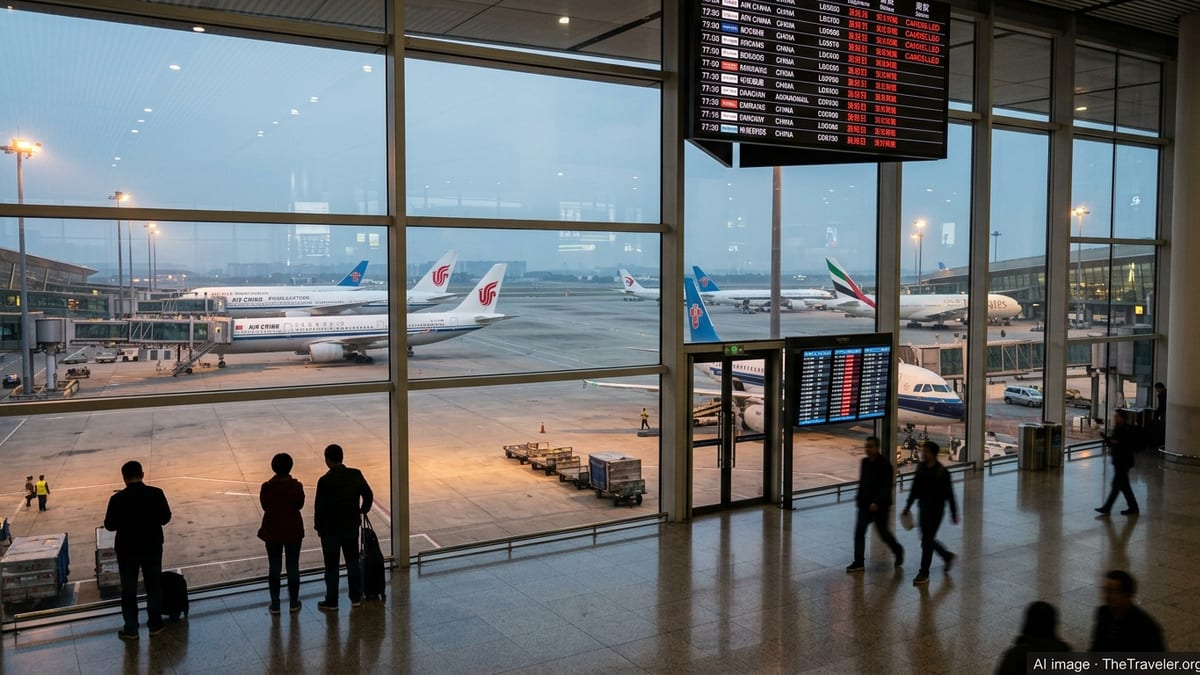
Wave of Cancellations Hits China’s Biggest Airline Hubs
Publicly available flight tracking data and airline schedule updates indicate that a new wave of cancellations has affected services operated by Air China, China Eastern, China Southern and other regional carriers. The interruptions have been concentrated on routes into and out of Beijing, Shanghai, Guangzhou and Shenzhen, four of China’s busiest aviation gateways and key transfer points for international travel.
Across multiple days, more than 40 flights touching Chinese hubs have been removed from schedules or marked as cancelled, according to aggregated timetable snapshots and traveler reports. The pattern includes domestic services within mainland China as well as international links that use Chinese cities as long haul connection points.
While the individual cancellations are dispersed across carriers and airports, the combined effect is being felt by passengers planning spring travel in late March and early April. Many are reporting short notice changes, particularly on itineraries that involve a change of aircraft in Shanghai or Guangzhou, or that connect onward via Middle Eastern hubs.
Operational bulletins emphasize that most services are still running, and the disruption remains limited compared with pandemic era shutdowns. Nonetheless, the latest adjustments are a reminder that long haul itineraries relying on multiple transit points can still be vulnerable to abrupt schedule shifts.
Beijing, Shanghai, Guangzhou and Shenzhen See Itinerary Changes
Beijing and Shanghai remain the primary long haul gateways for mainland China, and both have seen scattered cancellations and time changes on flights operated by major state owned carriers. Timetable data for late March shows gaps where selected Air China and China Eastern services had previously been listed, particularly on regional routes feeding into long haul flights.
At Guangzhou Baiyun International Airport, where China Eastern, China Southern and several partner airlines operate extensive domestic and international networks, travelers have reported connection disruptions when feeder services are removed or retimed. Even when long haul departures remain scheduled, the loss of a short haul segment can force full rerouting for passengers whose itineraries rely on tightly timed transfers.
Shenzhen, a fast growing technology and manufacturing hub, has also experienced cancellations affecting both point to point routes and connections. For some travelers, this has meant being rebooked through alternative Chinese hubs, adding additional domestic sectors or overnight stops to journeys that were originally planned as same day connections.
These changes are particularly challenging for itineraries that combine separate tickets or involve complex multi stop journeys. In such cases, passengers may find that a cancelled domestic leg from a city like Shenzhen or Guangzhou to Shanghai can jeopardize an onward long haul flight, even when the long haul sector itself is still scheduled to depart.
Middle East Tensions Add Pressure on Bahrain and Gulf Routings
The disruption is not confined to Chinese airspace. Across the Middle East, recent conflict related airspace restrictions and security concerns have led to rolling adjustments by Gulf based airlines, including services that link China with Europe, Africa and South Asia via Bahrain and neighboring hubs.
Travel forums and megathreads tracking the situation in the region describe a patchwork of cancellations and reroutings involving flights that would normally transit Bahrain’s airspace or use Bahrain International Airport as a connection point. In several cases, passengers transiting between Asia and Europe on Gulf carriers have reported repeated cancellations on itineraries routed through Bahrain, prompting last minute switches to alternative hubs such as Dubai or Doha where operations have been comparatively more stable.
The resulting network changes interact with Chinese airline schedules in complex ways. Some itineraries rely on a Chinese carrier for the first leg into a Gulf hub, followed by a Middle Eastern airline to complete the onward journey. When either half of such a pairing is removed from the schedule, the entire routing can collapse, contributing to the tally of disrupted flights linked to both China and Bahrain.
Even when flights continue to operate, rerouting around sensitive airspace can lengthen flight times, strain aircraft and crew availability, and reduce the margin for recovering from delays. These operational pressures increase the likelihood that marginal services, especially those with lower demand or thinner profit margins, may be trimmed or consolidated at short notice.
Travelers Face Missed Connections and Last Minute Rebookings
For passengers, the most immediate impact of the latest cancellations has been missed connections and unplanned overnight stays. Reports from affected travelers describe scenarios where a single cancelled segment on a China Eastern or China Southern itinerary forces complete rebooking via different hubs, sometimes adding many hours and additional stops to journeys that were originally straightforward.
Some travelers recount receiving notifications of cancellations only a few days before departure, particularly on regional sectors feeding into long haul flights from Shanghai and Guangzhou. Others have reported discovering changes while checking their booking references or consulting online departure boards, underscoring the importance of frequent monitoring in the current environment.
Passengers whose trips involve Bahrain face additional uncertainty. With some Gulf based airlines still adjusting their schedules in response to volatile regional conditions, itineraries that rely on smooth transfers through Bahrain may be particularly exposed to changes. In practice, this has led many travelers and travel agents to seek routings that avoid the most affected airspace or to choose carriers with larger and more flexible networks.
The patchwork nature of the disruption means that experiences vary widely. Some travelers continue to report smooth journeys through Chinese and Gulf hubs, while others encounter cascading changes triggered by a single cancelled flight. For those with time sensitive plans, the difference can be significant.
What the Disruptions Mean for Near Term China Travel
Despite the heightened attention around cancellations, overall capacity between China and many key markets remains significantly higher than during the strictest pandemic controls. Airlines have been steadily rebuilding their international networks, and Chinese hubs such as Beijing, Shanghai, Guangzhou and Shenzhen continue to handle large volumes of traffic.
However, the current round of disruptions serves as a reminder that the post pandemic recovery remains vulnerable to geopolitical tensions, regional conflicts and operational constraints. Even a relatively small number of cancellations, when spread across multiple airlines and hubs, can generate outsized inconvenience for travelers whose itineraries are tightly interconnected.
For those planning upcoming trips involving China and the Gulf region, travel industry guidance consistently emphasizes flexibility. Options such as refundable or changeable tickets, allowing longer connection windows, and maintaining up to date contact information with airlines can help reduce the impact if schedules change. Travelers are also keeping a close eye on airline advisories and airport notice boards in the days leading up to departure, particularly when their plans involve transit through hubs like Bahrain.
As airlines adjust to evolving conditions in both Chinese and Middle Eastern airspace, additional schedule refinements are likely in the short term. While there is no indication of a return to the sweeping shutdowns seen in earlier years, the latest series of cancellations underscores the value of contingency planning for anyone embarking on multi stop international journeys that touch China’s largest hubs.