

More news on this day
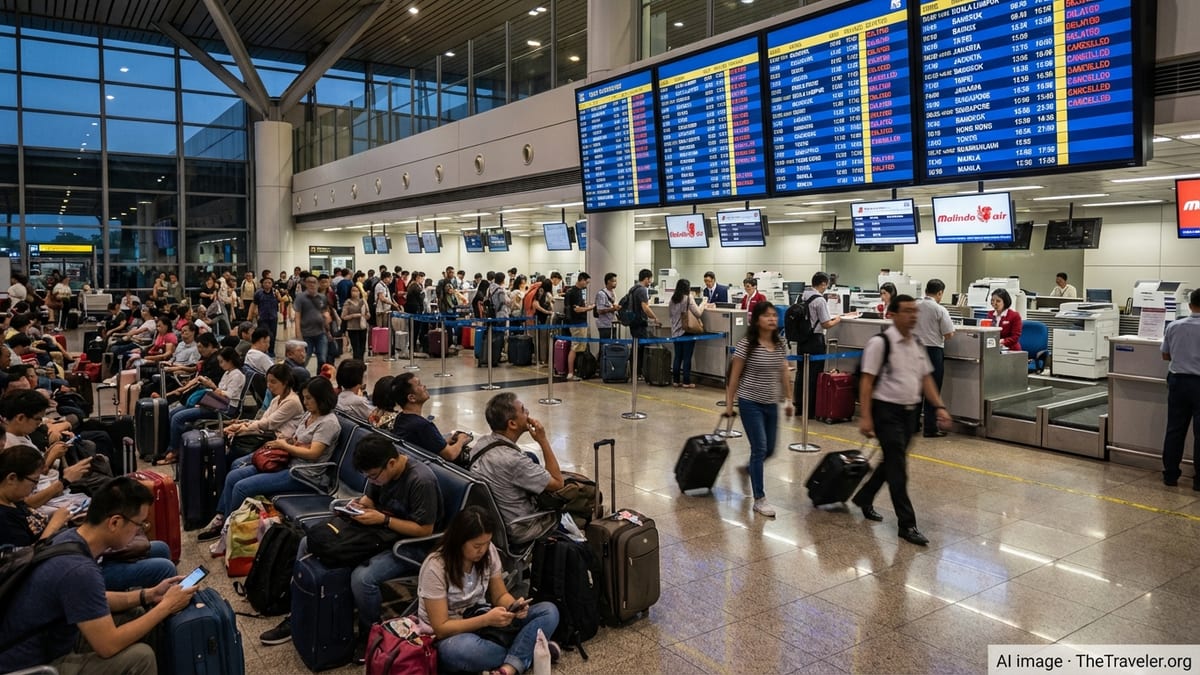
More than 35 flights operated by China Eastern, Air China, China Southern and other Chinese carriers have been cancelled in recent days, disrupting heavily used routes linking Shanghai, Beijing, Bangkok, Dubai and other key hubs just as regional air travel demand continues to climb.
Get the latest news straight to your inbox!
Targeted Cancellations Hit Major Chinese Hubs
Recent operational data and industry reporting indicate a concentrated wave of cancellations across major Chinese airports, including Shanghai Pudong, Shanghai Hongqiao, Beijing Capital and Beijing Daxing. The disruptions, which surfaced around March 29, 2026, involve a mix of domestic and international services, many of them on trunk routes that normally see strong business and leisure demand.
Coverage from aviation-focused outlets describes more than 35 cancelled departures tied to China Eastern, Air China, China Southern and several smaller carriers, with Shanghai and Beijing handling a significant share of the affected flights. Services to and from key partners in Southeast Asia and the Middle East appear prominently in the cancellation lists, magnifying the impact beyond China’s borders.
Shanghai’s dual-airport system, split between Pudong for long-haul operations and Hongqiao for dense domestic and regional traffic, has been particularly affected. Publicly available schedules show withdrawn or scrubbed departures on routes linking Shanghai to Beijing, Shenzhen, Chengdu and other core Chinese cities, alongside select long-haul and regional sectors.
In Beijing, both Capital and Daxing airports have reported cancellations among services operated by the country’s largest state-owned airlines. These hubs function as primary connectors between northern China and international destinations, so any reduction in frequencies quickly cascades through airline networks and passenger itineraries.
Bangkok and Dubai Routes Face Noticeable Disruption
The current wave of cancellations is being felt most clearly on some of China’s busiest regional and long-haul corridors. Routes between Chinese hubs and Bangkok rank among the most popular outbound leisure markets, while flights to Dubai form part of a broader web of connections linking China with the Middle East, Europe and Africa.
Industry reports point to multiple cancelled services between Chinese cities such as Shanghai and Beijing and Bangkok’s main international gateway. Even a limited number of cancellations on these high-demand sectors can cause congestion at check-in, rebooking counters and transfer desks, as airlines work to reallocate passengers onto later departures or alternative routings.
On the China–Dubai axis, flight tracking snapshots and schedule summaries show specific services removed from the board at short notice. In some cases, cancelled departures from Shanghai Pudong or other coastal hubs mean passengers heading to Dubai face longer layovers, the need to backtrack via third countries or overnight delays until capacity becomes available.
Because Dubai also serves as a key connection point for travel onward to Europe, Africa and South Asia, the loss of a single China–Dubai leg can lead to missed long-haul connections and complex rebooking chains. Travel agents and online booking platforms are reporting tighter seat availability around the affected dates, particularly in economy cabins on alternative routes.
Operational Pressures and Network Realignment
The immediate triggers behind the cancellations involve a combination of operational challenges rather than a single, clearly defined cause. Publicly available information and analytical coverage reference factors such as tighter crew scheduling, aircraft rotation constraints and localized weather or airspace restrictions that complicate day-of-operation planning.
At the same time, the cancellations are occurring against a backdrop of financial and strategic pressure for China’s largest airlines. Recent earnings coverage highlights that China Eastern, Air China and China Southern all reported quarterly losses late in 2025, with jet fuel costs rising amid heightened geopolitical tensions. In this context, selectively cancelling lightly loaded or operationally complex flights can be one of the tools carriers use to stabilise yields and manage costs.
Network planners also continue to recalibrate capacity after several years of uneven demand recovery. International traffic from China has been rebounding, but not uniformly across all regions or routes. Pulling back frequencies on certain sectors, even temporarily, may allow airlines to redeploy aircraft to more profitable markets or align schedules with updated seasonal demand forecasts.
Analysts note that these adjustments are increasingly dynamic. A route that sees cancellations one week might receive additional capacity later in the season if forward bookings improve. For travelers, however, the practical effect is that itineraries booked weeks in advance can still be subject to late changes as airlines fine-tune their operations.
Passenger Impact Spreads Across Asia and Beyond
While the headline figure of more than 35 cancelled flights may appear modest compared with the hundreds of daily departures handled by major hubs, the knock-on effects are substantial. Each long-haul or high-density regional flight can carry hundreds of passengers, so a cluster of cancellations over a short time frame can translate into thousands of disrupted journeys.
Recent regional data from Asia show that large numbers of passengers have already faced delays and cancellations at airports such as Shanghai Pudong, Beijing Capital and Bangkok Suvarnabhumi this week, in some cases connected to the same airlines and routes affected in China. When irregular operations occur simultaneously at multiple hubs, rebooking options narrow quickly, complicating recovery efforts.
Travellers heading to or from China on connecting tickets are particularly exposed. Those flying from secondary cities via Shanghai or Beijing to reach Bangkok, Dubai or other international destinations may find that a cancelled domestic leg breaks their connection, even if the long-haul flight is operating on schedule. In such cases, passengers often depend on the conditions of carriage and the responsiveness of customer service channels to secure alternative arrangements.
Industry observers also point out that business travelers on tight schedules face elevated risk. Missed meetings, shortened layovers and reduced same-day return options can all result when early morning or late-evening flights are cut from airline timetables.
What Travelers Should Watch in the Coming Days
For those planning to fly on China Eastern, Air China, China Southern or other Chinese carriers through Shanghai, Beijing, Bangkok, Dubai and related hubs, close monitoring of flight status is recommended in the near term. Published coverage suggests that cancellations have been clustered over several days rather than confined to a single event, indicating that schedule adjustments could continue as airlines respond to operational and commercial pressures.
Travel specialists advise checking bookings regularly in the 24 to 48 hours before departure and enabling notifications from airlines or booking platforms where possible. Passengers with tight connections, especially on itineraries that combine Chinese domestic legs with international sectors to Southeast Asia or the Middle East, may wish to build in longer transfer times or consider alternative routings if flexibility allows.
Airlines are generally offering rebooking on later flights or different routings when services are cancelled, though the exact options depend on fare rules and seat availability. At busy times of day and on popular routes such as Shanghai to Bangkok or Shanghai to Dubai, same-day alternatives can be limited, increasing the likelihood of overnight stays or extended layovers.
As Chinese carriers continue to balance cost pressures, fleet deployment and resurgent demand, further short-term adjustments to schedules remain possible. For now, the latest cancellations serve as a reminder that the region’s aviation recovery, while advanced, still carries a level of unpredictability that travelers must factor into their plans.