

More news on this day
China’s busiest aviation hubs are experiencing a fresh wave of disruption as more than 200 flights operated by major carriers including China Southern, China Eastern and Air China are reported cancelled, snarling international links to Dubai, Saudi Arabia, Bangkok and other key destinations just as spring travel demand accelerates.
Get the latest news straight to your inbox!
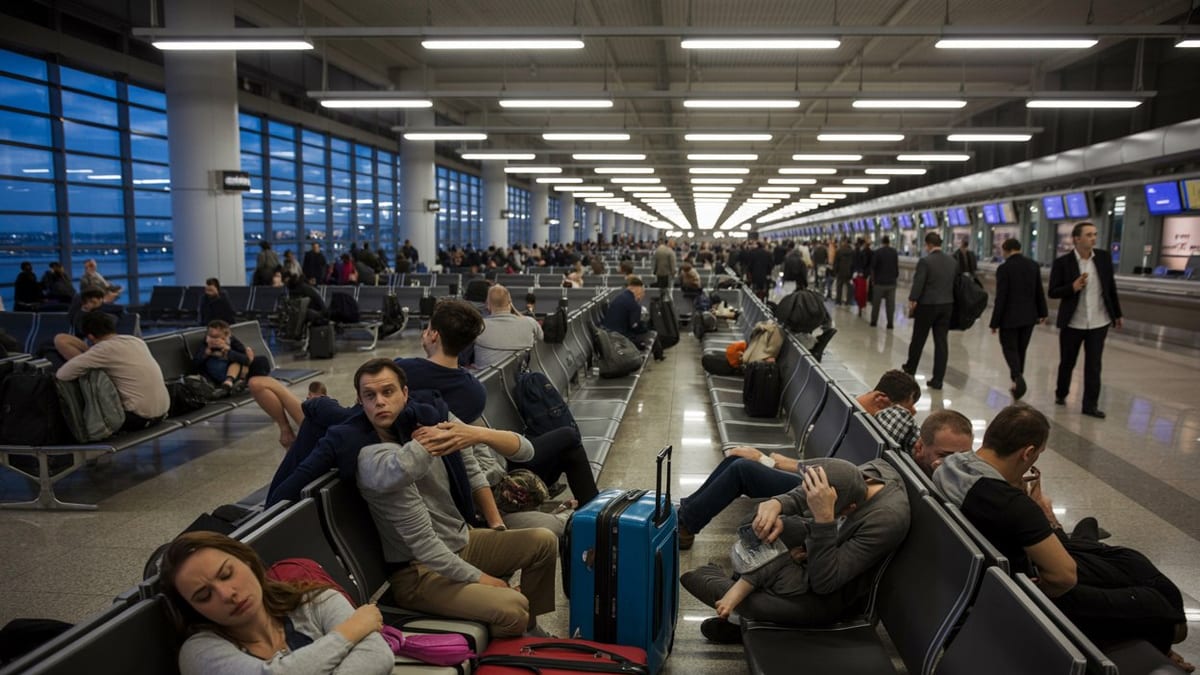
Image by Travel And Tour World
Major Chinese Hubs See Wave of Scrapped Flights
Publicly available flight-tracking and schedule data indicate that airports in Guangzhou, Shanghai, Beijing, Shenzhen and Chengdu have recorded a sharp rise in cancellations over the past 24 to 48 hours, with the total number of scrubbed departures and arrivals climbing into the low hundreds. The bulk of the disruption is concentrated among China’s three largest state-controlled carriers, alongside several regional affiliates that connect secondary cities into these mega-hubs.
Capacity data and airport notices show that Guangzhou Baiyun International Airport, a core base for China Southern and a growing hub for China Eastern and Air China, has seen a particular concentration of cancellations on long-haul and regional routes. Shanghai’s dual-airport system and Beijing Capital, traditionally among the most punctual in the region, are also posting elevated cancellation rates compared with typical late-March operations.
While some level of schedule adjustment is common at the transition between winter and summer seasons, the current volume of simultaneously cancelled flights across multiple hubs appears to go beyond routine retiming and minor capacity trims, especially given the spread of affected destinations and carriers.
Links to Dubai, Saudi Arabia and Bangkok Hit Hard
The most visible impact for international travelers is on trunk routes that link China’s coastal megacities with the Middle East and Southeast Asia. Published timetables and airport boards point to disrupted services between Guangzhou and Dubai, Shanghai and Dubai, and Beijing and the major Gulf gateways, where Chinese airlines typically coordinate schedules with local partners to feed onward connections to Europe and Africa.
Routes connecting Chinese hubs with Saudi Arabian cities are also seeing cancellations, reducing seat availability for workers, religious travelers and business passengers who rely on these corridors. The timing is especially sensitive for travelers transiting through Gulf airports to reach Europe, Africa or South Asia, where wider regional airspace issues have already complicated planning in recent weeks.
Bangkok, historically one of the most popular outbound leisure destinations for Chinese travelers, is another focal point. Forward schedules and booking platforms show multiple canceled rotations linking Bangkok with Guangzhou, Shanghai, Shenzhen and Chengdu, forcing holidaymakers and tour groups to scramble for alternative routings through other Asian hubs.
China Southern, China Eastern and Air China Lead the Disruptions
The cancellations are spread across several large airlines, but data aggregators and airport manifests indicate that China Southern, China Eastern and Air China account for a significant share of the affected flights. These three carriers dominate domestic trunk routes between Beijing, Shanghai, Guangzhou, Shenzhen and Chengdu, as well as a wide network of international services to the Middle East and Southeast Asia.
China Southern, the largest operator at Guangzhou Baiyun, appears particularly exposed on links between southern China and Dubai, as well as on selected services feeding Gulf and Southeast Asian partners. China Eastern, with its strong presence in Shanghai and links to Bangkok and other Thai gateways, is showing multiple cancellations that ripple through connecting itineraries to and from North America and Europe.
Air China, headquartered in Beijing but present across all five major hubs, is also adjusting its schedules, including on routes used to funnel passengers from secondary Chinese cities to international departures. Travel forums and booking platforms show passengers being rebooked on alternative Air China services or shifted onto partner flights via other hubs when non-stop options are removed from the schedule.
Knock-On Effects for Domestic and Transit Passengers
The immediate impact for travelers is a wave of missed connections, extended layovers and last-minute rerouting. Because many passengers traveling between China and the Middle East or Southeast Asia connect through Guangzhou, Shanghai or Beijing, the cancellation of a single long-haul sector can disrupt an entire chain of domestic feeder flights and onward segments.
Reports from passenger forums suggest that some travelers transiting via Dubai, Bangkok or Saudi Arabian gateways are facing unexpected overnight stays or are being rerouted through alternative Asian hubs such as Hong Kong, Seoul or Tokyo when Chinese and Gulf carriers are unable to offer same-day alternatives. In some cases, travelers originating in smaller Chinese cities are being asked to reposition by high-speed rail or domestic flights to whichever hub still has operating services.
For domestic travelers, the same cancellations are reducing frequency on key business corridors like Guangzhou–Shanghai, Beijing–Guangzhou, Shenzhen–Chengdu and Shanghai–Chengdu. That adds crowding pressure to the remaining services and narrows options for same-day returns, especially for corporate travelers and those connecting to international flights from inland provinces.
Uncertain Outlook as Airlines Adjust Spring Schedules
The precise mix of factors driving the wave of cancellations remains unclear, but industry analysts have pointed to a combination of operational constraints, aircraft and crew availability, and wider regional airspace challenges impacting routes that overfly the Middle East. As airlines enter the summer 2026 schedule with ambitious capacity plans, any mismatch between planned operations and available resources can quickly translate into short-notice flight cuts.
Chinese carriers are simultaneously ramping up new and resumed routes, including high-profile services from Beijing and Shanghai to destinations in Europe and South Asia, which may be absorbing aircraft and crew that might otherwise support existing links to Dubai, Saudi Arabia and Bangkok. That dynamic can lead to short-term instability in schedules as airlines test demand and adjust networks.
For travelers with upcoming trips through Guangzhou, Shanghai, Beijing, Shenzhen or Chengdu, aviation advisories and airport information pages recommend closely monitoring flight status in the 24 hours before departure and considering more generous connection times when itineraries involve Middle Eastern or Southeast Asian hubs. With more than 200 cancellations already reported and schedules still in flux, flexibility and contingency planning remain essential for anyone relying on these critical China–Middle East and China–Southeast Asia corridors.