

More news on this day
Thousands of air travelers across China faced severe disruption today as major hubs reported 1,595 delayed and 124 cancelled flights, snarling operations for China Southern, Air China, China Eastern, XiamenAir and several other carriers.
Get the latest news straight to your inbox!
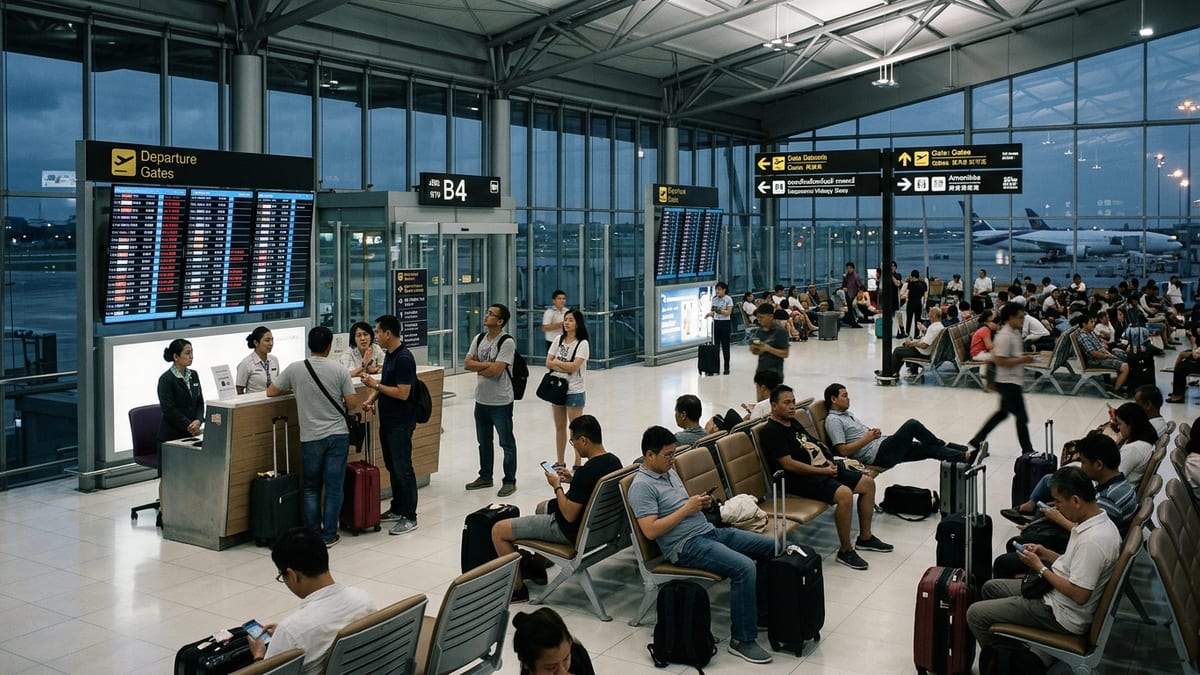
Major Chinese Hubs Buckle Under Mounting Delays
Publicly available aviation dashboards and flight-tracking platforms for April 5 and 6 indicate that delays and cancellations are concentrated at China’s busiest hubs, including Beijing, Chengdu, Guangzhou, Shenzhen, Hangzhou and Kunming. Combined figures across these and other large airports point to at least 1,595 delayed departures and 124 outright cancellations over the current disruption cycle, with knock-on effects likely to ripple through the network for days.
Capital city gateways in Beijing, along with major southern airports in Guangzhou and Shenzhen, feature prominently in the latest irregular-operations tallies. These hubs handle dense banks of domestic flights as well as key regional connections, magnifying the impact when schedules slip. Congested departure boards at these airports show rows of flights pushed back by one or more hours as ground teams attempt to reset operations.
Chengdu in Sichuan province, Hangzhou on the eastern seaboard and Kunming in Yunnan have also reported elevated disruption. These fast-growing secondary hubs play a critical role in connecting interior provinces with the coastal megacities, so delays there can quickly cascade into missed connections and aircraft rotations systemwide.
While figures vary by airport and time of day, the aggregate pattern points to a highly stressed domestic network, in which even modest operational hiccups at one hub can trigger wider scheduling instability across the country’s tightly timed short-haul routes.
China Southern, Air China And China Eastern Among Hardest Hit
Flight-status feeds and aggregated data for the affected period indicate that the country’s largest carriers are bearing the brunt of the disruption. China Southern, Air China and China Eastern, which dominate traffic at many of the impacted hubs, appear frequently among delayed and cancelled services. Their extensive domestic networks and multiple daily frequencies into Beijing, Guangzhou, Shenzhen and Chengdu mean that even isolated issues can quickly multiply into dozens of affected flights.
Smaller and regional airlines are also feeling the strain. XiamenAir, Shenzhen Airlines, Sichuan Airlines and several other Chinese carriers show notable clusters of late departures and a smaller number of cancellations from key coastal and inland cities. Because many of these airlines operate with tight aircraft utilization and limited spare capacity, each grounded aircraft can translate into a string of follow-on delays.
Publicly accessible performance statistics further illustrate the pressure on flagship routes connecting major economic centers. Flights between Beijing and southern hubs such as Guangzhou and Shenzhen, and trunk routes linking Chengdu and Hangzhou to the capital, have recorded high rates of disruption in recent days. High-demand sectors with full load factors are often more difficult to re-accommodate, intensifying the strain at rebooking counters.
For travelers, the disruption is largely airline-agnostic. Whether flying on a national flag carrier or a regional operator, passengers are encountering similar issues, from rolling boarding time changes to aircraft being held at gates while crews and slots are reassigned.
Weather, Congested Airspace And Knock On Effects
Recent regional coverage and operational analyses point to a combination of factors behind the latest wave of irregular operations. Unsettled spring weather, including thunderstorms around busy eastern and southern corridors, has periodically constrained departures and arrivals at major fields such as Shanghai Pudong and Guangzhou Baiyun, creating bottlenecks that then affect nearby airports in the broader airspace structure.
Reports focusing on Shanghai and neighboring regions describe how storm lines and temporary air-traffic-control restrictions forced departure pauses and reduced arrival rates. Although Shanghai is not the only focal point of today’s disruption, constraints there have contributed to aircraft and crew being out of position for subsequent rotations into Beijing, Chengdu, Shenzhen and other cities.
Analysts note that the tightly scheduled nature of China’s domestic aviation market leaves limited slack to absorb such shocks. Once early morning waves of flights are significantly delayed, recovery can be challenging, particularly on high-density routes where aircraft are scheduled for multiple sectors in quick succession. The outcome is a familiar pattern of compounding delays, with later services pushed back as airlines prioritize safety checks, crew duty-time limitations and airspace slot allocations.
In addition to weather and airspace constraints, operational data from previous days in the wider Asia Pacific region suggests that Chinese carriers are contending with broader regional turbulence. Irregular operations in neighboring markets, including Japan and Southeast Asia, have affected through-connections, further complicating the task of restoring normal schedules.
Passengers Confront Crowded Terminals And Limited Options
Passenger-facing information from airport departure boards, third-party tracking platforms and local media coverage depicts crowded terminals, long lines at customer service desks and limited same-day rebooking options. With hundreds of flights delayed and more than a hundred cancelled across China, thousands of travelers have been left waiting in terminals or forced to make last-minute changes to onward plans.
At Beijing and Guangzhou, reports describe particularly busy scenes around information counters as travelers attempt to secure alternative departures. Shenzhen and Chengdu have seen similar congestion, with queues forming at security checkpoints and boarding gates while rolling updates appear on overhead screens. In Kunming and Hangzhou, where tourist and business demand often peaks around weekends and holidays, disruptions have translated into missed hotel check-ins and rearranged ground transport.
Standard industry practice in China generally provides for rebooking on later flights or refunds when services are cancelled by the airline. However, widespread network disruption reduces the number of viable same-day alternatives, especially on popular city pairs already operating near capacity. Travelers connecting onward to international services face particular challenges, as missed domestic feeder flights can invalidate long-haul itineraries.
Many travelers are turning to airline apps, messaging platforms and airport social media feeds to track evolving schedules. Travel advisers typically recommend that passengers monitor their flight status closely on the day of departure, arrive at the airport earlier than usual during periods of disruption and maintain flexible plans for ground transport and accommodation in case of extended delays.
Wider Implications For China’s Aviation Recovery
The latest disruption arrives during an important phase for China’s aviation recovery, as domestic traffic continues to rebound and international services gradually expand. Aviation-focused analysts point out that recurring waves of delays and cancellations across major hubs can affect traveler confidence, especially among business passengers who rely on tight schedules for meetings and connections.
Operational challenges at hubs such as Beijing, Guangzhou, Shenzhen and Chengdu also carry implications for airlines’ financial performance. High utilization of aircraft and crews is central to many carriers’ recovery strategies, but irregular operations tend to drive up costs associated with overtime staffing, aircraft repositioning and passenger care while simultaneously straining revenue on disrupted routes.
Industry commentary suggests that events like the current 1,595 delays and 124 cancellations may accelerate investment in more resilient systems, including enhanced weather forecasting tools, air-traffic-management upgrades and more flexible crew rostering. Chinese regulators have previously outlined plans to modernize key airspace corridors and hub infrastructure, and repeated episodes of large-scale disruption are likely to keep those projects in focus.
For now, traveler-facing data and published coverage indicate that conditions remain fluid across multiple Chinese airports. Passengers scheduled to fly within or via China in the coming days are being urged by travel advisers and airlines alike to keep a close eye on live updates, as carriers work through backlogs and attempt to bring stretched schedules back on track.