

More news on this day
Travel across northern and eastern China was thrown into disarray this week as mass flight cancellations and delays by Air China, China Eastern and China Express disrupted key routes linking Inner Mongolia, Xinjiang, Hebei and Shanghai, stranding passengers and triggering a wave of confusion at regional airports.
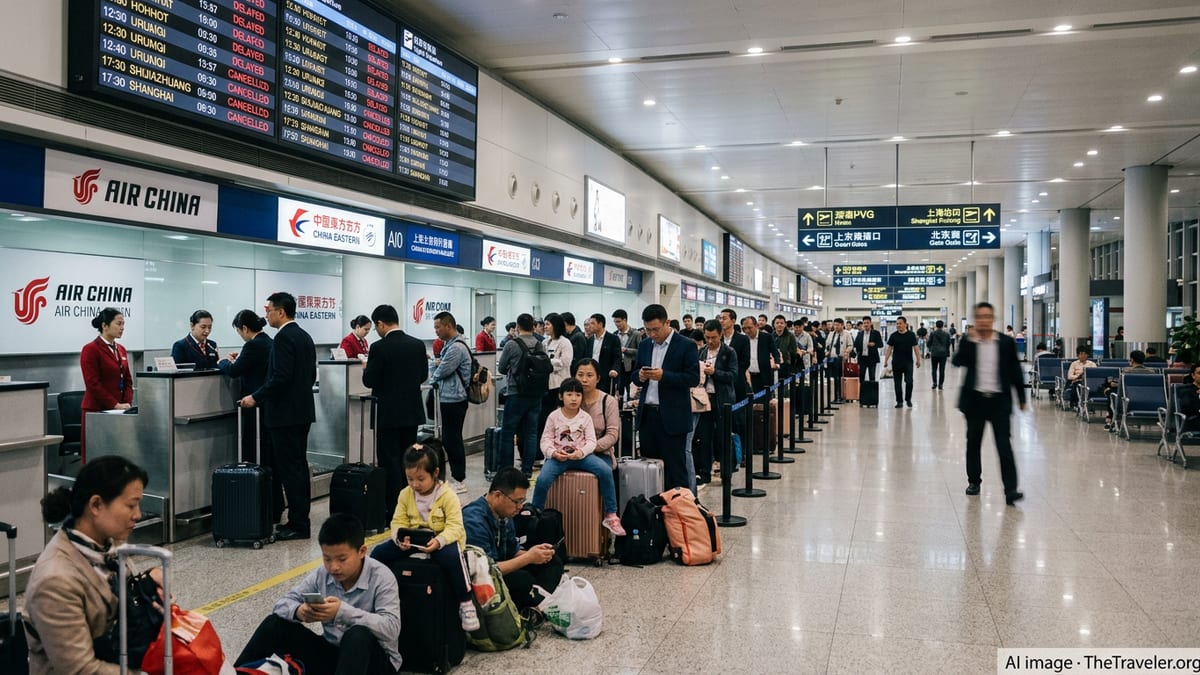
Severe Schedule Disruptions Across Multiple Provinces
Chinese domestic aviation saw a sharp spike in operational disruption as at least 60 flights were terminated and more than 320 were delayed across Inner Mongolia, Xinjiang, Hebei and Shanghai, according to aggregated data from flight tracking platforms and airport operations reports. The impact has been felt most strongly on heavily used north to east corridors that funnel passengers through Shanghai’s Pudong and Hongqiao hubs.
Air China, China Eastern and regional carrier China Express have each cut a portion of their services, citing a mix of operational constraints and airspace flow control. While the precise breakdown of cancellations versus delays varies by airport and carrier, the pattern is consistent: early morning and late evening departures have borne the brunt, leaving long gaps in service on routes where alternatives are limited.
Shanghai Pudong and Hongqiao International Airports have reported mounting knock on effects as disrupted inbound flights from Urumqi, Hohhot and Shijiazhuang fail to arrive on schedule, forcing ground handlers and slot coordinators to reshuffle departure banks. This has created a cascading series of rolling delays, extending problems well beyond the original set of cancelled flights.
At regional airports in Inner Mongolia and Xinjiang, where daily frequencies are far lower, the termination of even one or two round trips can effectively wipe out same day travel options to Shanghai or Hebei, magnifying the disruption for local business and family travellers.
Key Routes and Airports Most Affected
Among the routes most heavily impacted are links from Hohhot and Baotou in Inner Mongolia to Shanghai, as well as services connecting Urumqi and other Xinjiang cities to China’s eastern seaboard. Several daily rotations that typically tie these western and northern regions into Shanghai’s long haul network have either been cancelled outright or pushed back by several hours.
In Hebei, Shijiazhuang Zhengding International Airport has reported clusters of delays on services operated or marketed by Air China and China Eastern, particularly those feeding into Shanghai and other coastal hubs. Passengers have reported multiple schedule revisions in the hours leading up to departure, with flights repeatedly retimed before finally leaving the gate.
Shanghai Pudong International Airport, one of China’s busiest gateways, has recorded elevated levels of disruption on domestic departures, with China Eastern and its Shanghai based affiliates among the most affected. Aircraft and crew arriving late from northern and western provinces have struggled to make tight turnarounds, forcing airlines to consolidate lightly booked services or cancel rotations to reset schedules.
China Express, which operates a dense web of regional routes with smaller aircraft, has trimmed frequencies on some secondary connections in Inner Mongolia and Xinjiang. These cuts, while numerically smaller than those of the big state owned carriers, have had an outsized impact on smaller cities that rely heavily on a limited number of daily flights.
Stranded Passengers Face Long Queues and Patchy Information
For travellers caught in the middle of the upheaval, the most immediate experience has been crowded terminals, long queues at airline service counters and inconsistent communication about options. Passengers at Shanghai and Hohhot described scenes of rolling announcements that cited generic “operation adjustments” without clearly explaining whether flights would depart later or had been fully cancelled.
Many stranded travellers reported difficulty reaching airline call centres, with hold times stretching beyond an hour at peak periods. Others who had booked through online travel agencies said they were shuffled back and forth between platform customer service and airline hotlines, each side insisting the other was responsible for rebooking or refunds.
In several cases, passengers learned of cancellation or severe delay only after clearing security, discovering updated departure times or status changes on the terminal displays rather than through direct messaging. This has led to frustration among travellers who say that better use of text alerts and app notifications could have reduced congestion at check in and ticketing counters.
Despite the disruption, on the ground response has varied by airport. Some terminals have deployed additional volunteers and customer service staff to help passengers rebook and locate baggage from terminated flights, while others have struggled to provide timely meal vouchers or hotel arrangements for those forced to stay overnight.
Airline Responses and Passenger Rights
Air China and China Eastern have issued brief operational notices acknowledging cancellations and schedule changes, generally attributing them to a combination of resource constraints, aircraft rotation issues and broader traffic flow restrictions. Detailed explanations for specific route cuts, however, have been limited, and public statements have largely focused on broad assurances of passenger support.
Where flights have been terminated, airlines have typically offered passengers a choice between full refunds and rebooking on later services to the same destination, subject to availability. In some cases, particularly on trunk routes into Shanghai, carriers have attempted to consolidate passengers from multiple cancelled flights onto a smaller number of departures later in the day.
Compensation policies for delays and cancellations within mainland China can be more restrictive than in some other markets, and entitlements often depend on the cause of disruption and fare conditions. Travellers are advised to keep boarding passes, booking confirmations and any written communication from the airline in order to document their case if they seek additional assistance.
Industry analysts note that while consolidation and schedule trimming can help airlines stabilise operations in the short term, a lack of clear, proactive communication risks eroding passenger confidence on key domestic routes. Frequent flyers on the affected corridors say they are now building in longer buffers or considering alternative routings to hedge against further disruption.
Practical Travel Advice for Affected Passengers
For travellers with upcoming journeys that involve Inner Mongolia, Xinjiang, Hebei or Shanghai, the single most important step is to monitor flight status closely in the 24 hours before departure. Airline mobile apps and airport information boards are often updated before mass text messages are sent, so checking multiple times can provide an early warning of schedule changes.
Passengers whose flights are already delayed or cancelled should, where possible, use digital self service tools for rebooking while queuing at the airport. Many Chinese carriers allow same day changes within the app or website, which can secure scarce seats on later departures before they are snapped up at the counter.
Travellers connecting through Shanghai from regional airports in Inner Mongolia or Xinjiang should consider lengthening minimum connection times, especially if they are linking domestic flights to international departures. Booking a longer layover window or an overnight stop can reduce the risk of missed onward flights if upstream services from the north and west run late.
Finally, passengers are encouraged to keep receipts for any additional expenses incurred as a result of disruption, such as airport hotels, local transport or meals. While reimbursement is not guaranteed in every case, having clear records improves the chances of securing at least partial compensation or goodwill gestures once airlines complete their immediate operational recovery.