

More news on this day
Passengers across China faced fresh disruption today as a cluster of cancellations and delays by China Southern and China Eastern disrupted domestic and regional schedules, with 44 flights reportedly cancelled and 482 delayed across key hubs such as Beijing and Guangzhou.
Get the latest news straight to your inbox!
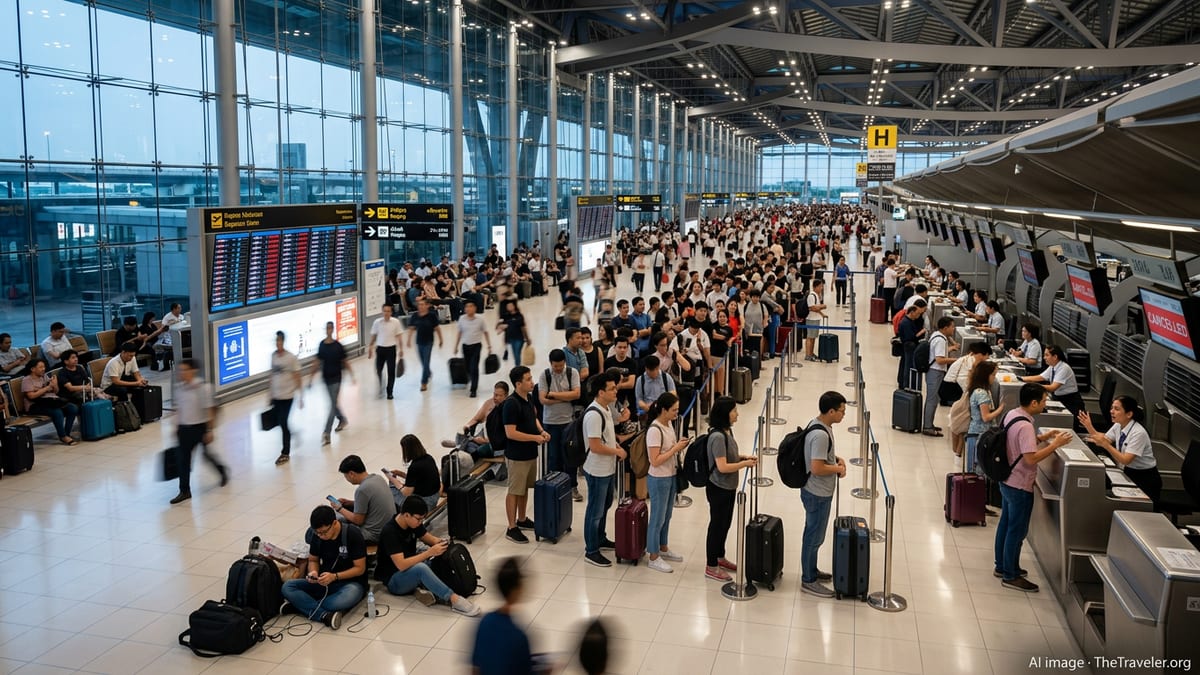
Fresh Turbulence in an Already Disrupted Week
The latest wave of disruption comes on the heels of several difficult days for China’s aviation network, as a combination of severe weather, tight air traffic control capacity, and heavily banked hub schedules has left little margin for recovery. Recent tallies from Chinese and regional aviation trackers have already highlighted hundreds of cancellations and thousands of delays at Beijing, Guangzhou, Shanghai, Shenzhen, Chengdu, and other major cities in early April.
Within that broader pattern, China Southern and China Eastern have emerged as two of the most exposed carriers. Publicly available data and industry coverage show these airlines repeatedly appearing at the top of daily delay and cancellation tables, particularly at Guangzhou Baiyun, Beijing Capital, Beijing Daxing, and Shanghai’s dual-airport system. The new count of 44 flights cancelled and 482 delayed involving TBA, CSN, and CES services adds another layer of strain for both carriers and their passengers.
While the headline numbers appear modest compared with earlier spikes this week, they represent concentrated pain in already busy time bands and at congested terminals. For travelers connecting through Beijing and Guangzhou in particular, even relatively small percentages of disrupted flights can unravel tight itineraries and lead to missed onward legs, overnight stays, and rebookings into already full services.
Impact on Beijing, Guangzhou, and Key Domestic Corridors
Beijing and Guangzhou continue to feature prominently in disruption statistics, reflecting their role as central nodes in China’s domestic aviation network. Beijing’s dual-airport system, serving both capital and connecting traffic, and Guangzhou Baiyun’s position as China Southern’s main hub mean operational issues at these gateways ripple quickly across the country.
Reports from recent days indicate that Guangzhou Baiyun has repeatedly logged dozens of cancellations and several hundred delays in single-day snapshots, while Beijing Capital and Beijing Daxing have each recorded triple-digit delay counts. When even a share of those disruptions involve China Southern and China Eastern flights, routes linking Beijing and Guangzhou to secondary cities such as Changsha, Nanjing, Xi’an, and regional hubs like Shenzhen are particularly vulnerable.
Travel-focused outlets and aviation analytics platforms describe a classic hub-and-spoke domino effect. A late departure from Guangzhou into a smaller city can cause crews and aircraft to miss their return slots back into Beijing or Shanghai. In turn, that can push knock-on delays into evening banks of flights that feed overnight and early-morning international services, creating inconvenience for both domestic and long-haul travelers transiting China.
China Southern, China Eastern, and the Strain on Schedules
China Southern, listed under the CSN code, and China Eastern, operating as CES, have both been under scrutiny as disruptions mount. Publicly available operational snapshots from early April show China Southern leading daily delay counts on some days, particularly at Guangzhou and Shenzhen, while China Eastern features heavily in Shanghai and Beijing statistics.
Industry observers point to several structural factors behind the strain. Both carriers manage dense wave patterns at their primary hubs, with many aircraft scheduled on short ground turnarounds between domestic legs. When storms, low visibility, or air traffic control restrictions slow arrivals into a hub, the tightly packed departure schedule can quickly fall behind, especially during afternoon and evening peaks.
Airline customer documents and conditions of carriage for China Southern and China Eastern set out rebooking and assistance policies when flights are delayed or cancelled, including specific thresholds such as four-hour delays for certain forms of support. However, reports from recent days suggest many passengers are choosing refunds or significant itinerary changes once disruptions exceed several hours, compounding the complexity of seat management on subsequent flights.
For now, there is no indication of a single systemic failure at either airline, but the recurring appearance of CSN and CES at the top of delay and cancellation charts underlines how exposed China’s largest carriers are to even short-lived weather or congestion issues when operating at or near capacity.
Weather, Congestion, and the Wider Asia-Pacific Picture
The situation in China is unfolding against a broader backdrop of operational challenges across the Asia-Pacific region. In recent days, regional aviation reports have documented hundreds of cancellations and several thousand delays across major hubs in China, Japan, South Korea, India, and Southeast Asia, often linked to storm systems and air traffic control bottlenecks.
Stormy conditions and low visibility episodes around Shenzhen and Guangzhou have been cited as key triggers for recent spikes in cancellations and delays in southern China. These disruptions have sometimes coincided with pressure on other regional hubs such as Jakarta and Tokyo, amplifying the impact on multi-leg journeys that rely on smooth connections between Chinese and international services.
Analysts note that as travel demand rebounds and carriers add capacity into the northern summer season, the resilience of scheduling across Asia’s main hubs will be tested more frequently. Even moderate weather systems can now translate quickly into large numbers of delayed flights when runway slots, gates, and ground resources are tightly allocated across the day.
For travelers, this means that disruptions like today’s 44 cancellations and 482 delays affecting flights such as those operated by TBA, China Southern, and China Eastern are likely to remain a recurring feature during peak periods, rather than isolated anomalies.
What Travelers Can Expect in the Coming Days
With several consecutive days of elevated disruption already logged at Chinese airports, the immediate focus for carriers is clearing backlogs and restoring punctuality to core trunk routes. Observers suggest that if weather conditions remain stable and air traffic control restrictions ease, operations at Beijing, Guangzhou, Shanghai, and Shenzhen could gradually normalize over the coming days, though schedules may continue to show pockets of irregularity.
Travel industry guidance emphasizes that passengers scheduled to fly with China Southern, China Eastern, or other major Chinese carriers in the near term should monitor flight status regularly and be prepared for gate changes or rolling departure-time adjustments. Same-day rebooking options within China can be relatively flexible when seats are available, but capacity on popular city pairs often tightens quickly once delays accumulate.
For international travelers connecting through Beijing or Guangzhou, longer layovers and the avoidance of last-flight-of-the-day connections remain practical safeguards during periods of network instability. Publicly available case studies from recent disruption events suggest that itineraries booked on a single ticket and within one airline group generally experience smoother handling when cancellations or long delays occur.
As the northern summer schedule ramps up, China’s major airlines and airports face the challenge of balancing aggressive capacity growth with the operational resilience needed to withstand adverse weather and traffic constraints. Today’s disruption, concentrated in 44 cancellations and 482 delays across carriers including TBA, CSN, and CES, underscores how quickly conditions at a handful of hubs such as Beijing and Guangzhou can cascade into a nationwide travel headache.