

More news on this day
Thousands of travelers across eastern China faced major disruption as a wave of cancellations and delays rippled through airports in Shandong, Guangdong, Beijing and Zhejiang, with reports indicating at least 60 flights scrapped and 472 delayed by Xiamen Air, China Eastern and Shenzhen Airlines.
Get the latest news straight to your inbox!
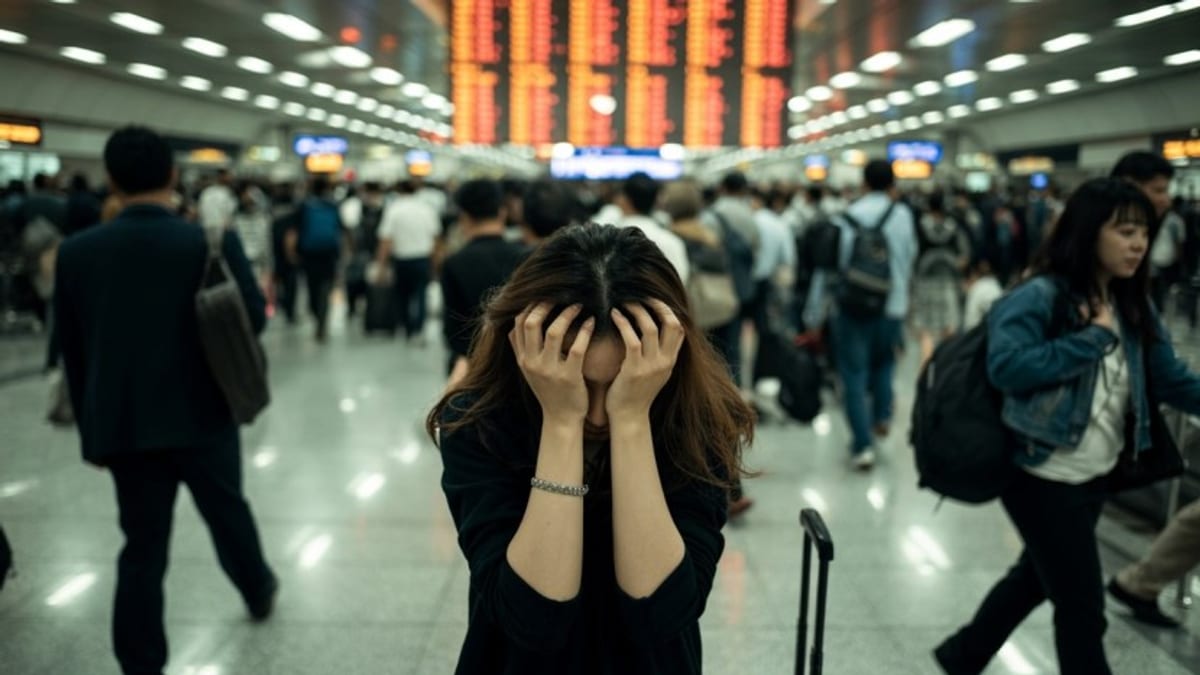
Widespread Disruptions Across China’s Eastern Travel Corridor
Recent operational data and industry coverage point to a significant concentration of delays and cancellations at some of China’s busiest hubs, including airports serving Beijing, Guangzhou and Shenzhen in Guangdong, as well as key coastal cities in Zhejiang and Shandong. These regions form the backbone of China’s domestic aviation network, meaning localized disruptions can quickly cascade into system-wide delays.
Aggregated flight-tracking figures for China in late March and early April show thousands of delays nationally on peak disruption days, with several hundred cancellations layered on top. Within that wider picture, at least 60 flights linked to the eastern corridor were reported canceled and more than 470 delayed over a short window, affecting routes into and out of Beijing Capital, Guangzhou Baiyun, Shenzhen Bao’an, Hangzhou Xiaoshan, Qingdao and Jinan.
The impact has been particularly visible in Shandong and Zhejiang, where secondary hubs connect provincial capitals to Beijing and major Pearl River Delta cities. When flights along these trunk routes are delayed or cut, aircraft and crews are left out of position, undermining subsequent departures across the country.
In Guangdong, where airspace is dense and weather systems from the South China Sea frequently roll inland, operational stress can quickly build. Reports of heavy delays at Guangzhou and Shenzhen have coincided with wider disruptions elsewhere in China and across Asia, magnifying the effect on tight domestic transfer schedules.
Xiamen Air, China Eastern and Shenzhen Airlines Under Pressure
Publicly available punctuality dashboards and recent travel-industry coverage show that Xiamen Air, China Eastern and Shenzhen Airlines have all been exposed to the current wave of disruption. These carriers are key players on routes linking coastal provinces with Beijing and other national hubs, so irregular operations at any one base can ripple through their schedules.
Data compiled from recent days indicate that China Eastern continues to handle one of the largest volumes of flights in China, and even modest percentages of late operations can translate into hundreds of delayed departures and arrivals. Shenzhen Airlines, which is strongly tied to Shenzhen Bao’an and also maintains a substantial presence in Beijing, has likewise seen a notable share of its schedule affected.
Xiamen Air, based in Fujian but operating dense links into Beijing, Guangdong and eastern seaboard cities, appears in delay tallies both as a primary carrier and as a codeshare operator. Flight-level records for certain Xiamen Air services on the Beijing route in late March show average delays approaching an hour, underscoring the strain on east coast corridors when conditions deteriorate.
Industry observers note that Shandong Airlines also features in current delay statistics, reflecting how disruptions at shared hubs can draw multiple carriers into the same operational bottlenecks. While the focus has been on three headline airlines, the broader pattern is a network-wide challenge rather than an isolated issue at a single company.
Weather, Congested Airspace and Operational Knock-on Effects
Aviation monitoring services and regional media reports point to a familiar mix of causes behind the latest wave of disruptions. Periodic thunderstorms, low visibility and unsettled weather patterns along the Guangdong and East China coasts have limited runway capacity and forced flow-control measures at some of the country’s largest airports.
China’s eastern corridor is also among the world’s most congested airspaces, and when weather reduces usable routes or altitudes, air traffic management measures can rapidly create queues on the ground. Once departures are held or sequences are reshuffled, missed slots echo across the network, especially on already busy Beijing and Pearl River Delta sectors.
Operational knock-on effects are visible in the form of rolling delays through the day. When an early-morning rotation from, for example, Shandong into Beijing runs late, the same aircraft may arrive behind schedule for its next leg to Guangdong or Zhejiang. Without spare capacity or slack built into the timetable, what begins as a short delay on one sector can stretch into hours of disruption for passengers booked on later flights.
Historical examples from Chinese airports have shown that prolonged weather-related closures and limited information can heighten tensions among stranded passengers. While recent reports from the current disruption cycle focus largely on statistics rather than specific terminal incidents, images circulating on social media again show long queues at check-in and customer service counters at major hubs.
What Passengers Need to Know Right Now
For travelers with upcoming trips involving Beijing, Shandong, Zhejiang or Guangdong, the current pattern suggests that even if a specific flight is not yet flagged as delayed, schedules remain vulnerable to rapid change. Same-day flight-tracking platforms and airline apps show real-time gate and timing updates and are an essential tool for anyone traveling during periods of elevated disruption.
Recent consumer advice published by travel-industry outlets stresses the importance of checking flight status repeatedly in the 24 hours before departure and again on the way to the airport. Passengers connecting between domestic and international flights through Beijing or southern China hubs are being encouraged to build in additional buffer time where possible, as missed connections have been a recurring feature of recent disruption days.
Publicly available policy summaries indicate that major Chinese airlines, including China Eastern, Xiamen Air and Shenzhen Airlines, generally offer rebooking options or refunds in cases of significant delays or cancellations, although specific terms vary by fare type and the reason for disruption. Travelers are advised to review fare rules and irregular-operations policies in advance rather than waiting until they are already in a crowded terminal.
Travel insurance with trip-interruption coverage may also provide an additional layer of protection, particularly for itineraries involving multiple carriers or separate tickets. Policy fine print typically distinguishes between weather-related and airline-related causes, so passengers affected by the current wave of delays should retain boarding passes, delay notifications and expense receipts to support any future claims.
How Long the Turbulence Could Last
Forecasts for air travel in China this spring point to sustained high demand, with domestic traffic near or above pre-pandemic levels on many routes. That means even temporary weather systems or localized operational issues can have outsized consequences if they coincide with peak travel periods such as weekends, holidays or major events.
Analysts tracking regional flight performance note that while the most acute disruptions tend to play out over one or two days, the effects on aircraft and crew positioning can persist longer, particularly for airlines with dense, hub-focused schedules like China Eastern and Shenzhen Airlines. Recovery often depends on the extent to which carriers can add capacity, swap aircraft or adjust rotations without creating new bottlenecks elsewhere.
Travel-data providers continue to flag China as one of the most heavily affected markets globally whenever large-scale disruptions emerge in Asia. With weather, airspace constraints and surging passenger volumes all in play, observers expect episodic waves of delays and cancellations to remain a feature of the travel landscape across Shandong, Guangdong, Beijing and Zhejiang in the near term.
For now, passengers planning to fly through these regions are being urged by consumer advocates and travel outlets to treat schedules as fluid rather than fixed, to monitor conditions closely, and to prepare contingency plans in case the next round of turbulence hits on their travel day.