

More news on this day
Thousands of air travelers across China faced lengthy disruptions as major hubs in Shanghai, Beijing, Chengdu, Guangzhou, Shenzhen, Xi’an and Wuhan reported 1,439 delayed flights and 164 cancellations, snarling operations for China Eastern, Air China, China Southern and several other carriers.
Get the latest news straight to your inbox!
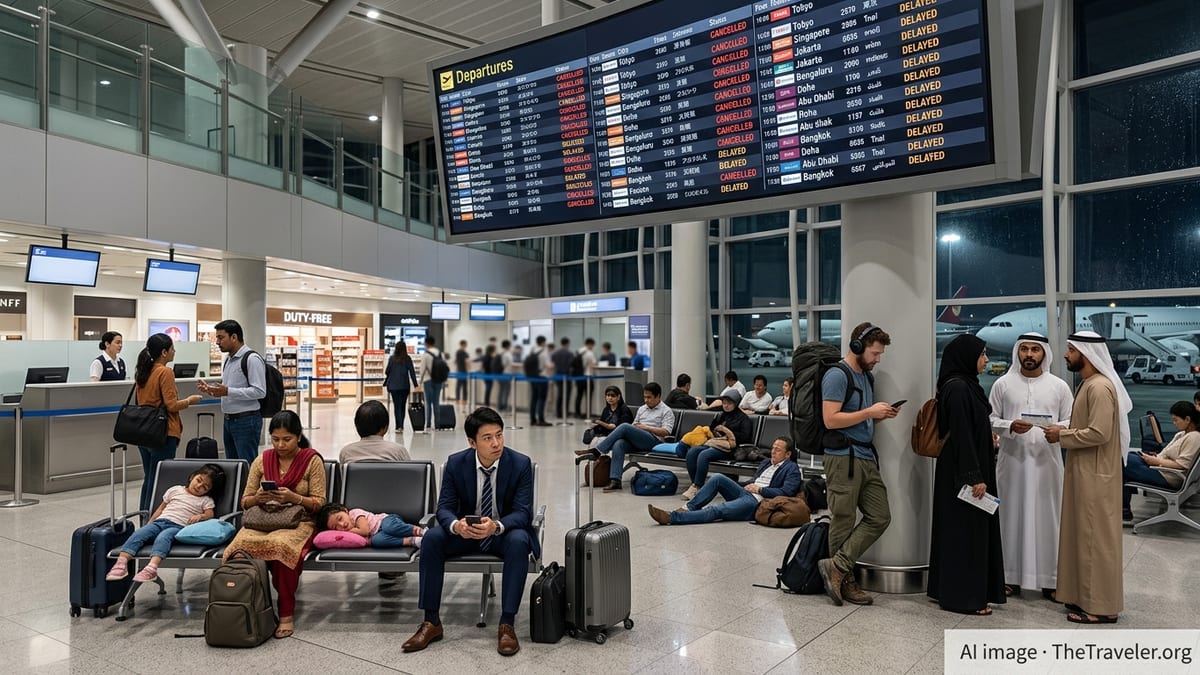
Major Chinese Hubs Struggle With Fresh Wave of Disruptions
Operational data compiled from flight-tracking platforms for the latest travel window in April 2026 indicate that China’s busiest aviation centers again experienced heavy schedule turbulence. Shanghai’s dual airports, Beijing’s main gateways, and regional megahubs in Guangzhou, Shenzhen, Chengdu, Xi’an and Wuhan all recorded elevated numbers of late and cancelled departures as weather, airspace constraints and congestion converged.
The 1,439 delayed and 164 cancelled flights represent a significant setback for a domestic market that has largely recovered in volume. While the majority of services eventually operated, extended holding patterns on the ground, rolling gate changes and missed connection banks left thousands of passengers facing missed meetings, disrupted holidays and unplanned overnight stays.
Publicly available tracking dashboards show that disruption was not confined to a single region. Eastern coastal hubs such as Shanghai Pudong and Shanghai Hongqiao, northern centers around Beijing Capital and Beijing Daxing, and western and central nodes in Chengdu, Xi’an and Wuhan all appeared prominently in delay and cancellation rankings during the current disruption period.
Recent coverage of similar events across Asia has already highlighted the vulnerability of the region’s tight flight banks, where small schedule shocks at one airport can rapidly cascade across the network. The latest figures within China reinforce that pattern, with clusters of late departures amplifying congestion throughout the day.
China Eastern, Air China and China Southern Among Most Affected
The disruption has been particularly visible for China’s three largest carriers, which operate dense schedules through the affected hubs. China Eastern, headquartered in Shanghai, relies heavily on Shanghai Pudong and Hongqiao for both domestic and international connections, meaning delays there quickly ripple through its system. Air China, with primary operations concentrated in Beijing, and China Southern, whose main base is Guangzhou, are similarly exposed when their core airports slow down.
Operational summaries published in recent days on aviation and travel industry platforms show these airlines appearing repeatedly near the top of daily delay and cancellation tallies in China. Earlier in April, monitoring of a separate disruption day recorded several hundred delays and dozens of cancellations for China Eastern and China Southern alone, underscoring how sensitive their networks are to constraints at major hubs.
Smaller and regional carriers have also been drawn into the turbulence. Airlines such as Shanghai Airlines, Shenzhen Airlines, XiamenAir, Juneyao Air, Hainan Airlines and others operate as feeders or partners at many of the same airports, so they face knock-on effects from saturated runways, aircraft rotation issues and limited parking stands. Even when a particular airline has relatively few outright cancellations, high rates of late arrivals can leave crews and aircraft out of position for subsequent legs.
Data from real-time flight trackers on April 11 showed individual services on routes such as Beijing to Shenzhen and Fuzhou to Nanning operating with sizeable delays or being cancelled outright, illustrating how even routine domestic sectors have been swept up in the broader pattern of disruption.
Weather, Airspace Controls and Network Congestion Intersect
While precise causes vary from airport to airport, publicly available information points to a combination of adverse or changeable weather conditions, temporary airspace restrictions and chronic congestion as key drivers behind the latest disruption wave. In online travel forums, passengers and aviation observers have recently discussed multi-week airspace control measures over parts of China, in effect from late March to early May, that can constrain the number of flights handled at certain times of day.
At the same time, rapid recovery in domestic demand and an ongoing ramp-up in regional international flying have left schedules tightly packed at peak periods. Industry analyses of China’s air travel rebound in early 2026 describe a market where slots at major airports are heavily utilized, leaving little room to absorb operational shocks. When thunderstorms, low visibility or strong winds briefly reduce runway capacity at key hubs, queues of departing and arriving aircraft can quickly build.
Recent data-driven coverage of delays across Asian hubs also notes a structural imbalance between delays and cancellations, with airlines generally preferring to operate flights late rather than scrub them entirely. That tendency is visible in China’s figures as well, with the tally of 1,439 delays dwarfing the 164 cancellations. For passengers, this often means hours spent in terminals with shifting estimated departure times rather than clear-cut rebookings.
Infrastructure constraints at some airports add another layer of complexity. Even where new terminals and runways have opened in recent years, bottlenecks in ground handling, security processing or taxiway layouts can slow down operations during surge periods, especially when weather or airspace factors are already in play.
Travelers Face Missed Connections and Overnight Disruptions
For travelers, the practical consequences of the current disruption wave are significant. Late-evening departures from major hubs have been particularly vulnerable, leaving passengers stranded when onward connections to smaller cities or international destinations are missed. Once the last bank of departures has left for the night, options for same-day rerouting narrow sharply.
Earlier in April, detailed reporting on schedule disruptions within China described passengers sleeping in terminal seating areas or lining up at airline counters for hotel and meal vouchers after waves of cancellations at airports such as Shanghai Hongqiao, Guangzhou Baiyun and Wuhan Tianhe. The latest elevated figures suggest that similar scenes are likely recurring as airlines and airports work through backlogs.
Extended delays also translate into secondary impacts, from missed business appointments and tour departures to additional ground transport and accommodation costs. Travelers on multi-stop itineraries that include China’s major hubs are especially exposed, as a late arrival into Shanghai or Beijing can jeopardize long-haul flights or regional connections onward to Southeast Asia, Japan or the Middle East.
Online accounts from affected passengers over recent days describe a mix of rapid rebookings in some cases and more challenging experiences in others, particularly when flights are heavily booked and alternative services are limited. Language barriers and varying service standards across airlines can further complicate the experience for international travelers unfamiliar with local procedures.
What Passengers Can Do As Disruptions Persist
With airspace measures and intermittent spring weather likely to persist over the coming weeks, travelers planning to pass through Chinese hubs such as Shanghai, Beijing, Guangzhou, Shenzhen, Chengdu, Xi’an and Wuhan face an elevated risk of delay. Aviation analysts and consumer guides recommend building additional buffer time into itineraries, especially where critical same-day connections are involved.
Publicly available guidance from travel industry outlets suggests checking flight status frequently via airline apps and independent trackers, as schedules can change multiple times before departure. Where possible, selecting earlier flights in the day may reduce the risk of being affected by accumulating delays, since congestion tends to peak in late afternoon and evening banks.
Passengers are also encouraged to review the change, refund and accommodation policies of their chosen airlines before travel. In recent weeks, detailed breakdowns from consumer advocates have emphasized that eligibility for hotel stays, meal vouchers or alternative transport varies by carrier, fare type and route. Knowing the relevant conditions in advance can help travelers act quickly if disruption strikes.
As China’s aviation system continues to balance strong demand with operational and regulatory constraints, episodes of widespread delay and cancellation are likely to remain a periodic feature of the travel landscape. For now, the latest figures from Shanghai, Beijing, Chengdu, Guangzhou, Shenzhen, Xi’an and Wuhan serve as a reminder that even mature, high-capacity networks can experience sudden strain, with consequences felt by travelers across the country and beyond.