

More news on this day
China’s aviation network has been hit by a fresh wave of disruption in early April 2026, with a mounting tally of cancellations and delays stranding thousands of travelers at major hubs from Beijing to Shenzhen.
Get the latest news straight to your inbox!
Early April Storm Systems Trigger New Wave of Disruptions
Publicly available aviation data and recent industry coverage indicate that a series of fast moving storm fronts over eastern and southern China have sharply reduced capacity on some of the country’s busiest air corridors in the first week of April. Rain bands, low cloud and shifting winds have combined with seasonal congestion to create repeated bottlenecks at high volume hubs.
Reports from Chinese and regional travel outlets describe particularly challenging conditions at airports in Guangzhou and Shenzhen, where thunderstorms, fog and restricted visibility have periodically curtailed runway operations and slowed turnaround times. Earlier weather related disruption in late March had already stretched schedules, and the latest systems arriving in early April have added further pressure to an already tight operating environment.
By the first week of April, aggregated tracking figures cited by multiple travel news services show that hundreds of flights across China had been cancelled or delayed beyond standard turnaround windows over short periods, with the impact concentrated on domestic and short haul regional services. Each new storm band has triggered localised ground stops and flow restrictions that ripple outward across the network.
These weather effects have coincided with strong spring travel demand, increasing the number of passengers affected when schedules unravel. The combination of high load factors and reduced flexibility makes it harder for airlines to absorb disruption by simply rebooking travellers on the next departure.
Major Hubs Buckle Under Mounting Cancellations
Large coastal and inland hubs including Beijing Capital, Beijing Daxing, Shanghai, Guangzhou, Shenzhen, Chengdu, Hangzhou and Kunming have borne the brunt of the current wave of disruption. Published coverage drawing on airport departure boards and third party tracking platforms points to several days in early April where these airports collectively recorded well over a thousand delays and more than one hundred cancellations in compressed time frames.
One recent analysis focused on China’s busiest nodes reported more than 1,500 delayed flights and over 100 cancellations across a cluster of major hubs over a short window, affecting operations at leading carriers such as China Southern, Air China, China Eastern and XiamenAir. These airlines dominate domestic flows through Beijing, Guangzhou and Shanghai, so even modest schedule adjustments can quickly cascade through connecting banks and regional spokes.
The pattern described in these reports is one of delay heavy disruption rather than mass cancellation across entire schedules, but the effect for individual passengers has been severe. Missed connections, rolled over departures and late night or overnight waits have become common at affected airports, with crowded terminals and long rebooking queues reported in cities such as Beijing, Shenzhen and Chengdu.
With China’s domestic network highly banked around peak morning and evening waves, a few hours of reduced runway acceptance at one hub can leave aircraft and crews out of position for subsequent rotations, leading to further cancellations later in the day. Recent data driven coverage suggests that this knock on effect has been a key driver of the mounting disruption figures in early April.
Nationwide Ripple Effects and Regional Spillover
China’s role as a central node in the wider Asia Pacific aviation system means that domestic disruption has not been contained within its borders. Regional travel outlets report that on April 5 alone, more than 3,600 flights across Asia Pacific were delayed and around 350 were cancelled, with southern Chinese hubs such as Shenzhen and Guangzhou highlighted among the hardest hit.
Travel industry summaries indicate that storms affecting airspace over China, Japan, South Korea, India and parts of Southeast Asia interacted with existing congestion to create rolling bottlenecks across the region. For China, this has meant additional pressure on airports that already entered April with weather related backlogs and constrained runway capacity.
These regional ripple effects are visible in the data through elevated delay counts on international services touching Chinese hubs, particularly on routes linking Beijing and Shanghai with Northeast and Southeast Asia. When Chinese departures push back late due to local weather or air traffic flow control, aircraft arrive behind schedule at onward hubs, compressing their own ground times and elevating the risk of further delay or cancellation.
For travelers, the result has been a patchwork of missed onward flights, rebooked itineraries and overnight layovers across multiple countries, even when the original disruption began with a localised Chinese weather event. This interconnected pattern is likely to persist as long as unsettled spring weather and high demand continue to coincide.
Passengers Face Long Queues, Limited Options and Patchy Information
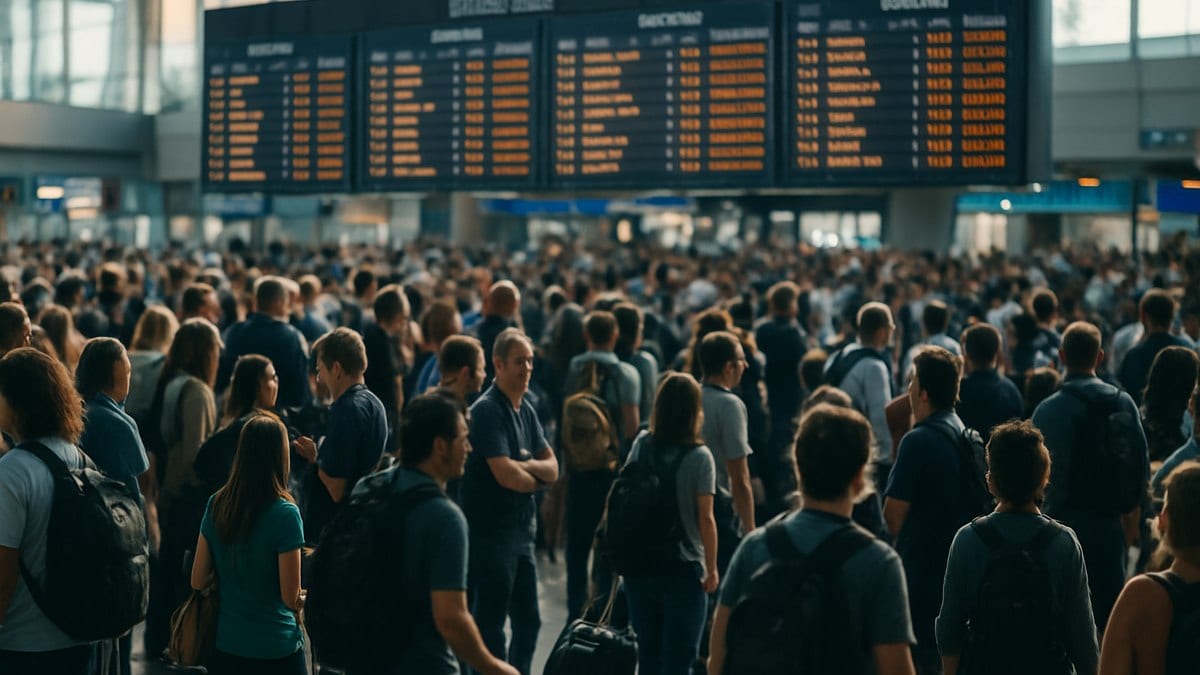
Published accounts and images from local media show crowded departure halls and long check in and customer service queues at several major Chinese airports during the latest disruption. With hotel inventory near congested hubs often tight during peak travel weeks, many stranded passengers have faced extended waits in terminal seating areas while they search for alternative flights or accommodation.
Travel analyses note that most major Chinese carriers typically offer free rebooking to the next available flight when disruption is classified as weather related, although eligibility can depend on fare class and route. In practice, however, high load factors on remaining services and the scale of recent delays mean that finding open seats on the same day has been difficult on some domestic city pairs.
Information flow has been another point of stress. Aviation focused outlets point out that real time updates supplied through airline mobile apps and airport displays are often more reliable than generic emails or messages from third party booking platforms, yet not all travellers habitually check these tools before leaving for the airport. During the latest wave of disruption, some passengers have arrived at terminals only to discover that their flights were rescheduled hours earlier.
Consumer advice pieces responding to the current situation urge passengers to document all notifications and keep copies of boarding passes and receipts for meals or hotels, in case airlines or travel insurers request proof of disruption. Travelers are also widely encouraged to use self service rebooking functions where available, in order to avoid lengthy queues at airport counters during peak disruption periods.
Uncertain Outlook as Spring Weather Patterns Evolve
Forecasts cited in regional weather and aviation coverage suggest that unstable conditions over parts of northern and southern China could persist at intervals through April, even if intensity varies from day to day. While airlines and airports have been working to restore schedules after each wave of disruption, the combination of strong demand and recurring storms leaves little slack in the system.
Operational updates and data driven reports show that carriers continue to retime or cancel selected flights at short notice as they adjust to evolving weather windows and airspace restrictions. On some thinner domestic routes, this has translated into outright cancellations rather than long delays, as airlines consolidate traffic onto fewer departures in order to stabilise crew and aircraft rotations.
Industry observers note that the current bout of flight chaos in China is unfolding against a backdrop of broader capacity management challenges across Asia Pacific, with several countries also experiencing weather related disruptions, air traffic control constraints or infrastructure works. For travellers planning to transit Chinese hubs in the coming days, this context increases the importance of flexible itineraries, longer connection buffers and close monitoring of flight status.
As April progresses, the scale of any further disruption will largely depend on whether weather patterns moderate and whether operational adjustments succeed in rebuilding punctuality. For now, the picture that emerges from publicly available flight data and on the ground reporting is one of a system under sustained strain, with thousands of passengers still facing uncertainty as China’s airlines and airports work to clear mounting backlogs.