

More news on this day
Thousands of travellers across China faced extensive disruption today as airports in Shanghai, Beijing, Guangzhou, Shenzhen, Chengdu, Xi’an, Nanjing, Changsha, Wuxi and other cities recorded 316 cancellations and 2,211 delays, snarling operations for leading carriers including Air China, China Eastern, China Southern and Shenzhen Airlines.
Get the latest news straight to your inbox!
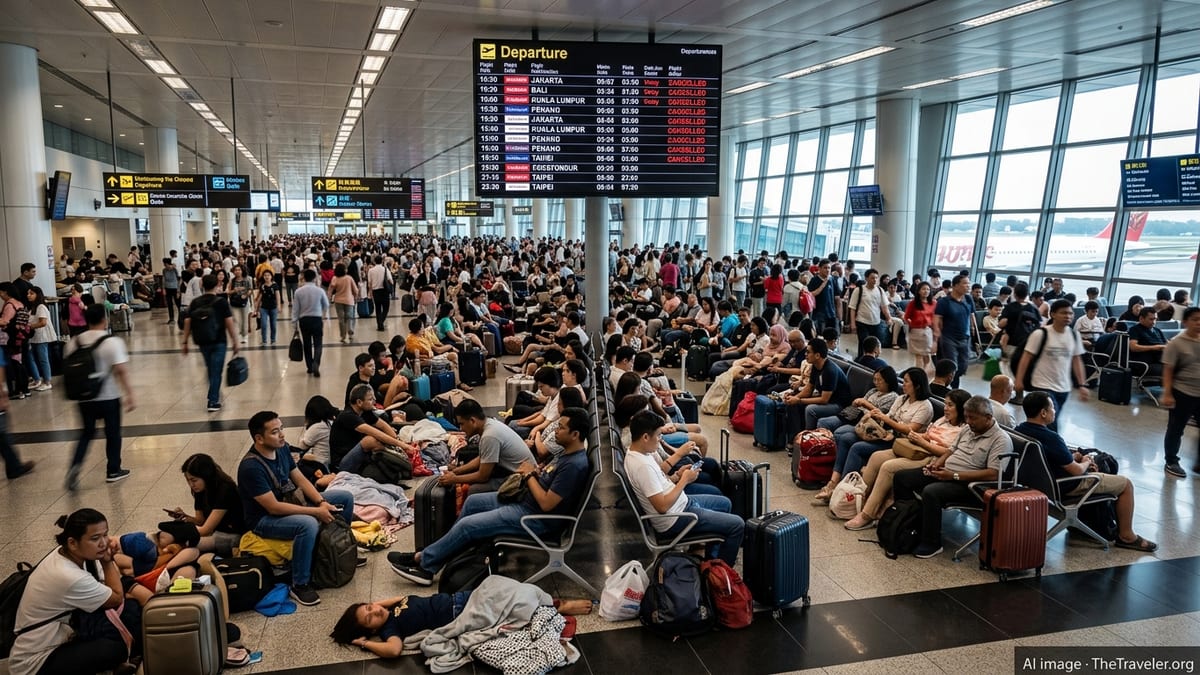
Major Hubs Buckle Under Wave of Disruptions
Publicly available flight-tracking data and industry summaries indicate that China’s largest aviation hubs have borne the brunt of the disruption, with cancellations and delays rippling through the domestic network. Shanghai’s twin airports, Pudong and Hongqiao, have seen a high volume of delayed departures on trunk routes to Beijing, Guangzhou and Shenzhen, creating knock-on congestion across the schedule.
In Beijing, both Capital International and Daxing are reporting elevated levels of late-running flights, affecting services operated by Air China and China Eastern in particular. Guangzhou Baiyun and Shenzhen Bao’an have also experienced clusters of cancellations, further amplifying disruption in the southern Pearl River Delta region, where passenger demand is especially strong during early April.
Chengdu’s Shuangliu and Tianfu airports, important hubs for traffic to western China, have reported significant delays on domestic services connecting to Xi’an, Nanjing and Changsha. Operational bottlenecks in these secondary hubs have added to the overall tally of 316 cancelled flights and more than 2,200 delays nationwide, leaving travellers facing extended waits and missed connections.
Data compiled by travel-industry outlets suggest that the disruption cuts across full-service and low-cost carriers alike. While China Eastern, Air China, China Southern and Shenzhen Airlines feature prominently in the affected schedules, a range of regional airlines have also seen their operations curtailed or heavily delayed.
Qingming Holiday Traffic Magnifies Passenger Impact
The timing of the disruption is particularly challenging for travellers, coinciding with the Qingming Festival holiday period from April 4 to 6. Public information from Chinese authorities and tourism bodies indicates that both domestic and cross-border travel volumes are surging this weekend, with millions of trips scheduled by air, rail and road.
At major international gateways such as Shanghai Pudong, Guangzhou Baiyun, Beijing Capital, Shenzhen Bao’an and Chengdu Shuangliu, the holiday surge has left little slack in the system. Many flights that did operate today departed with heavy loads, limiting rebooking options for those whose services were cancelled or significantly delayed.
For travellers, the result has been long queues at check-in counters and customer service desks, crowded departure halls and, in some cases, overnight airport stays while waiting for alternative flights. Families travelling for traditional ancestor visits, as well as leisure and business travellers, have all been caught up in the disruption, often with onward rail or international connections at risk.
Travel analysts note that holiday periods typically reduce airlines’ ability to absorb irregular operations, because high load factors and tight turnarounds mean fewer spare seats and limited aircraft flexibility. Today’s pattern of widespread delays across multiple hubs fits that broader trend, turning routine schedule pressures into a nationwide wave of disruption.
Network Knock-on Effects Across China’s Air Corridors
Operational experts point out that China’s domestic aviation network is highly interconnected, with key city pairs such as Shanghai to Beijing, Shanghai to Guangzhou, and Shenzhen to Chengdu serving as arterial corridors. When flights on these routes encounter extended delays, the same aircraft and crew are often scheduled to operate subsequent legs to cities such as Xi’an, Nanjing, Changsha or Wuxi, multiplying the impact.
Today’s data suggest precisely this kind of rolling disruption, with some aircraft arriving hours behind schedule and then either turning late or being withdrawn from service. This dynamic helps explain how a relatively modest number of outright cancellations, at 316 nationwide, can coexist with more than 2,200 delayed flights and widespread reports of passengers stranded well beyond the initial problem airports.
Secondary hubs such as Xi’an Xianyang, Nanjing Lukou, Changsha Huanghua and Wuxi’s regional airport have thus experienced heavy congestion, despite not registering the very highest delay counts individually. Arrivals from Shanghai, Beijing, Guangzhou and Shenzhen that reached these airports late in the day left limited room to recover schedules before night curfews and crew duty limits came into play.
Industry observers also highlight that China’s aviation sector is operating at traffic levels close to, and in some cases exceeding, pre-pandemic volumes. In such an environment, even minor operational hurdles can quickly cascade, particularly when they coincide with a holiday spike in demand and a dense pattern of domestic services.
Airlines Struggle to Reprotect and Communicate With Passengers
As cancellations and long delays accumulated, airlines faced mounting pressure to rebook passengers, arrange accommodation where necessary and keep travellers informed. Publicly available reports from airport terminals across the affected cities describe long waits at airline counters as passengers sought new itineraries or refunds.
Major carriers including Air China, China Eastern, China Southern and Shenzhen Airlines have updated flight status information through their digital channels and airport information boards, but the sheer volume of disrupted services has meant that many travellers received confirmation of changes only close to, or after, scheduled departure times. This has complicated efforts to make alternative arrangements, especially for those with non-refundable hotel bookings or separate onward tickets.
Consumer advocates routinely advise passengers in such situations to document their original bookings, boarding passes and any delay notifications, as this can support later claims for refunds, vouchers or other remedies. While compensation policies differ between domestic and international services, as well as between carriers, clear records of the timeline of delays generally improve passengers’ options once immediate travel needs are addressed.
Some industry commentary suggests that, as China’s air traffic rebounds, investment in real-time communication tools and more flexible rebooking systems will be critical to limiting the impact of similar disruption episodes in the future. Today’s events highlight the strain that large-scale irregular operations can place on both digital systems and front-line staff during peak travel periods.
What Travellers Can Do If Their Flight Is Affected
Travel specialists recommend that passengers scheduled to fly into or out of Chinese hubs over the coming 24 to 48 hours closely monitor their flight status via airline apps and airport information channels. Given the volume of delayed services today, knock-on schedule changes are likely to continue even after the initial wave of disruption begins to ease.
Passengers already at the airport are generally advised to stay within easy reach of their departure gate once a delay is announced, as boarding times can change quickly if aircraft or crew become available. At the same time, keeping receipts for meals, ground transport and any emergency accommodation can be important if airlines or travel insurers later consider reimbursements.
Those yet to begin their journey may have slightly more flexibility. Travel-industry guidance suggests proactively contacting airlines or travel agents if a planned itinerary involves tight connections through Beijing, Shanghai, Guangzhou or Shenzhen, as modest adjustments to departure times or routing can sometimes reduce the risk of missed onward flights.
With China’s aviation network operating near peak capacity for the Qingming holiday, most analysts expect a period of continued strain as airlines work through today’s backlog. For the thousands of travellers whose plans were upended by the 316 cancellations and 2,211 delays, the focus now is simply on getting back in the air and reaching their destinations, even if that means re-routing through unfamiliar airports or arriving many hours behind schedule.