

More news on this day
Thousands of air travelers across China faced long queues, missed connections, and overnight waits as a fresh wave of disruption hit the country’s aviation network, with 1,595 flight delays and 124 cancellations reported across major hubs including Beijing, Chengdu, Guangzhou, Shenzhen, Hangzhou, Kunming, and other cities.
Get the latest news straight to your inbox!
Widespread Disruptions From Beijing To Kunming
Operational data compiled from China’s major airports indicates that delays and cancellations were spread across the country’s busiest corridors, affecting both domestic and limited international traffic. Beijing’s twin hubs, Capital and Daxing, saw mounting bottlenecks as congestion built through the day and knock-on delays rippled into the evening schedule.
Further south, Guangzhou Baiyun and Shenzhen Bao’an International Airport reported some of the highest volumes of disrupted services. These airports handle large flows of connecting passengers from across China and the wider Asia Pacific region, meaning each grounded aircraft translated into cascading missed connections and extended rebooking lines.
In eastern China, Hangzhou and nearby Shanghai-area routes fed additional strain into the system, while Kunming in the southwest experienced its own wave of holdups on trunk routes linking to Beijing, Shenzhen, and Guangzhou. Reports indicate that crowded departure halls, packed boarding gates, and makeshift waiting areas became common scenes across multiple terminals.
Published coverage from industry trackers shows that the combined tally of 1,595 delays and 124 cancellations left aircraft, crew, and passengers out of position across the network. Even flights that departed roughly on time typically faced air traffic flow controls along busy corridors, further lengthening journey times.
China Southern, Air China, China Eastern Among Hardest Hit
The latest disruption has been particularly visible among China’s major full-service carriers, including China Southern Airlines, Air China, and China Eastern Airlines. Operating dense schedules across the affected hubs, these airlines bore the brunt of the knock-on effects as aircraft rotations fell out of sync and available spare capacity diminished during peak periods.
China Southern, with strong hubs in Guangzhou and Shenzhen, saw numerous departures pushed back or held at gates, especially on high-demand routes to Beijing, Chengdu, and Kunming. Passengers on multi-leg itineraries reported long waits for rebooking onto later flights as already-full services left limited room for accommodation.
Air China and China Eastern, which anchor many of the Beijing and eastern China routes, also experienced substantial operational challenges. When departures from Beijing, Shanghai-adjacent corridors, and secondary cities such as Hangzhou were delayed, the resulting disruption extended to a broad range of domestic destinations, complicating crew scheduling and aircraft availability across the day.
Other carriers, including XiamenAir, Shenzhen Airlines, and several regional operators, were caught in the same system-wide squeeze. With so many services delayed at once, reports indicate that spare aircraft were quickly absorbed, leaving airlines reliant on rolling adjustments to get flights airborne as soon as slots, weather, and air traffic conditions allowed.
Stranded Passengers Face Long Queues And Limited Options
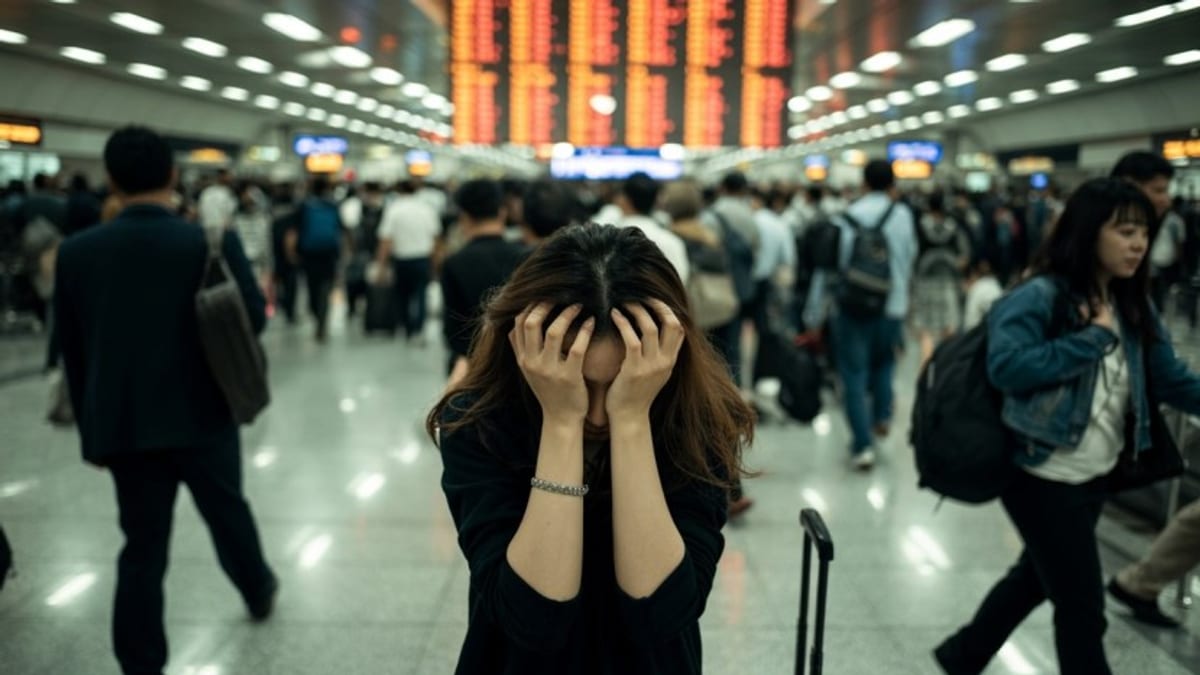
For travelers, the numbers translated into hours of waiting in crowded terminals. At major hubs, check-in and customer service counters experienced sustained surges as passengers sought information on new departure times, compensation procedures, and hotel arrangements where overnight stays became unavoidable.
Publicly available information from previous mass-disruption events in China suggests that passengers on airline-initiated cancellations are typically offered rebooking or refunds. In practice, however, high load factors across Chinese domestic routes meant that same-day re-accommodation was often difficult, especially for groups or travelers needing to connect onward to international flights.
Social media posts and local media coverage highlighted scenes of travelers sleeping on benches, lining up at food outlets that remained open late, and using mobile devices to monitor live flight tracking tools and airline apps. Families with children, elderly passengers, and those traveling for time-sensitive commitments such as business meetings or medical appointments appeared particularly affected by the mounting delays.
With many airports operating close to capacity on normal days, the sudden spike in off-schedule aircraft also strained ground services. Baggage handling, aircraft turnaround times, and gate availability all came under pressure, prolonging the time needed to reset the operation even after immediate weather or air traffic constraints began to ease.
Weather, Congestion, And Structural Vulnerabilities
The disruption follows a broader pattern of strain across parts of the Asia Pacific aviation system in recent days. Recent coverage of thunderstorms and localized air traffic control issues around Shanghai, as well as seasonal weather across central and southern China, has underscored how quickly conditions can deteriorate at major hubs and spread to secondary cities.
Analysts note that China’s rapid recovery in domestic air travel, combined with dense peak-hour scheduling, leaves relatively little slack in the system when multiple airports are affected at once. When severe weather, visibility reductions, or route restrictions arise, controllers often introduce flow constraints that slow departures and landings, resulting in queues both in the air and on the ground.
Historical punctuality studies of Chinese hubs point to recurring vulnerabilities around storm seasons, with airports such as Shenzhen, Guangzhou, and Kunming particularly exposed to convective weather and low-visibility events. Under such conditions, safety-driven spacing between aircraft must be increased, effectively reducing runway capacity at the very time demand remains high.
Infrastructure upgrades, such as enhanced satellite-based navigation and more dynamic air traffic management tools, are gradually being introduced across key hubs. However, the latest wave of cancellations and delays suggests that the pace of technology deployment and procedural reform continues to lag behind the current intensity of demand and the complexity of China’s domestic route network.
Ongoing Ripple Effects For Tourism And Business Travel
The impact of 1,595 delayed and 124 canceled flights extends beyond airports and airlines, with tourism operators and business travelers also absorbing the shock. Cities such as Beijing, Chengdu, Hangzhou, and Kunming are important gateways for both domestic tourism and inbound visitors connecting through major hubs, meaning late arrivals and missed flights can quickly disrupt tour schedules and hotel bookings.
Travel industry observers note that even short-lived disruption episodes can have multi-day consequences, as tour groups reshuffle itineraries and independent travelers adjust plans at the last minute. Missed evening arrivals may force the cancellation of first-night activities, while delays out of leisure destinations can cause travelers to forfeit nonrefundable hotel nights or pre-booked excursions at their next stop.
Business travelers using trunk routes between Beijing, Guangzhou, Shenzhen, and other commercial centers also faced heightened uncertainty. Late arrivals compress already tight meeting schedules and can result in lost opportunities when same-day round trips become impossible due to rolling delays or curtailed evening departures.
As airlines work through the backlog, industry tracking suggests that travelers across China may continue to encounter off-schedule departures and limited seat availability for at least another operational cycle. For passengers planning imminent trips, monitoring live flight-status tools, allowing longer connection windows, and maintaining flexible ground arrangements remain prudent steps as the country’s aviation system works to regain equilibrium.