

More news on this day
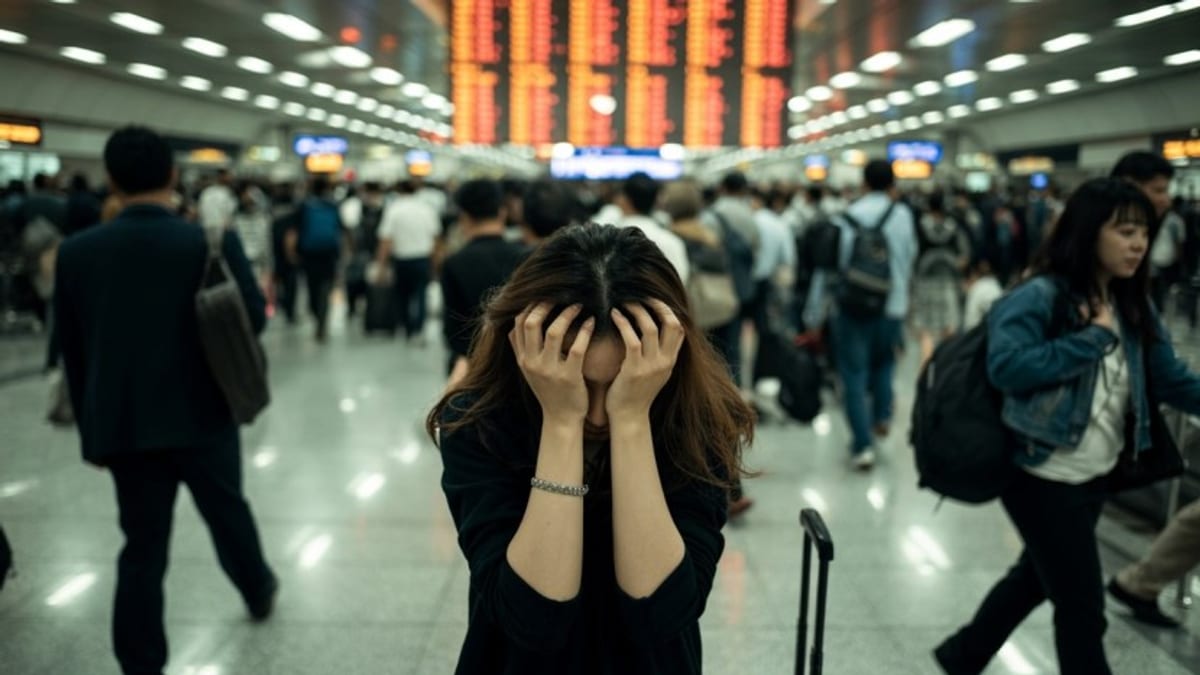
Thousands of air travelers across China have been stranded in early April 2026 as a cascade of flight cancellations and delays at major hubs from Beijing to Shenzhen ripples through the country’s already stretched aviation network.
Get the latest news straight to your inbox!
Disruptions Mount Across Major Chinese Hubs
Publicly available aviation data for the first week of April 2026 indicate a sharp escalation in disruption across China’s biggest airports, with clusters of cancellations and heavy delay volumes reported at Beijing Capital, Beijing Daxing, Shanghai Pudong, Guangzhou Baiyun, Shenzhen Bao’an, Chengdu Tianfu and several secondary hubs.
Coverage from industry trackers shows that on April 7 alone, hundreds of flights within China’s domestic system were either canceled or severely delayed, leaving thousands of passengers stuck in terminals as aircraft and crews fell out of position. Shanghai, Beijing and Shenzhen recorded some of the country’s highest disruption totals, turning what is typically a busy spring travel period into a test of schedule resilience.
Earlier in the month, reports on April 2 highlighted at least 42 cancellations and 150 delays concentrated at airports including Shanghai, Beijing, Nanjing, Chengdu and Changsha, signaling the start of a trend that has since intensified. Travel-focused outlets describe scenes of crowded departure halls and long lines at rebooking counters as rolling schedule changes forced passengers to scrap or drastically alter travel plans.
The broader regional picture underlines the scale of the challenge. Data compiled by travel news services for April 7 and 8 show that China is contributing a significant share of cancellations and delays to an already strained Asian network, with Shanghai, Shenzhen, Xiamen, Nanjing, Wuhan, Qingdao, Kunming, Guiyang, Ningbo and Chengdu all logging notable disruption.
Weather, Congestion and Operational Strain Converge
Reports from aviation analytics platforms and travel media attribute much of the current turmoil to a convergence of severe weather systems, entrenched congestion patterns and operational strain within airline networks. Fast-moving storm fronts over eastern and southern China in early April reduced usable capacity on key corridors, forcing air traffic managers to introduce flow-control measures that immediately translated into delays and knock-on cancellations.
In northern China, fluctuating visibility and intermittent storms have periodically slowed operations at Beijing’s two major airports. When combined with already busy departure banks, even modest reductions in arrival and departure rates have produced rolling queues of aircraft and reduced slack in daily rotations, making it harder for airlines to recover after each successive disruption.
Operational pressures are adding another layer of complexity. Publicly available coverage notes that carriers have been working with tight aircraft utilization and limited spare capacity, a common feature of China’s fast-recovering domestic market. Under these conditions, a single weather-induced ground stop in one region can lead to aircraft and crews being unavailable for subsequent flights elsewhere, amplifying the number of passengers affected over the course of a day.
Industry observers also point to the wider Asian context, where multiple countries are facing similar weather-related and logistical challenges. With regional routes feeding into and out of Chinese hubs, delays in neighboring markets can quickly spill into China’s airspace, further complicating recovery efforts and contributing to the sense of system-wide instability that passengers are now experiencing.
Passenger Impact at Beijing, Shanghai, Shenzhen and Beyond
For travelers caught in the middle of the April 2026 turbulence, the statistics translate into long waits, missed connections and unexpected overnight stays. Terminals at Beijing Capital and Beijing Daxing have reported heavy crowds as travelers attempt to rebook, while Shanghai Pudong’s dual role as both an international gateway and a major domestic hub has left many passengers juggling disrupted long-haul and onward domestic flights.
In southern China, Shenzhen Bao’an and Guangzhou Baiyun have been particularly exposed. Coverage from flight-tracking summaries and regional travel reports indicates that these airports have seen a mix of cancellations and triple-digit delay counts in recent days, as storms along the coast disrupted arrival flows and complicated departures for both China Southern and other carriers that rely on these hubs.
Further inland, Chengdu Tianfu and airports in Nanjing, Wuhan, Guiyang and Kunming have registered smaller but still significant disruption clusters. In practice, this means that passengers connecting between provincial cities and coastal hubs are facing heightened uncertainty, with relatively minor delays on feeder flights sometimes snowballing into missed onward services late in the day.
The strain is not limited to mainland China. Separate reports from nearby Kinmen highlight how low visibility and fog over consecutive days in early April stranded more than a thousand travelers on short regional sectors, underscoring how vulnerable shorter routes are when weather and air traffic restrictions align.
Guidance for Travelers Caught in the Chaos
Publicly available travel advisories suggest that passengers flying into, out of or within China during April should treat flight times as provisional and allow for additional buffer in their plans. Aviation analysts emphasize that while many services continue to operate, the risk of rolling delays and late-notice cancellations remains elevated, particularly at Beijing, Shanghai, Guangzhou, Shenzhen and Chengdu.
Travel outlets recommend that passengers monitor airline apps and airport information screens closely, as mobile notifications often reflect gate changes and revised departure times before they are widely announced in terminals. Travelers holding separate tickets for onward connections are urged to factor in several extra hours between flights where possible to reduce the risk of misconnecting if an upstream sector is delayed.
Consumer guidance circulating in Chinese and international media also highlights the importance of documentation. Stranded travelers are being advised to keep boarding passes, booking confirmations and any written disruption notices from carriers, which can support later claims for refunds, rebooking or travel insurance, even when delays are officially classified as weather-related and therefore outside the airline’s direct control.
For those yet to depart, travel experts suggest considering flexible fare options or routes that offer multiple daily frequencies, which can provide more rebooking opportunities if one flight is canceled. With adverse weather and congestion continuing to stress China’s aviation system in early April 2026, flexibility and real-time information are emerging as the most valuable tools for anyone planning to navigate the country’s skies in the coming days.