

More news on this day
China’s air travel network has entered early April 2026 under intense strain, with a surge of delays and cancellations at major airports leaving thousands of passengers stranded and highlighting how fragile domestic schedules remain during the busy spring travel period.
Get the latest news straight to your inbox!
Wave of Disruptions Hits Major Chinese Hubs
Publicly available aviation data and published coverage indicate that early April has brought a new spike in operational disruption across China’s busiest hubs, including Beijing, Shanghai, Guangzhou, Chengdu, Shenzhen, Hangzhou and Kunming. Aggregated flight tracking figures for the first week of April point to well over a thousand delays alongside more than a hundred outright cancellations within short time windows, snarling departure boards and overwhelming customer service desks.
Reports from industry outlets describe clusters of cancellations and delays affecting leading domestic carriers, among them Air China, China Eastern, China Southern, XiamenAir, Tibet Airlines and Shenzhen Airlines. In one recent snapshot highlighted by travel trade publications on April 7, more than 260 services were cancelled and over 1,600 delayed across multiple Chinese airports in a single day, grounding or severely disrupting travel plans for many thousands of passengers.
Although China’s aviation system handles tens of thousands of flights each week, the concentration of problems at a few large hubs has amplified the visible impact. Travelers connecting through Beijing, Shanghai and Guangzhou, in particular, have reported prolonged waits at gates, rolling departure time changes and last minute aircraft swaps that have cascaded through already tight schedules.
The latest difficulties arrive on top of earlier turbulence in late March and the opening days of April, when separate sets of cancellations and several hundred delays were recorded on specific carriers over individual days. This pattern has created a sense of sustained instability for domestic and international passengers relying on China’s internal network.
Weather, Airspace Constraints and Systemic Strain
Travel and aviation analysts point to a combination of seasonal weather, constrained airspace and network congestion as key drivers behind the April disruption. Northern China has seen bouts of unstable spring weather that have affected visibility and wind conditions around regional airports, forcing precautionary air traffic control measures that ripple outward to busier hubs further south.
In addition, publicly available commentary on China’s aviation system has long highlighted the limited flexibility in civilian airspace, where portions remain restricted. When storms, low cloud or strong winds affect one corridor, rerouting options can be limited, intensifying knock-on effects at major airports that are already operating near capacity during peak hours.
The current turmoil also follows a broader Asia Pacific trend of tight airline schedules and minimal spare capacity. Recent regional analyses have documented how a mix of high travel demand, crew availability issues and aircraft maintenance backlogs has left little margin for error. When combined with localized weather or airspace constraints in China, even relatively small disruptions can produce disproportionately large waves of delays and missed connections.
Observers note that these structural pressures resemble those seen in other global markets in recent months, where storm systems and geopolitical tensions have interacted with stretched airline operations to generate multi-day waves of cancellations and rolling delays.
Passenger Impact: Missed Connections and Overnight Stays
For travelers on the ground, the statistics translate into missed family events, disrupted business trips and unexpected overnight stays in unfamiliar cities. According to travel industry reporting, passengers connecting from domestic routes to long haul services have been particularly exposed, as a delayed feeder flight into a hub such as Beijing or Shanghai can easily jeopardize onward departures to Europe, North America or other parts of Asia.
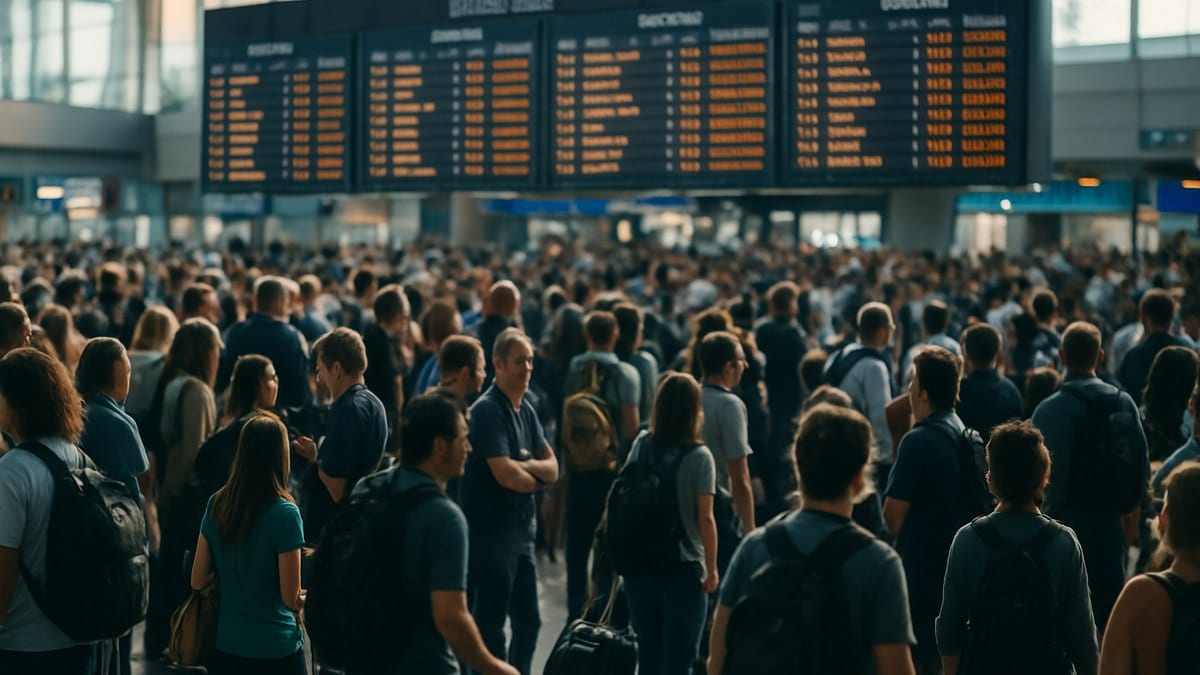
Terminals at impacted airports have reportedly seen long queues at transfer and rebooking counters, with limited hotel availability near some hubs as disruptions stretched into the evening. Social media posts and online travel forums include accounts of passengers sleeping in departure halls or scrambling to secure high speed rail tickets as an alternative to uncertain flight options.
Domestic leisure travelers making use of early April holidays have also been caught out. Tourism-focused airports serving popular destinations in western and southern China have experienced rolling delays, making it more difficult for visitors to rely on tight itineraries that involve multiple internal flights over just a few days.
Some travelers have reported that short connection times once considered acceptable now carry higher risk amid the current conditions. Online discussions about itineraries through Beijing and other hubs increasingly warn that layovers barely exceeding one hour may no longer be realistic when security procedures, terminal transfers and frequent schedule adjustments are taken into account.
How Airlines and Airports Are Responding
Public information from airline channels indicates that carriers have been attempting to stabilize schedules through a mix of tactical cancellations, aircraft swaps and rolling rebooking efforts. Some operators have encouraged passengers to monitor mobile apps and official channels closely, reflecting the reality that departure times may change repeatedly before a flight finally pushes back from the gate.
Chinese airports, for their part, have been directing passengers toward automated kiosks and digital communication channels where possible, in order to relieve pressure on traditional service counters. At peak disruption moments, however, photos and descriptions shared online suggest that bottlenecks quickly emerge as travelers seek written confirmation of delay reasons for insurance or employer documentation, along with meal vouchers and accommodation support.
Consumer guidance documents published for 2026 by carriers such as Air China outline circumstances in which hotels, meals and ground transport may be offered when disruptions fall within an airline’s control. In practice, the large volume of affected passengers during sudden disruption waves can limit how consistently such measures are applied, especially when problems stem from weather or air traffic management decisions outside a carrier’s direct authority.
Some travel advisories recommend that passengers build extra buffer time into onward plans, carry essentials in hand luggage in case checked bags are delayed and download airline apps in advance to make use of self-service rebooking where available. This advice has been echoed in recent coverage of China’s April difficulties as a pragmatic way to cope with fast changing conditions.
What Early April Reveals About China’s 2026 Travel Season
The flight chaos unfolding in early April 2026 offers an early stress test for China’s peak travel season, which will stretch through spring and into the summer months. The pattern of repeated disruption clusters suggests that while capacity has largely returned across the domestic network, resilience has not fully kept pace with rising demand.
Analysts following China’s aviation sector note that a revised Civil Aviation Law is scheduled to take effect in July 2026, with the aim of updating regulatory frameworks around safety, consumer rights and airline operations. While the full impact of those changes remains to be seen, the present wave of disruption underscores the importance of clear passenger information, transparent compensation rules and robust contingency planning.
For international visitors planning itineraries through China in the coming months, early April’s events offer several practical lessons. Allowing longer connection times at Chinese hubs, avoiding last outbound flights of the day on critical legs and considering multi-modal options such as high speed rail on shorter domestic segments may all reduce the risk of becoming stranded.
With weather patterns still volatile and airspace constraints unlikely to ease quickly, travel watchers expect conditions to remain changeable across China’s skies through the rest of April. For now, the images of crowded terminals and scrolling delay lists serve as a reminder that, even in a year of strong travel demand, aviation systems can still be thrown into sudden disarray, leaving passengers to navigate the fallout on their own timelines.