

More news on this day
Thousands of air passengers across China found themselves unexpectedly isolated on March 12 as major carriers including China Eastern, Air China and Shenzhen Airlines scrubbed or severely disrupted more than 100 flights, snarling traffic through key hubs such as Beijing, Shanghai, Guangzhou, Chengdu and Shenzhen.
Get the latest news straight to your inbox!
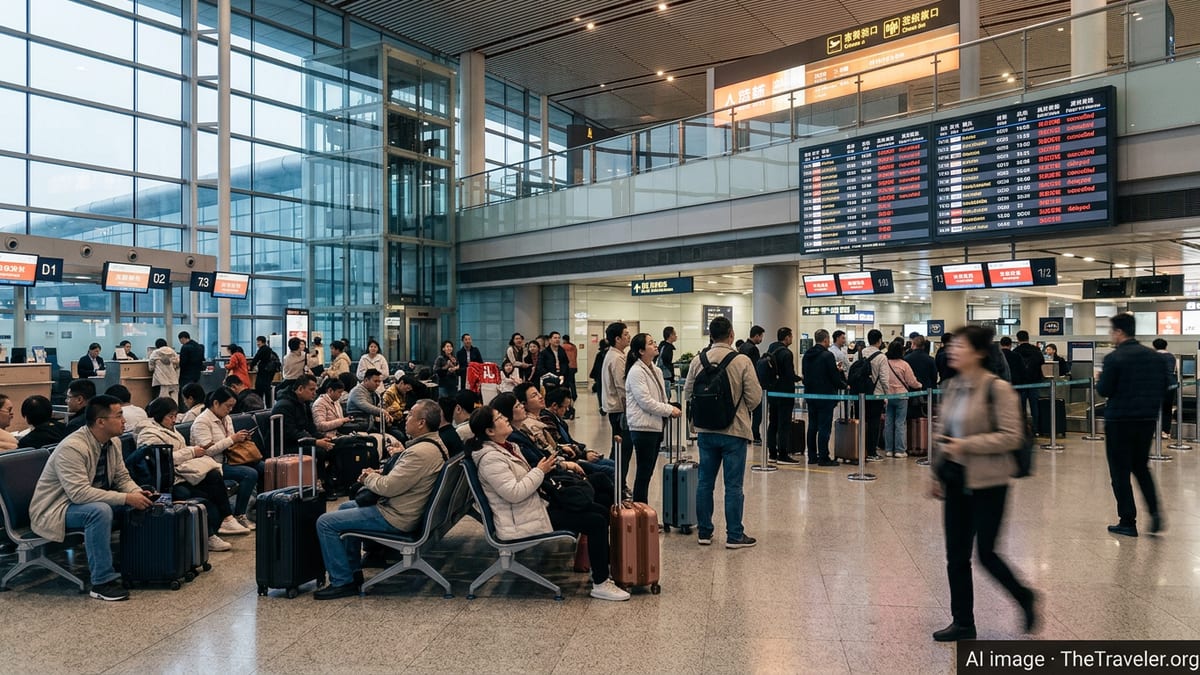
Wave of Cancellations Hits China’s Busiest Airports
Operational data from multiple aviation tracking platforms on March 12 show a sharp spike in cancellations and delays at major mainland airports, with at least several hundred flights affected across the network and more than 100 outright cancellations. Beijing Capital, Beijing Daxing, Shanghai Hongqiao, Guangzhou Baiyun, Chengdu Tianfu and Shenzhen Bao’an all reported disrupted schedules, with knock-on delays spilling into regional airports including Urumqi, Chongqing, Wenzhou and Guiyang.
Travel industry analysts noted that the disruption comes at a time when Chinese carriers were already juggling reduced Japan capacity due to the ongoing China Japan diplomatic dispute, as well as persistent ripple effects from recent Middle East airspace closures. As aircraft and crews are shifted between long haul and regional routes, even localized weather or congestion can quickly cascade into widespread cancellations across the domestic network.
China Eastern and Air China bore much of the brunt at the country’s two primary hubs of Beijing and Shanghai, while Shenzhen Airlines reported irregular operations at both Shenzhen Bao’an and Guangzhou Baiyun. Passengers reported sudden text messages announcing cancellations within hours of departure, followed by long queues at service counters as travelers struggled to secure alternative routes.
Passengers Stranded and Isolated Across the Mainland
At Beijing Capital and Beijing Daxing, travelers described crowded departure halls, with many passengers forced to spend the day or night in the terminal after missing connections onward to smaller cities. Some international travelers arriving from Europe and North America were left in limbo when their onward domestic sectors were canceled, leaving them effectively isolated in transit with no clear rebooking options.
Scenes were similar at Shanghai Hongqiao and Pudong, where China Eastern and partner carriers typically funnel large volumes of connecting traffic to central and western China. With multiple departures to Chengdu, Chongqing and Kunming canceled or heavily delayed, families and business travelers tried to navigate unfamiliar rebooking rules, while those relying on tight layovers to reach onward international flights found themselves stuck in the city overnight.
Further south, in Guangzhou and Shenzhen, packed departure lounges and overcrowded information desks reflected the mounting frustration. Travelers heading for key industrial centers in the Pearl River Delta reported being rebooked on late night or next day services, while others were advised to accept full refunds and make their own arrangements on high speed rail, adding hours to already complex journeys.
Weather, Airspace Tensions and Network Congestion Converge
Aviation observers say today’s disruption is the result of several pressures converging rather than a single, isolated incident. Periods of adverse weather in western and central China have repeatedly forced airlines to slow operations or temporarily suspend services in recent weeks, building up a backlog of aircraft and crews that can take days to unwind once conditions improve.
At the same time, ongoing closures and restrictions in parts of Middle East airspace have created further challenges. Chinese carriers, including Air China, China Eastern and Shenzhen Airlines, have had to reroute or cancel westbound services, then reposition aircraft and crews in Asia. This has reduced the margin for error on busy domestic corridors such as Beijing Shanghai and Guangzhou Chengdu, where even modest schedule changes can have outsized impact.
Layered on top of this, capacity cuts on China Japan routes ordered amid the diplomatic standoff have prompted airlines to reshuffle fleets and adjust timetables through major Chinese hubs. While these reductions are focused on international services, they alter the broader network, limiting the options carriers have to rescue disrupted passengers when operational problems arise elsewhere in the system.
Airlines Offer Flexibility but Relief Proves Uneven
In response to recent instability, China’s largest airlines have expanded change and refund options on selected routes. Air China, China Eastern and Shenzhen Airlines have all introduced more flexible policies for passengers booked on Middle East services affected by airspace closures, including free date changes or refunds within specified travel windows.
For today’s wave of cancellations within China, however, travelers report an uneven experience. While some passengers were quickly reprotected onto later flights or rerouted through alternative hubs, others said they were told to apply for refunds through original booking channels or third party agents, a process that can take days to resolve. Travelers who booked via online travel agencies often faced an extra layer of customer service hurdles before any changes could be confirmed.
Consumer advocates have again urged passengers to keep detailed records of boarding passes, cancellation notices and out of pocket expenses in case compensation is later offered. Under China’s existing civil aviation guidelines, airlines are generally required to provide meals and hotel accommodation when delays or cancellations are within their control, though enforcement can vary widely by airport and operator.
What Travelers Should Do Now
With China’s aviation system under sustained strain, travel planners are advising passengers to build in more buffer time for connections and to avoid tight same day transfers through Beijing, Shanghai, Guangzhou, Chengdu and Shenzhen whenever possible. Where journeys involve onward international legs or separate tickets, experts suggest scheduling overnight stops or longer layovers to reduce the risk of missed flights.
Passengers currently affected by disruptions are being urged to check their flight status repeatedly on the day of departure, as schedules are changing hour by hour. When flights are canceled, contacting the airline directly through official customer service channels is often more effective than relying solely on airport desks, which can be overwhelmed during peak disruption.
Travelers still in the planning stage are being encouraged to consider alternative routings, including high speed rail on trunk corridors such as Beijing Shanghai and Guangzhou Shenzhen, where services are frequent and relatively resilient to airspace issues. Until weather patterns stabilize and airspace tensions ease, irregular operations and sudden cancellations across China’s major hubs are likely to remain a risk factor for both domestic and international journeys.