

More news on this day
China’s aviation network is facing fresh disruption as more than 100 flights have been canceled or severely delayed across key hubs including Beijing, Shanghai, Guangzhou, Chengdu, Shenzhen and Hangzhou, with major carriers such as Air China, China Southern, Chengdu Airlines and Qatar Airways adjusting schedules in response to mounting operational and airspace pressures.
Get the latest news straight to your inbox!
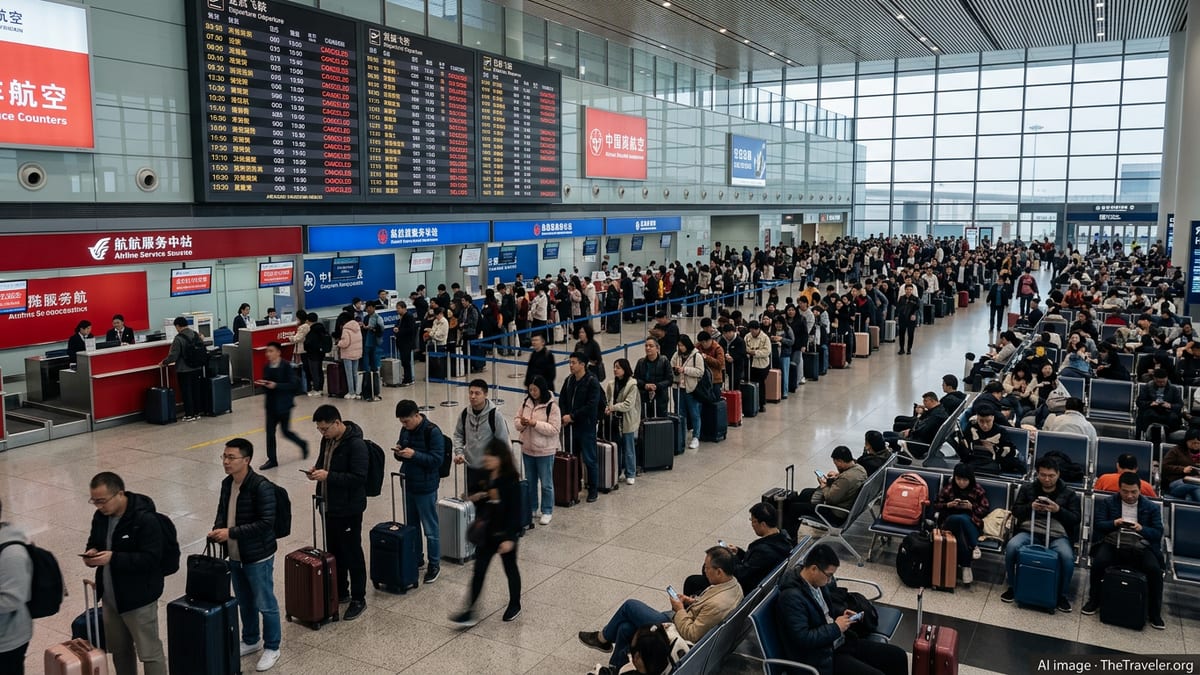
Wave of Cancellations Ripples Across China’s Major Airports
New operational data published on March 11 indicates that Chinese airports have entered a new phase of disruption, with cancellations and delays now concentrated at some of the country’s busiest hubs. Reports collated from aviation trackers and industry briefings show more than 100 flights scrubbed or heavily disrupted over recent days, clustering around Beijing, Shanghai, Guangzhou, Chengdu and other high-traffic cities.
Separate tallies released the same day highlight at least 156 cancellations and more than 1,500 delays affecting airports in Beijing, Chengdu, Urumqi, Karamay, Xi’an and Yining, underscoring how the latest turbulence is no longer confined to a single region or carrier. Travel analysts say the pattern suggests mounting strain on crew and aircraft rotations, with knock on effects for both domestic and international services.
The situation has been particularly acute at Beijing’s main gateways and in southwestern hubs such as Chengdu, which handle large volumes of connecting traffic. Passengers at these airports have reported long queues at rebooking desks and crowded departure halls as airlines race to consolidate schedules and protect priority routes.
While the majority of flights are still operating, the spike in cancellations has injected a new level of uncertainty into travel planning just as demand for business and outbound tourism continues to build in early 2026.
Major Carriers Trim and Shuffle Networks
Flag carrier Air China has been at the center of the disruption, with multiple domestic and international services reportedly canceled or rescheduled in recent days. Industry data point to cancellations on routes linking Beijing and Chengdu with other major Chinese cities, as well as selective adjustments on long haul sectors as the airline rebalances capacity.
China Southern Airlines is also navigating a volatile schedule. While the Guangzhou based carrier has restarted some high profile international routes, including links between Guangzhou, Shenzhen and Riyadh, it has simultaneously joined other Chinese airlines in cutting or delaying services on congested domestic corridors. Flights touching Shanghai, Beijing and key inland hubs have seen timing changes and equipment swaps as the carrier seeks to maintain network integrity.
Chengdu Airlines and regional operator China Express Airlines have likewise been drawn in, particularly at secondary western airports such as Karamay, Yining and Urumqi, where clusters of cancellations and triple digit delay counts have been recorded. The ripple effects from these smaller hubs have fed back into national schedules, complicating connections into coastal centers like Shanghai, Hangzhou and Shenzhen.
Internationally, Qatar Airways has pared operations in and out of Chinese cities as part of a broader Middle East capacity reset, further reducing options on some long haul itineraries that rely on Doha as a transit point. Travel agents report that seats on remaining services via alternative hubs are selling out quickly as travelers scramble to reroute.
Middle East Airspace Strain Intensifies Disruption
The latest wave of Chinese cancellations is closely intertwined with a wider Asia and Middle East crisis that has seen hundreds of flights scrubbed across the region over the past fortnight. Heightened geopolitical tensions and temporary airspace restrictions in the Middle East have forced airlines to rethink routings, add fuel stops or suspend certain corridors altogether.
Data compiled from 16 major Asian and Gulf airports show at least 774 flights canceled and more than 2,100 delayed as of March 11, covering carriers from Japan Airlines and Singapore Airlines to IndiGo and Lion Air, alongside Gulf operators such as Qatar Airways and Emirates. Chinese hubs, including Shanghai Pudong and Shanghai Hongqiao, feature prominently in the delay statistics, reflecting their role as key connectors between East Asia and the Middle East.
For Chinese airlines, the result has been a complex juggling act between maintaining profitable domestic trunk routes and managing disrupted long haul services that pass through or near affected airspace. Extended flight times, unplanned diversions and crew scheduling challenges have all contributed to the tightening squeeze on aircraft availability back home.
Analysts note that while not all cancellations in China are directly tied to the Middle East situation, the regional shock has acted as a catalyst, exposing latent fragilities in staffing, fleet deployment and airport capacity that leave networks vulnerable when conditions suddenly change.
Flexible Ticket Policies Offer Some Relief to Travelers
Amid mounting passenger frustration, China’s major airlines have moved to soften the blow with unusually generous change and refund policies. Air China, China Eastern, China Southern, Hainan Airlines and Shenzhen Airlines have all introduced or expanded special measures covering itineraries affected by the Middle East turmoil and subsequent schedule reshuffles.
For many tickets issued before late February, travelers with journeys scheduled between the end of February and mid March are being offered one time free changes or refunds when their flights are canceled or significantly altered. Industry statements indicate that some carriers have also extended flexibility windows into late spring on select Middle East linked routes, reflecting continued uncertainty over airspace stability.
Passengers on disrupted domestic routes to and from cities such as Beijing, Shanghai, Guangzhou, Chengdu, Shenzhen and Hangzhou are being urged to use official airline apps, hotlines and airport counters to process options, as online travel agencies may lag in updating live inventory. However, travelers posting on social media and forums continue to report inconsistent implementation, with some frontline staff interpreting rules narrowly or pushing customers toward vouchers instead of cash refunds.
Consumer advocates say the expanded waivers are nonetheless a notable departure from pre crisis norms, when change fees and restrictive fare conditions often left travelers absorbing most of the financial risk from last minute schedule shifts.
What Affected Travelers Should Do Now
For passengers with imminent departures involving Beijing, Shanghai, Guangzhou, Chengdu, Shenzhen, Hangzhou or other major Chinese hubs, experts recommend treating published timetables as provisional. Travelers are advised to monitor bookings closely in the 24 to 48 hours before departure, as many airlines are making rolling adjustments overnight to respond to evolving crew and airspace constraints.
Where possible, passengers are being encouraged to opt for earlier flights in the day, when operational buffers are larger and the chances of same day reaccommodation are higher. Those with tight international connections, particularly via Middle East or Gulf hubs, should consider adding extra layover time or rerouting through alternative Asian gateways less exposed to current airspace issues.
Travel planners caution that disruption may persist even as some long haul routes slowly resume, because aircraft and crew rotations can take days to normalize after major schedule shocks. They say the pattern seen this week in China, with intermittent clusters of cancellations layered on top of widespread delays, could remain a feature of the spring travel landscape if geopolitical conditions remain unsettled.
For now, the message from airlines and airports alike is to stay informed and flexible. With key Chinese gateways experiencing rolling periods of congestion and cancellations, successful journeys are likely to depend on rapid rebooking decisions, willingness to accept alternative routings and close attention to evolving airline advisories.