

More news on this day
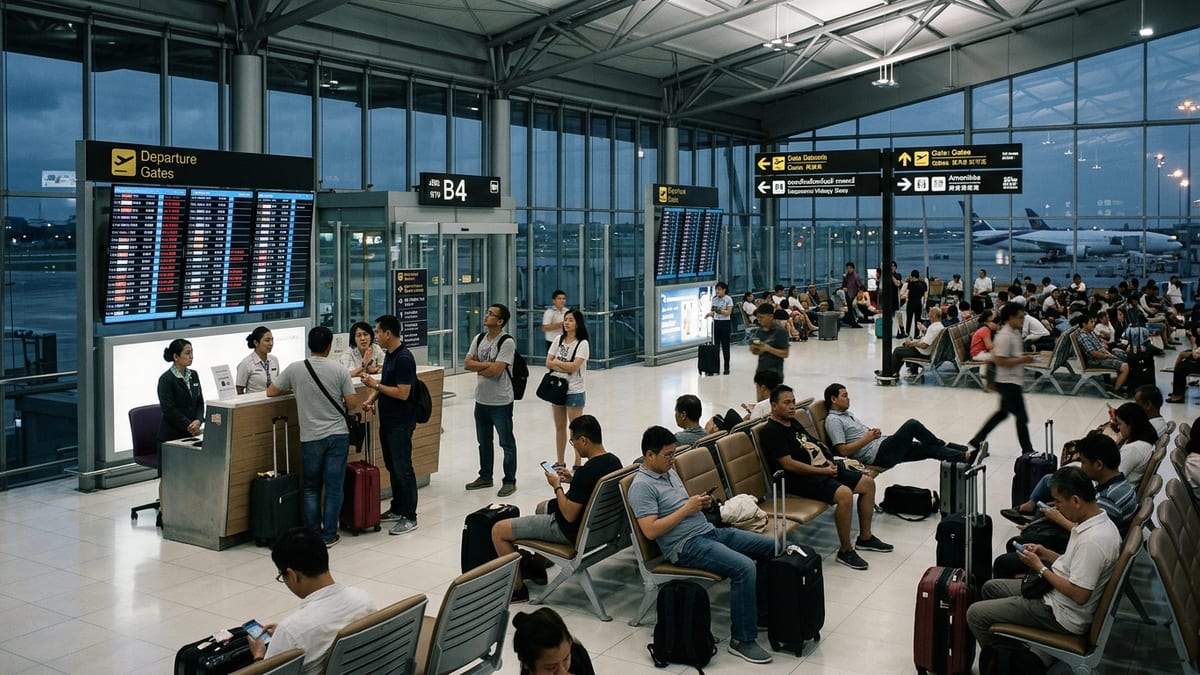
Travelers across China’s busiest aviation corridors faced mounting disruption today as publicly available flight data showed at least 124 delays and 15 cancellations affecting services operated by China Eastern, Spring Airlines, Urumqi Air and several other carriers at major hubs including Beijing, Shanghai, Hefei and Guangzhou.
Get the latest news straight to your inbox!
Major Hubs See Knock-On Disruptions
The latest disruption primarily affects trunk routes linking eastern and central Chinese cities, with Beijing, Shanghai, Hefei and Guangzhou among the hardest hit. Published airport and tracking data indicate that delayed departures and arrivals have cascaded across multiple waves of flights, slowing traffic at peak morning and early afternoon periods.
In Beijing and Shanghai, where China Eastern and Spring Airlines operate dense domestic networks, congestion at check in and security reportedly built up quickly as flights slipped behind schedule. The delays have been most visible on short and medium haul domestic legs, where tight turnarounds make recovery from even minor schedule changes difficult.
Hefei and Guangzhou, important connectors for central and southern China, have also reported a cluster of delayed services tied to affected carriers. Public dashboards tracking on time performance show the impact spreading along connecting routes, creating further hold ups for passengers attempting same day transfers.
While the total number of delayed flights remains modest compared with daily nationwide traffic, the concentration at major hubs means a relatively small set of disrupted rotations can affect a large number of itineraries, particularly for travelers relying on connections through Shanghai and Guangzhou.
China Eastern and Low Cost Carriers in Focus
China Eastern, one of the country’s largest full service airlines, appears at the center of the latest disruption wave, with multiple delayed services originating from or arriving into Beijing, Shanghai and Guangzhou. Publicly available information from tracking platforms suggests that a mix of route structures and aircraft rotations has amplified the effect across its network.
Spring Airlines and Urumqi Air, both important players in China’s low cost and regional segments, are also among the carriers affected. Low cost operators typically depend on tight schedules and rapid aircraft turnarounds, leaving less buffer time when irregular operations occur. As a result, a single late inbound aircraft can trigger a chain of knock on delays across subsequent departures.
According to industry data and prior operational updates, these carriers use Shanghai, Guangzhou and other coastal hubs as key bases, feeding traffic into inland cities such as Hefei and onward to regional centers in western China. Disruption at the hubs therefore has an outsized impact on travelers heading to or from secondary and tertiary cities.
Available background documents on China Eastern’s general conditions of carriage highlight the airline’s stated commitment to take reasonable measures to avoid delays and cancellations, but they also underscore that irregular operations remain a possibility within complex domestic networks, particularly during busy travel periods.
Travelers Face Missed Connections and Schedule Uncertainty
The cluster of delays and cancellations has translated into a familiar set of challenges for passengers, from missed connections to extended waits at departure gates. With 15 cancellations reported across the affected carriers, some travelers have been left seeking rebooking options on later services or alternate routes through other hubs.
Recent online discussions and traveler forums dedicated to China Eastern and Spring Airlines show heightened concern about managing tight connections in Shanghai and Guangzhou when flights run late. Some passengers have shared experiences of rebookings or reroutings on different dates when early segments were cancelled, underscoring how quickly an apparently minor schedule change can alter an entire multi leg itinerary.
For international travelers connecting through Chinese hubs, the impact can be particularly disruptive if an initial domestic leg is delayed long enough to jeopardize onward long haul flights. Publicly accessible advice frequently recommends building in generous buffer times at major hubs, a strategy that appears especially relevant on days of concentrated disruption such as this one.
In many cases, travelers have also turned to online travel agencies and booking platforms to seek clarification on revised timings or refund options. This can add another layer of complexity when tickets involve multiple carriers or combinations of domestic and international segments issued under a single reservation.
Operational Context: New Season, Heavy Schedules
The disruption comes as China’s aviation sector transitions into the summer and autumn 2026 flight season, a period that typically sees airlines adjusting schedules, reopening suspended routes and increasing frequencies on popular corridors. Recent coverage of the new season has highlighted route resumptions from Beijing and Shanghai as well as expanded deployment of newer aircraft types on busy domestic legs.
During such seasonal transitions, airlines often operate dense programs with limited slack, which can amplify the impact of any localized operational strain. Publicly available timetables show that major hubs like Shanghai and Guangzhou host complex webs of domestic and regional flights, sometimes with multiple departures per day on the same city pairs.
Industry observers note that as Chinese carriers scale up capacity to meet resurgent demand, balancing utilization targets with on time performance remains a central challenge. Any minor disruption impacting aircraft or crew availability can ripple across an already tight schedule, particularly for carriers that rely heavily on point to point networks instead of large connection banks.
The current pattern of 124 delays and 15 cancellations, while not unprecedented for a busy travel day, serves as a reminder that schedule adjustments during high demand seasons can test the resilience of airline and airport operations, especially at hubs already working near capacity.
What Travelers Can Do When Irregular Operations Strike
For passengers caught up in the latest wave of disruptions, publicly available guidance from airlines and consumer advocates offers several practical steps. Travelers are generally encouraged to monitor their flight status frequently on the day of departure using both airline apps and airport information boards, as schedules can change on short notice when earlier rotations are delayed.
Those facing cancellations or significant delays are typically advised to contact their ticketing channel, whether it is the airline directly or an online travel agency, to explore rebooking and refund options. Published terms and conditions on airline websites outline the circumstances under which involuntary changes may entitle passengers to alternative flights or reimbursement, although the precise remedies can vary by carrier and route.
Travel planners also recommend allowing wider connection windows at busy hubs such as Beijing Capital, Shanghai Pudong and Guangzhou Baiyun, particularly when traveling on separate tickets or combining domestic and international segments. Building in extra time can reduce the risk that an upstream delay will cause a missed onward flight that is harder to rebook.
As Chinese carriers continue to adjust their networks and schedules for the 2026 travel season, today’s disruptions highlight the ongoing importance of flexibility, real time monitoring and contingency planning for anyone relying on connections through the country’s major aviation gateways.