

More news on this day
Hundreds of passengers across China faced extended disruption on Sunday as multiple domestic carriers reported a combined 278 flight delays and 24 cancellations, with operations at major hubs including Shanghai, Shenyang, Chongqing, Kunming and Nanjing particularly affected, according to live tracking data and local media summaries.
Get the latest news straight to your inbox!
Wide Impact Across Major Chinese Hubs
Flight tracking dashboards and Chinese aviation monitoring feeds on March 22 indicated that operations at several of the country’s busiest airports were under strain, with delays clustering around Shanghai’s dual airports and large inland hubs such as Chongqing Jiangbei, Kunming Changshui, Shenyang Taoxian and Nanjing Lukou.
Data compilations from publicly available tracking platforms pointed to at least 278 delayed departures and arrivals involving a mix of trunk and secondary routes, alongside 24 outright cancellations by mid to late afternoon local time. The disruption affected both morning and early evening peaks, leaving passengers queuing at check in, transfer and customer service desks.
While delay levels fluctuated through the day as airlines re-sequenced aircraft and crews, the figures placed Sunday’s operation notably above a typical weekend schedule for several of the impacted airports, according to historical punctuality comparisons published by aviation analytics providers.
The pattern of disruption reflected the central role of Shanghai, Chongqing, Kunming, Shenyang and Nanjing as connecting points in China’s domestic network, meaning knock-on effects were reported at smaller regional airports served by the same aircraft rotations.
Multiple Carriers Affected, From Low Cost to Full Service
The delays and cancellations were spread across a range of airlines, hitting passengers booked on low cost operators and full service brands alike. Publicly available flight boards and route maps showed Spring Airlines, China Express Airlines, China Eastern Airlines, China Southern Airlines and Jiangxi Air among those experiencing schedule disruption, alongside several other regional and joint venture carriers.
Spring Airlines, one of China’s largest budget carriers, maintains a dense network from Shanghai and other coastal cities into inland hubs such as Shenyang and Chongqing. China Express Airlines, headquartered in Guiyang, focuses on regional and feeder routes that connect smaller cities to larger airports including Chongqing Jiangbei. China Eastern and China Southern, two of the country’s biggest state-linked airlines, operate extensive domestic and international services through Shanghai and other major hubs, while Jiangxi Air links Nanchang and other provincial cities into the wider network.
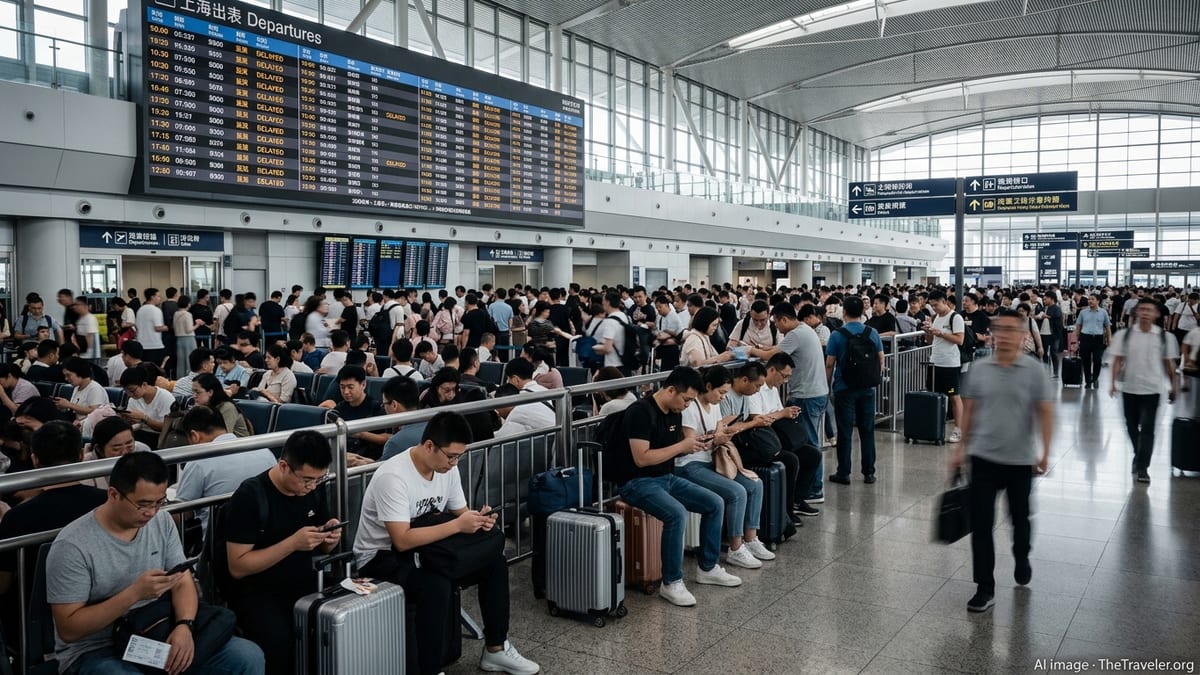
Because many domestic flights in China operate on tight turnarounds, a disruption that begins with a limited number of aircraft can quickly ripple through an airline’s schedule. Passengers with onward domestic connections were particularly exposed to missed links, and publicly shared photos from several airports showed crowded departure halls and gate areas as travelers waited for updated departure times.
Published traveler accounts from recent months have already highlighted sensitivity to even short delays on some of these carriers, and Sunday’s heavier disruption added to concerns among passengers with tightly timed itineraries or international connections scheduled from Shanghai and other hubs.
Operational and Weather Pressures Behind the Disruptions
Early assessments by Chinese-language aviation blogs and flight data commentators on Sunday suggested a mix of contributing factors, including localized weather constraints, airspace flow management and operational ripple effects linked to aircraft and crew positioning. Several northern and central Chinese cities experienced bouts of reduced visibility and shifting winds during the weekend, conditions that can require increased spacing between arrivals and departures.
At high-volume airports such as Shanghai Pudong and Shanghai Hongqiao, even modest reductions in runway capacity can generate significant delays over the course of a day. Similar pressures apply at Chongqing Jiangbei and Kunming Changshui, both of which serve large catchment areas and handle substantial domestic traffic, amplifying the impact of any temporary restrictions in air traffic flow.
Chinese aviation analysts frequently note that rapidly growing passenger volumes in recent years have left some domestic networks sensitive to disruption, particularly during busy weekends and holiday periods. While there was no single headline incident associated with Sunday’s delays, the combination of weather, congestion and resource constraints appeared sufficient to push operations at multiple airlines beyond the margin where schedules can absorb disruptions.
Public information released by several airports emphasized standard advice for passengers to arrive in good time, monitor airline apps for gate and time changes, and allow extra connection buffers on days when punctuality indicators trend below average.
Knock On Effects for Domestic and International Travelers
The disruption at Shanghai, Shenyang, Chongqing, Kunming and Nanjing had immediate consequences for travelers on domestic point-to point flights, but also raised complications for those relying on smooth connections to long haul services. Shanghai Pudong in particular functions as an important transfer point for China Eastern and China Southern passengers traveling between East Asia, Europe and North America.
Travel forums and social media posts on Sunday described travelers in Shanghai facing tight margins to clear immigration, security and transfer checks after inbound domestic legs arrived late. Some international passengers reported being rebooked onto later departures or alternative routings after missing original connections, with overnight stays required in a minority of cases when final outbound flights of the day could not be met.
Within China, delays on feeder services operated by carriers such as China Express and Jiangxi Air complicated plans for passengers heading to smaller cities with limited daily frequencies. In such markets, a cancellation or multi hour delay can mean significant schedule changes, with some travelers opting for high speed rail as a backup where available.
Travel advisers often recommend that international visitors connecting through Chinese hubs allow generous minimum connection times and avoid scheduling critical onward commitments immediately after arrival. Sunday’s performance data and traveler reports reinforced that conservative planning remains advisable when routing through the country’s busiest airports.
What Affected Passengers Can Do Next
For travelers caught up in Sunday’s disruption, airline customer service channels, mobile apps and airport service counters remained the primary routes for rebooking and assistance. Policies on meal vouchers, hotel accommodation and voluntary rerouting vary between airlines and ticket types, and passengers were encouraged in publicly available guidance to retain boarding passes and receipts in case of later claims.
Consumer rights frameworks for domestic flights within China differ from compensation regimes applied in some other markets, and published commentary from travel law specialists notes that fixed cash payments for delays are less common. Instead, carriers are more likely to offer rebooking on the next available service, refunds in the case of cancellations, or flexible changes for trips that no longer meet travelers’ needs.
Travel news outlets and independent passenger advocacy sites advise that those with upcoming journeys on the affected airlines monitor their flight status closely in the 24 hours before departure, particularly when traveling through Shanghai, Chongqing, Kunming, Shenyang or Nanjing. Building in longer connection times, considering earlier departures on routes with multiple daily flights and having a backup plan, such as rail alternatives on dense corridors, can reduce the risk of severe disruption to travel plans.
While Sunday’s spike in delays and cancellations may ease as airlines work through backlogs and reposition aircraft, the episode highlighted the continued vulnerability of dense domestic networks to sudden operational pressures, and the importance for travelers of staying informed and flexible when flying across China.