

More news on this day
Hundreds of travelers across China faced unexpected overnight stays and missed connections after a wave of cancellations and delays hit major airports in Shanghai, Beijing, Nanjing, Chengdu, Changsha and other hubs, disrupting at least 42 flights and delaying more than 150 services operated by China Eastern, Air China, XiamenAir, Hainan Airlines and several other carriers, according to flight tracking data and local media coverage.
Get the latest news straight to your inbox!
Widespread Disruptions at China’s Busiest Gateways
The latest round of disruptions unfolded across some of mainland China’s busiest aviation hubs, including Shanghai Pudong and Hongqiao, Beijing Capital and Daxing, as well as key regional airports serving Nanjing, Chengdu and Changsha. Publicly available flight tracking dashboards showed clusters of delayed departures and arrivals concentrated in peak travel banks, with a notable spike in late afternoon and evening operations.
While the overall number of affected flights remains modest compared with China’s daily schedule, the impact on travelers was magnified by the role these airports play as national transfer points. Missed onward connections turned single delays into extended disruptions, as passengers struggled to secure seats on already crowded follow-on flights during one of the busier stretches of the spring travel period.
Domestic networks were particularly affected, with late inbound aircraft arriving from secondary cities and triggering knock-on delays for their outbound rotations. Reports indicate that some services were held at gates for extended periods while airlines reshuffled aircraft and crew assignments in an effort to stabilize operations.
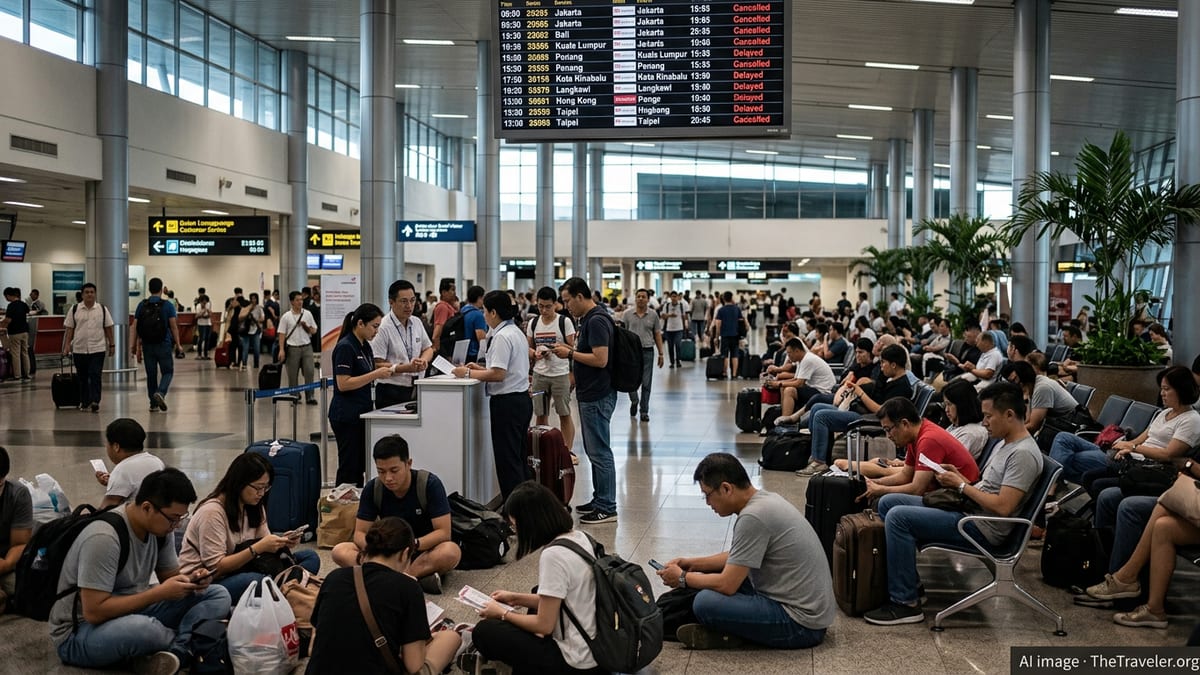
Airport departure boards in several cities showed long lines of red and amber status indicators as the day progressed, reflecting a mix of cancellations, rolling delays and schedule changes. In some terminals, passengers waited for hours for updated departure times or rebooking options, adding to the sense of uncertainty.
Multiple Carriers Caught in the Disruption
China Eastern and Air China, based in Shanghai and Beijing respectively, accounted for a substantial share of the affected services, according to aviation data platforms that aggregate real-time operational statistics. XiamenAir, Hainan Airlines and several smaller regional carriers were also listed among operators experiencing elevated delay and cancellation rates across parts of their domestic networks.
Operational statistics for recent days show that China Eastern and Air China have been managing higher-than-normal levels of schedule pressure as demand remains strong following the Spring Festival travel peak. Both carriers have reported solid growth in international and domestic passenger volumes in early 2026, even as they continue to navigate higher fuel costs and tight aircraft utilization patterns.
Industry analysts note that when large network carriers face a cluster of disruptions on the same day, the effects tend to cascade quickly through their systems. Aircraft arriving late into Shanghai or Beijing are often scheduled to turn around rapidly on popular trunk routes to Chengdu, Xi’an, Guangzhou or Kunming, leaving little margin to absorb upstream delays before they affect passengers down the line.
Regional airlines such as XiamenAir and Hainan Airlines, which connect coastal and interior cities, can also feel the strain when shared airports experience congestion or temporary ground holds. Even a relatively small number of cancellations can force carriers to consolidate flights, reassign aircraft types and adjust crew rosters, prolonging the time it takes to restore normal operations.
Knock-on Effects for Domestic and International Travelers
The disruptions affected a mix of domestic point-to-point journeys and more complex itineraries linking Chinese cities with international destinations. Travelers on long-haul routes connecting via Shanghai and Beijing reported missed onward flights to Europe, Southeast Asia and North America, based on publicly shared itineraries and social media posts describing missed connections and overnight layovers.
China’s major hub airports have seen sustained traffic growth over the past year, with travel platforms reporting record passenger volumes during the Spring Festival travel rush. That growth has left terminals and airspace operating near capacity at peak times, which heightens the risk that relatively small operational challenges can spill over into widespread delays when demand is high.
In practical terms, a cancellation or late departure from a regional city into Shanghai or Beijing may leave travelers with limited options to continue the same day. Many popular onward flights depart in tightly grouped waves, and once those banks have closed, stranded passengers can face waits of 12 hours or more for the next available service, particularly on heavily trafficked routes.
International passengers using Chinese hubs as transit points are especially vulnerable to such bottlenecks. Missed connections can trigger complex rebookings across multiple tickets and alliances, and not all travelers have through-checked itineraries that simplify the process. As a result, some passengers may be forced to purchase additional tickets or make last-minute changes to accommodation plans.
What Is Driving the Cancellations and Delays
Published coverage and aviation data platforms did not point to a single, clearly defined cause behind the latest disruptions. Instead, industry observers highlight a mix of contributing factors that commonly affect operations at Chinese airports during transitional weather periods and busy travel windows.
Weather-related constraints remain a recurring challenge, particularly for coastal and central cities where low visibility, thunderstorms or seasonal haze can reduce runway capacity for hours at a time. Even when conditions appear manageable on the ground, air traffic flow restrictions in crowded airspace corridors can force airlines to delay departures to maintain safe separation between aircraft.
Airlines are also still balancing network growth with operational resilience after several years of fluctuating demand. High aircraft utilization rates, while efficient, leave little slack for irregular operations. When a mechanical inspection takes longer than expected or when crew duty-time limits are reached, carriers can be forced to cancel or combine flights rather than allow delays to extend late into the night.
On top of these structural pressures, surging passenger numbers through key hubs have increased the complexity of ground operations. Boarding, baggage handling and security screening all take longer when terminals are crowded, and any slowdown at these points can contribute to missed departure slots and additional delays further down the schedule.
How Affected Passengers Are Responding
Travelers caught by the disruptions responded in a range of ways, from seeking same-day alternatives on high-speed rail to requesting refunds and rebookings through airline customer service channels. Publicly shared experiences on travel forums and social platforms suggest that some passengers were able to secure new flights within a few hours, while others faced overnight waits or longer rerouting journeys.
Chinese civil aviation regulations generally provide a framework for rebooking, refunds and limited compensation in the event of cancellations and long delays, though eligibility often depends on the specific cause cited by the airline and whether the disruption is considered within the carrier’s control. Each airline maintains its own detailed policies outlining how meals, accommodation and onward travel are handled during irregular operations.
Consumer advocates encourage travelers to keep detailed records when flights are disrupted, including boarding passes, booking confirmations, expense receipts and any written notices of cancellation or delay. Such documentation can be important when filing claims with airlines or travel insurers, particularly for multi-leg journeys that cross jurisdictions with different passenger rights rules.
With flight delays and cancellations continuing to affect pockets of the global network, experienced travelers increasingly build extra buffer time into itineraries, especially when connecting through busy hubs such as Shanghai and Beijing. For many passengers stranded across China’s airports during the latest wave of disruptions, that additional margin could mean the difference between an inconvenient delay and a missed once-in-a-lifetime trip.