

More news on this day
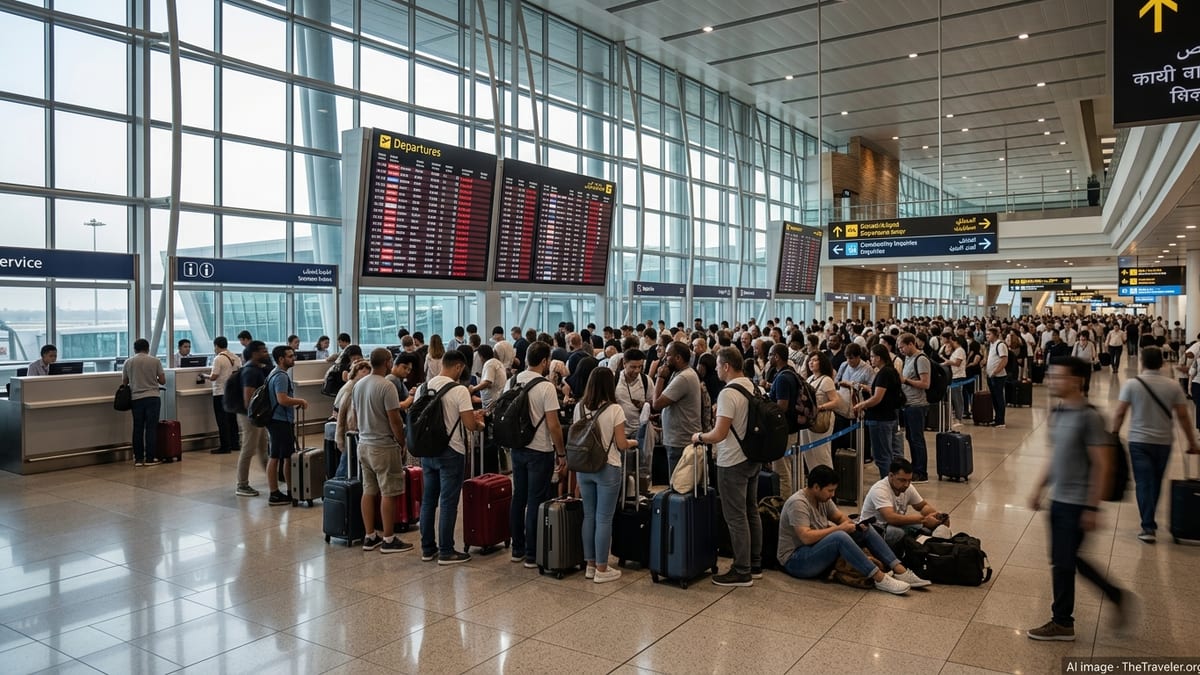
Hundreds of travelers have been left stranded across China’s busiest air hubs after a succession of late March disruptions triggered hundreds of delays and cancellations at major airports from Shanghai to Guangzhou.
Get the latest news straight to your inbox!
Wave of Disruptions Hits Key Chinese Gateways
Recent operational data for March 2026 indicates that a series of disruption days has rippled through China’s aviation network, concentrating particularly at high-traffic hubs such as Shanghai Pudong, Beijing Capital, Guangzhou Baiyun, and Shenzhen Bao’an. On March 18 alone, publicly available figures show that six airports across the country experienced significant irregular operations, with hundreds of flights delayed or canceled and entire departure banks pushed into later time slots.
Coverage from aviation and travel outlets describes at least 649 flights affected in one March disruption episode, stretching from the eastern seaboard to northern and northwestern cities. Shanghai and Nanjing reported some of the heaviest impacts, but mid-sized hubs in regions such as Inner Mongolia and the northwest also logged lengthy ground holds and rolling delays. For passengers, the uneven distribution of alternative services at these airports translated into long queues at check-in counters and rebooking desks.
Separate reporting from industry-focused platforms highlights an additional surge of disruption around March 30 and 31, when major hubs including Beijing, Chengdu, Shenzhen, Shanghai, and Guangzhou collectively recorded hundreds of cancellations and more than five thousand delays in a single day of severe weather. Airlines including China Southern, China Eastern, Air China, Hainan Airlines, and Shenzhen Airlines all faced substantial schedule adjustments, compounding the backlog for travelers already attempting to reposition after earlier interruptions.
As a result, late March became one of the most challenging periods of the season for domestic and regional flyers in China, with knock-on effects on connecting traffic across Asia. Network carriers that rely heavily on timed banks of arrivals and departures at coastal hubs struggled to absorb the sudden surges in disrupted passengers, particularly during peak evening waves.
Weather, Congestion and Seasonal Demand Converge
Publicly available information points to a mix of severe weather and systemic congestion as key drivers behind the latest disruption wave. Intense thunderstorms accompanied by hail around the Greater Bay Area prompted lengthy ground stops at Guangzhou Baiyun and Shenzhen Bao’an late in March, causing holding patterns, diversions, and widespread schedule reshuffling. In China’s tightly choreographed airspace, even a few hours of convective weather can produce delays that stretch well into the night.
In addition to storms in the south, reports from earlier in the month describe disruption days across eastern and central China where poor visibility and low cloud forced traffic-flow restrictions at several airports simultaneously. When multiple control areas reduce capacity at once, flights that might otherwise be rerouted through alternative hubs instead stack up in queues, creating congestion both in the skies and on the ground.
The disruptions also coincided with a busy spring travel period, when domestic leisure demand rises and international connections through Chinese hubs increase. Airlines had ramped up frequencies on popular routes, leaving little slack in schedules or spare aircraft capacity. Public aviation analysis notes that once cancellations start to climb, the combination of full flights and limited backup aircraft makes it much harder to re-accommodate stranded passengers on the same day.
Infrastructure changes and airspace management adjustments may also have added complexity. Recent terminal shifts at Guangzhou Baiyun and ongoing optimization of metroplex operations around Shanghai illustrate how fast-growing hubs must constantly balance runway capacity, gate availability, and traffic flows. While such projects aim to reduce congestion over the long term, they can temporarily heighten the risk of bottlenecks when unexpected weather or technical issues arise.
Major Airlines Face Operational Strain
The late-March turbulence has underscored the strain on China’s largest carriers, which act as the backbone of domestic connectivity and as key connectors between Asia and the rest of the world. Publicly accessible disruption tallies show that China Southern Airlines bore some of the heaviest operational impact during one of the worst days, with more than 1,200 delayed flights and dozens of cancellations across its network of hubs.
China Eastern and Air China, which rely heavily on hub operations in Shanghai and Beijing, also recorded substantial numbers of disrupted services. Additional reports reference irregular operations involving Hainan Airlines and various regional carriers that feed traffic from interior cities into coastal megahubs. As cancellations accumulated, aircraft and crews fell out of position, forcing further last-minute adjustments even after weather conditions began to improve.
Industry commentary suggests that the pattern of rolling disruptions highlights ongoing challenges in balancing rapid growth with resilience. Fleet and crew utilization across Chinese carriers remains high, a model that supports extensive route networks but leaves limited margin when storms, airspace restrictions, or technical faults strike. When multiple hubs experience constraints on the same day, spare capacity can disappear quickly, amplifying the impact felt by travelers.
Observers also note that Chinese airlines are navigating these disruptions in the context of broader regional volatility, including congestion at other Asian hubs and evolving geopolitical conditions that affect routing options. This wider backdrop reduces flexibility for long-haul operations and can compound localized issues inside China’s domestic network.
Passengers Endure Long Waits and Scramble for Options
For travelers caught in the latest disruption cycle, the statistics translated into crowded terminals, overnight waits, and a scramble for scarce seats. Travel reports describe passengers sleeping on benches at major hubs such as Shanghai Pudong and Beijing Capital as late-night services were canceled or pushed into the following day. At airports with fewer alternative departures, including secondary cities affected on March 18, some travelers faced waits that extended beyond 24 hours.
Public guidance from travel and consumer platforms has emphasized the importance of monitoring airline apps and airport information screens closely, as departure boards on recent disruption days changed repeatedly within short time windows. Passengers on separate tickets or complex itineraries, particularly those connecting between domestic and international legs, were advised to seek assistance quickly to avoid missing limited rebooking opportunities.
Consumer-rights resources consulted by travelers note that compensation and care obligations can vary depending on whether delays are classified as weather-related or as arising from other operational causes. In practice, reports indicate a patchwork of responses, with some passengers receiving hotel accommodation and meal vouchers while others were left to make their own arrangements when flights were canceled late at night.
The experience has renewed attention on personal contingency planning among frequent flyers in the region. Travel advisories recommend allowing longer connection times through China’s major hubs during periods of unstable weather, purchasing travel insurance that explicitly covers delays and cancellations, and preparing for the possibility of disrupted plans when itineraries rely on a single tightly timed connection.
Risks of Further Disruption Remain
Analysts tracking flight-performance data across Asia note that the March disruption pattern in China formed part of a broader wave of irregular operations affecting the wider region. In late February and again in the final days of March, aggregated figures showed thousands of delays and scores of cancellations across key hubs in China, India, Southeast Asia, and parts of the Middle East, underscoring how quickly disruption can cascade along major travel corridors.
With the spring storm season still underway and airspace constraints in other regions adding pressure to alternative routings, observers suggest that further episodes of congestion and mass delays cannot be ruled out in the coming weeks. Historical comparisons of previous seasonal peaks indicate that clusters of high-impact days are common, particularly when adverse weather coincides with holiday periods or major events.
For China’s airports and airlines, the latest events may accelerate efforts to improve disruption-management playbooks, including more dynamic use of re-timing, expanded cross-utilization of aircraft, and enhanced digital communication tools for passengers. Aviation research focusing on metroplex regions such as Shanghai has already pointed to the potential of advanced scheduling models to reduce arrival and departure delays when fully implemented.
As travelers continue to navigate a volatile operating environment, the March disruptions across China’s major hubs serve as a reminder that robust contingency planning, flexible itineraries, and real-time information remain essential for anyone relying on tight connections through the country’s busiest airports.