

More news on this day
Thousands of air travelers across China are facing extended waits and missed connections as major hubs including Beijing, Chongqing, Nanchang, Nanjing, Shanghai and Shenzhen log 4,559 delayed flights and 245 cancellations in a fresh wave of disruption affecting many of the country’s largest airlines.
Get the latest news straight to your inbox!
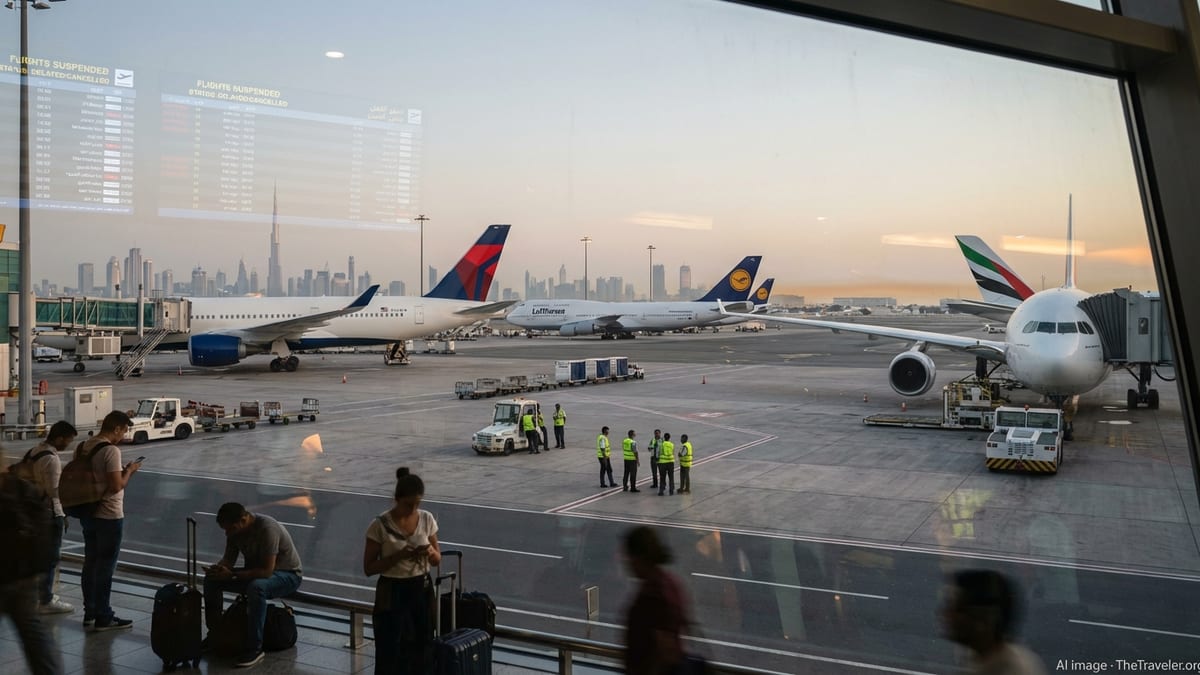
Major Chinese Hubs Buckle Under Nationwide Disruption
Publicly available flight-tracking data and industry reports for early April indicate that China’s aviation network has entered another period of severe operational strain, with delays and cancellations concentrated at the country’s busiest airports. Beijing Capital and Beijing Daxing, Shanghai’s twin hubs at Pudong and Hongqiao, and the fast-growing megahubs in Shenzhen and Chongqing are among the worst affected, alongside important regional centers such as Nanchang and Nanjing.
The tally of 4,559 delays and 245 cancellations across these and other airports over a short window represents one of the heaviest single waves of disruption reported in the Chinese market so far this spring. While the figures fluctuate throughout the day as schedules update, they point to widespread congestion on trunk routes that link northern, eastern and southern China, as well as spillover effects on secondary cities reliant on feeder traffic.
Travel trade coverage notes that the timing coincides with a busy early April travel period, when business demand overlaps with leisure trips and student travel. High baseline demand means that any loss of capacity, even for a few hours at a handful of hubs, can rapidly cascade into missed rotations, aircraft being out of position and mounting crew scheduling challenges across carrier networks.
China Eastern, China Southern, Air China Among Worst Hit
The disruption is rippling through the country’s largest airline groups, with China Eastern Airlines, China Southern Airlines and Air China all prominently represented in airport delay and cancellation statistics for the current wave of problems. Flight-status data shows that these state-backed giants are joined by XiamenAir, Sichuan Airlines and several other full-service and low cost operators whose aircraft are deeply embedded in the same hub-and-spoke system.
Coverage in Chinese and international aviation outlets emphasizes that the scale of the disruption reflects the sheer density of schedules at core coastal and inland hubs. China Eastern relies heavily on Shanghai Pudong and Shanghai Hongqiao, while China Southern’s operations are anchored in Guangzhou and Shenzhen but include significant flows through Beijing and key Yangtze corridor cities. Air China’s flagship presence in Beijing means that knock-on effects at the capital’s airports can quickly ripple out across its domestic and regional routes.
With multiple airlines sharing terminals and airspace at these locations, operational bottlenecks caused by weather or air-traffic restrictions at a single airport can simultaneously degrade on-time performance for several carriers. That interdependence is visible in the current episode, as punctuality metrics deteriorate across different airline brands serving the same constrained runways and airways.
Weather Systems, Airspace Controls and Congested Corridors
Recent reporting on the broader pattern of Chinese flight disruptions in late March and early April points to a familiar mix of triggers. Travel and aviation publications have linked earlier spikes in delays and cancellations to bands of intense spring storms sweeping across southern and eastern provinces, bringing low cloud, heavy rain and thunderstorms to airport catchment areas including the Pearl River Delta and the lower Yangtze region.
These conditions reduce visibility, force wider spacing between arrivals and departures and sometimes require temporary runway closures for safety checks, cutting effective capacity at precisely the time when passenger demand is strongest. When this happens simultaneously at several coastal hubs, aircraft arriving out of slot can miss their departure windows for onward legs, and taxiway congestion can lengthen turnaround times even once weather begins to improve.
Industry analysis also highlights the role of airspace management constraints over parts of China, where high-priority traffic and route restrictions limit the flexibility of dispatchers to reroute aircraft around storms or congestion. That means that when a choke point emerges, airlines have fewer options to improvise alternative routings, so delays accumulate quickly along some of the country’s busiest corridors between Beijing, Shanghai, Shenzhen and inland centers such as Chongqing and Nanchang.
Passengers Stranded, Rebooking Systems Under Pressure
The operational strain is being felt most acutely by passengers who arrived at airports only to find their flights heavily delayed or removed from departure boards entirely. Images and descriptions circulating on Chinese social platforms and in local media coverage describe long check in lines, crowded gate areas and overnight waits at several of the affected hubs, with some travelers reporting missed onward connections and difficulties securing hotel rooms near airports.
Publicly available guidance from Chinese carriers for this disruption cycle appears broadly consistent with past practice. Airlines typically offer rebooking on later services when space is available, refunds for canceled flights that are not reprotected, and paper or electronic delay certificates that passengers can use to support travel insurance claims or employer documentation. However, when thousands of flights are disrupted within a compressed timeframe, the main obstacle is simply finding sufficient open seats to accommodate everyone who needs to be moved.
Customer-service hotlines and mobile apps for China Eastern, China Southern, Air China and other carriers have reportedly encountered heavy traffic, with intermittent reports of long hold times and slow-loading self-service tools. For travelers already at the airport, ground staff are working within tight capacity limits, sometimes prioritizing passengers with imminent international connections or those who have already endured the longest delays.
What Disruption at Chinese Hubs Means for Global Travelers
Although the current disruption is centered on domestic and regional traffic within China, the impact is not confined to the country’s own market. Beijing, Shanghai and Shenzhen act as key connecting points for itineraries that link Asia, Europe and, to a lesser extent, North America. Even when the affected flights are primarily domestic legs, late inbound aircraft can jeopardize onward services heading overseas, including flights operated by partner carriers or foreign airlines that rely on Chinese hubs for feed.
International aviation observers note that similar waves of disruption across China in recent seasons have sometimes taken several days to fully unwind, as airlines gradually reposition aircraft and crews and work through backlogs of displaced passengers. That dynamic appears to be repeating as early April operations progress, with on-time performance still lagging historical norms even on days when weather improves.
For travelers planning near term journeys through Beijing, Chongqing, Nanchang, Nanjing, Shanghai, Shenzhen and other major Chinese airports, widely available advice from travel and aviation outlets is to monitor flight status frequently on airline apps, build in longer connection times where possible and remain prepared for schedule changes at short notice. With 4,559 delays and 245 cancellations already logged in this latest surge, the Chinese aviation system is likely to remain under visible strain until weather patterns stabilize and airlines can restore more predictable rotations.