

More news on this day
Flight operations across China came under renewed pressure in early April 2026, as publicly available aviation data showed China Eastern and Lao Airlines facing a combined 449 delayed services, adding fresh strain to an already fragile travel landscape.
Get the latest news straight to your inbox!
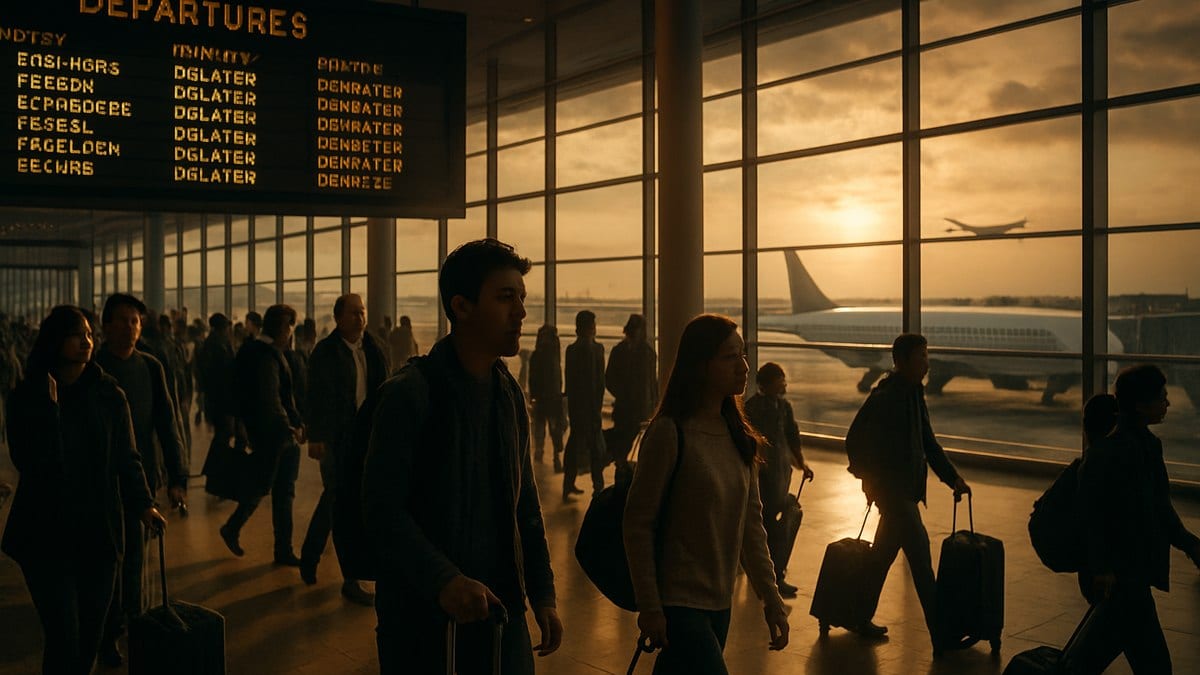
New Delay Figures Underscore a Difficult Start to April
Aggregated data from flight-tracking dashboards and industry coverage for the first week of April 2026 indicate that China Eastern accounts for the overwhelming share of the 449 combined delays, with Lao Airlines contributing a smaller but notable portion on routes touching Chinese hubs. The disruptions are concentrated around major airports including Shanghai Pudong, Beijing Capital and Daxing, Guangzhou, Shenzhen and Kunming, where airlines have already been navigating several consecutive days of irregular operations.
The latest numbers for Eastern and Lao sit within a much broader pattern of disruption. In recent days, multiple Chinese and regional airports have recorded several thousand delays and hundreds of cancellations in single-day snapshots, affecting a mix of full-service and low-cost carriers. Coverage focused on China’s big three airlines points to repeated episodes where more than 1,500 flights were delayed in a 24-hour period, with China Eastern regularly appearing among the most affected carriers.
The 449 delays attributed to Eastern and Lao for early April therefore represent only a fraction of the overall turmoil, but they highlight how secondary and regional operators are being swept up alongside national flag and mega-carriers. For travelers booked on these airlines, even a relatively small numerical share can translate into long queues, missed connections and rebookings that ripple across multi-leg itineraries.
Because many of Lao Airlines’ services into China feed larger Asian or long-haul networks operated by partner or connecting carriers, a delay on a short regional sector can upend onward journeys by pushing passengers outside connection windows. Aviation analysts tracking the data note that this amplifies the real-world impact of each delayed sector beyond what the raw count of 449 flights might suggest.
Weather Systems and Air Traffic Constraints Drive Irregular Operations
Reports from Chinese and regional travel outlets in the first week of April describe a confluence of weather and air traffic control constraints behind the latest wave of delays. Fast-moving storm systems over eastern and southern China have periodically reduced arrival and departure capacity at Shanghai, Guangzhou, Shenzhen and several inland hubs, forcing airlines to trim schedules or hold departures on the ground. Aviation dashboards for early April show multiple days when thunderstorms or poor visibility coincided with some of the heaviest disruption.
At the same time, ongoing airspace and flow-management restrictions have limited the ability of controllers to absorb surges in traffic when conditions briefly improve. When departure slots are held back or metered, airlines must sequence flights according to aircraft readiness, crew duty-time limits and connectivity obligations. Observers note that in such circumstances, even carriers with relatively lean schedules, such as Lao Airlines on China-linked routes, can see a disproportionate share of their flights pushed into delay status.
Operational backlogs from earlier days in April are also feeding into current disruptions. Once aircraft and crews end up out of position after extended delays, airlines face what industry coverage frequently describes as a cascade effect: an aircraft that arrives several hours late into Shanghai or Kunming may miss its next scheduled round-trip, forcing schedule adjustments that persist for days. Publicly available reporting on recent disruption days in China has repeatedly highlighted these rolling knock-on effects, particularly for carriers like China Eastern with dense domestic networks.
For both Eastern and Lao, this environment reduces flexibility to recover from minor schedule upsets. High load factors on many China routes limit opportunities to move passengers to alternative same-day flights, while limited spare aircraft capacity means that even a single technical issue can trigger additional late departures.
Impact on Passengers at Key Chinese Gateways
The 449 combined delays tied to Eastern and Lao in April have translated into visible strain at several Chinese terminals. Coverage from recent disruption days across the country has highlighted lengthy queues at check-in, security and airline service counters, particularly during evening banks of departures from Shanghai, Beijing and Guangzhou. Travelers on delayed flights frequently report difficulty obtaining clear, updated information as departure times shift repeatedly while crews and aircraft are repositioned.
Passengers connecting from Lao Airlines regional services into China Eastern’s domestic or international flights appear particularly exposed. A late arrival into hubs such as Kunming or Shanghai can quickly result in missed onward departures, especially where minimum connection times are tight or where additional immigration and security checks are required. Some travelers have faced overnight stays when there were no remaining seats on later flights, prompting a scramble for hotel rooms near major airports that were already busy due to other disrupted services.
Published guidance from travel industry commentators advises affected passengers to rely on official airline apps and airport departure boards for real-time status, as third-party booking platforms may lag during rapid schedule changes. In recent days, flight-tracking tools monitoring Chinese hubs have documented multiple instances where estimated departure times shifted in 30 to 60 minute increments before flights finally left the gate, a pattern that can make planning ground transfers and accommodation challenging.
For travelers who purchased tickets through online travel agencies, the disruption has sometimes added an extra layer of complexity. Rebooking may need to be processed through the original seller, and call centers in several markets have struggled to keep up with spikes in demand when weather or air traffic constraints affect large numbers of flights simultaneously.
Broader Regional Context of Asia-Pacific Flight Disruptions
The situation facing Eastern and Lao in early April is closely tied to a broader regional pattern of aviation disruption. Across Asia and the wider Asia Pacific, recent days have seen thousands of delays and hundreds of cancellations spread across up to half a dozen countries on a single day. Airports in Thailand, Singapore, India, Saudi Arabia and elsewhere have reported significant operational stress, often linked to the same weather systems or airspace restrictions that are impacting Chinese hubs.
Within this environment, China Eastern repeatedly appears in regional tallies among the most delay-affected airlines, alongside carriers based in Japan, Korea, Southeast Asia and the Gulf. Data compiled for early April show Chinese hubs featuring prominently in daily disruption rankings, with Shanghai and Beijing often listed among airports experiencing several hundred delays in a 24-hour period. For Lao Airlines, which operates a smaller network, even a handful of delayed flights on China routes can represent a large percentage of its daily schedule.
Industry observers note that while the focus in the early 2026 travel recovery period had been on capacity rebuilding and route resumptions, attention is increasingly shifting to operational resilience. The persistence of high-volume delay days in China and across the region raises questions about how quickly airlines and infrastructure can adapt to volatile weather patterns, evolving airspace management rules and strong rebound demand.
Travel analysts writing about the latest figures suggest that passengers flying in and out of China in April 2026 should plan for the possibility of multi-hour delays, particularly when connecting between different carriers. Recommendations include allowing extra buffer time between flights, booking long-haul sectors earlier in the day where possible, and keeping documentation of delay notifications and receipts in case airlines or travel insurers later assess claims.
What the Delay Data Could Signal for the Remainder of April
The 449 delayed flights recorded for Eastern and Lao in early April may offer an early signal of how the rest of the month could unfold for travelers using Chinese gateways. If weather patterns stabilize and air traffic constraints ease, airlines could gradually work through backlogs and return to more predictable operations. However, if storms persist or airspace restrictions remain tight, additional clusters of delays and cancellations are possible, particularly around peak holiday and weekend travel periods.
Publicly available on-time performance data from earlier months show that China Eastern, like many major carriers in the region, has at times struggled to maintain high punctuality during periods of rapid demand growth or significant operational stress. Analysts monitoring those metrics caution that even modest additional pressure on crew availability, maintenance slots or airport capacity can quickly translate into a visible dip in on-time performance, especially at busy multi-runway hubs.
For Lao Airlines, sustained disruption on China-linked routes could influence how the carrier allocates aircraft across its regional network later in the month. If repeated delays make certain rotations particularly difficult to operate reliably, schedule adjustments or aircraft swaps may follow, with knock-on effects for travelers across neighboring markets.
In the meantime, travelers planning April journeys with Eastern or Lao into or out of China are being urged by travel advisers and consumer advocates to monitor bookings closely, enable push notifications in airline apps and consider flexible ticket options where budgets allow. As the early April figures show, the cumulative effect of 449 delayed flights can be felt not just in raw statistics but in the day-to-day experience of passengers navigating crowded terminals and shifting departure boards.