

More news on this day
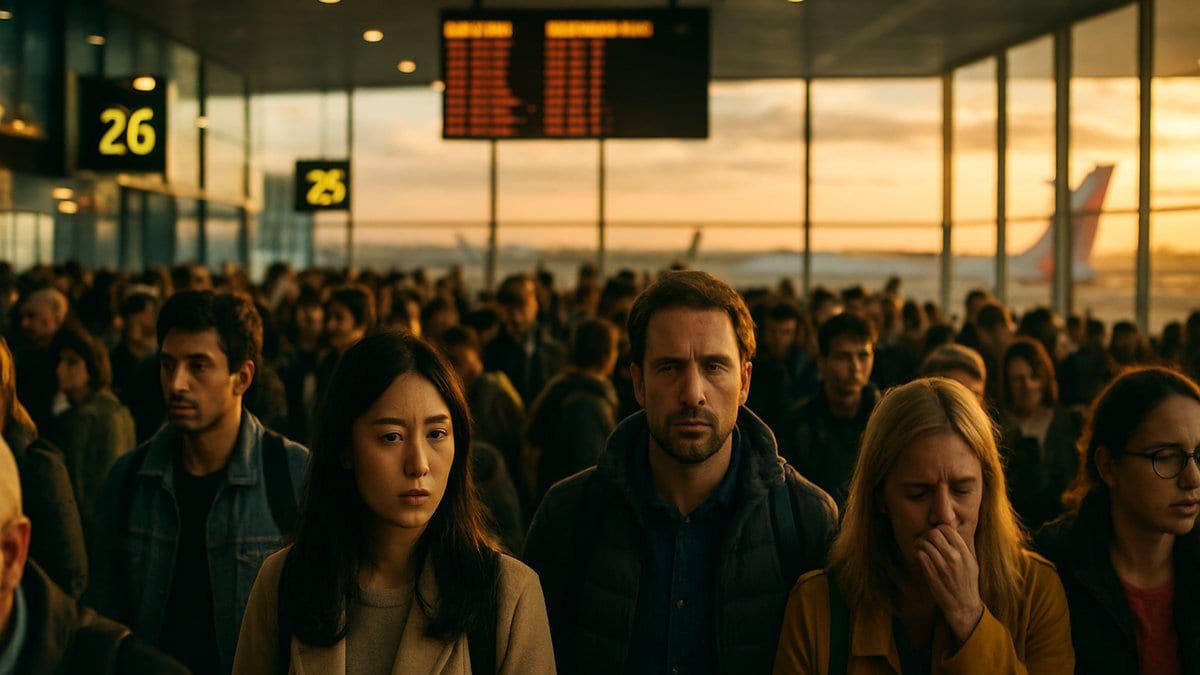
Travel across China’s busiest aviation corridors was heavily disrupted today as a wave of cancellations and delays on China Eastern and Hainan Airlines left thousands of passengers stranded in Shanghai, Beijing, and Guangzhou.
Get the latest news straight to your inbox!
Disruptions Mount Across China’s Biggest Airports
Publicly available operational data and industry reporting indicate that Shanghai Pudong, Beijing Capital, and Guangzhou Baiyun airports experienced a sharp spike in irregular operations, with a combined 49 flight cancellations and around 280 delays tied to China Eastern Airlines, Hainan Airlines, and affiliated carriers. The disruptions were concentrated on high-density domestic routes linking the three mega-hubs, amplifying knock-on effects across China’s internal network.
Coverage from aviation-focused outlets shows that China Eastern bore the brunt of the disruption, with multiple cancellations and a large share of delayed departures from Shanghai. Hainan Airlines and group airlines added to the congestion, particularly on services touching Beijing and Guangzhou, where late-arriving aircraft and rolling schedule changes contributed to extended waits for departing passengers.
The irregular operations followed a broader pattern of strain on Chinese carriers seen in recent days, where multiple hubs including Shanghai, Beijing, Guangzhou, Chengdu, and Shenzhen have oscillated between weather-related constraints and traffic-management restrictions. Within that context, today’s cluster of 49 cancellations and 280 delays on China Eastern- and Hainan-linked services represents a significant localized shock for travelers moving between the country’s core business centers.
While the absolute number of affected flights is small relative to China’s total daily departures, the concentration on trunk routes between top-tier cities magnified the passenger impact. These corridors typically run at high load factors, so even a limited number of cancellations can leave aircraft fully booked for subsequent departures and make same-day rebooking difficult.
Stranded Passengers Face Long Queues and Limited Options
Travel and aviation tracking platforms show that the disruption translated rapidly into long queues at customer-service desks in Shanghai, Beijing, and Guangzhou, as passengers attempted to secure new itineraries or refunds. With peak travel periods and busy evening banks of departures, rebooking options on later China Eastern and Hainan flights were constrained, pushing some travelers onto alternative carriers or forcing overnight stays.
Reports indicate that disrupted passengers faced a familiar set of challenges: limited real-time information on new departure times, difficulty accessing call centers from abroad, and language barriers for international travelers transiting through Chinese hubs. Social media posts and forum discussions in recent months have highlighted similar experiences, with travelers describing short-notice schedule changes and complex reissue rules when flights operated by Chinese carriers are altered.
For many passengers, the most immediate consequence was missed connections, both within China and on long-haul routes. Shanghai and Beijing, in particular, serve as major gateways for flights onward to Europe, North America, and Southeast Asia. Even when long-haul services themselves remained intact, late-arriving domestic feeders forced travelers to reshuffle entire itineraries at short notice, often incurring added hotel and ground-transport costs.
Travel insurance providers and passenger-rights groups have advised in prior disruption events that travelers retain boarding passes, e-tickets, and any written evidence of delays or cancellations to support later claims. China Eastern’s own published conditions of carriage and customer notices emphasize documentation of extended delays when passengers seek compensation or confirm coverage through third-party insurance.
Operational Pressures Behind the China Eastern and Hainan Chaos
Sector analysts point to a mix of structural and short-term operational pressures behind the current wave of disruption affecting Chinese carriers. Recent weather events in southern China, including severe thunderstorms around Guangzhou and Shenzhen, have already forced airports and airlines to compress schedules, reposition aircraft, and operate with thinner margins for on-time performance.
Industry statistics compiled in recent studies on Beijing Capital and Shanghai airports show that both China Eastern and Hainan Airlines historically contend with moderate to significant average delay times on key routes into and out of these hubs. When weather, air-traffic flow controls, or crew-availability issues coincide, small timetable adjustments can reverberate through tightly banked schedules, translating into clusters of cancellations and extended departure holds.
At the same time, China’s domestic aviation market has rebounded strongly, with high load factors returning on major city pairs such as Shanghai to Beijing and Shanghai to Guangzhou. This recovery leaves less slack in networks when an irregularity occurs. Once a handful of early flights are canceled or heavily delayed, subsequent services face added pressure as demand from stranded travelers is pushed forward through the day.
Public data from recent days also highlight that today’s China Eastern and Hainan figures form part of a broader pattern of large-scale disruptions for multiple Chinese airlines, including China Southern, Air China, and Shenzhen Airlines. Against that backdrop, the latest 49 cancellations and 280 delays underscore continuing fragility in operational resilience at several major Chinese hubs.
What Travelers Can Do if Their Flight Is Affected
For passengers caught in today’s disruption, aviation and consumer-travel advisories consistently recommend checking flight status as early and as often as possible on the day of travel. Airline and airport information channels in China typically update departure boards and mobile tools more quickly than third-party booking sites, particularly when rolling delays and gate changes are involved.
Where a flight is canceled, published guidance from China Eastern, Hainan Airlines, and other Chinese carriers generally provides for free rebooking within a defined time window or full refunds for unused segments. Travelers who booked through online travel agencies or tour operators may need to work through their original booking channel to access these options, which can add an extra step when many passengers are trying to change plans at once.
Travel specialists also advise that passengers consider alternative routes between Shanghai, Beijing, and Guangzhou during marked disruption. China’s high-speed rail network offers frequent services on these corridors, and in past events some travelers have opted to switch modes rather than wait through extended flight delays. However, this can require separate ticket purchases and additional coordination when luggage is already checked in with an airline.
For international travelers affected by irregular operations inside China, it can be useful to inform onward airlines of missed connections as soon as possible and to keep receipts for emergency accommodation and meals. These records can support later claims with insurers or, where applicable, with carriers that provide disruption assistance under their own policies.
Ongoing Scrutiny of Reliability on China’s Key Air Corridors
The spike in cancellations and delays on China Eastern and Hainan services feeding Shanghai, Beijing, and Guangzhou adds a fresh data point to ongoing scrutiny of reliability on China’s busiest air corridors. Academic research and punctuality statistics have documented consistent pressure on on-time performance at these hubs, particularly during peak travel seasons and adverse weather periods.
Travel media coverage over recent months has repeatedly highlighted mass disruption days in China’s skies, where hundreds of cancellations and thousands of delays across multiple carriers have stranded passengers nationwide. In that wider context, the newest tally of 49 cancellations and 280 delays tied to China Eastern and Hainan underscores how quickly conditions can deteriorate for travelers, even outside of headline-making storms or public holidays.
For airlines, today’s events will likely feed into renewed efforts to fine-tune schedules, strengthen contingency planning, and improve passenger communications when irregular operations occur. For travelers, they serve as a timely reminder that flexibility, robust travel insurance, and real-time monitoring of flight status remain essential tools when navigating China’s complex and heavily trafficked aviation network.