

More news on this day
Surging outbound demand from mainland China, Japan and Australia is reshaping Hong Kong’s aviation and hospitality landscape, with low cost carrier HK Express emerging as one of the world’s standout performers while city hotels report sharply higher occupancy and room rates.
Get the latest news straight to your inbox!
HK Express Rides Asia’s Travel Rebound to Global Recognition
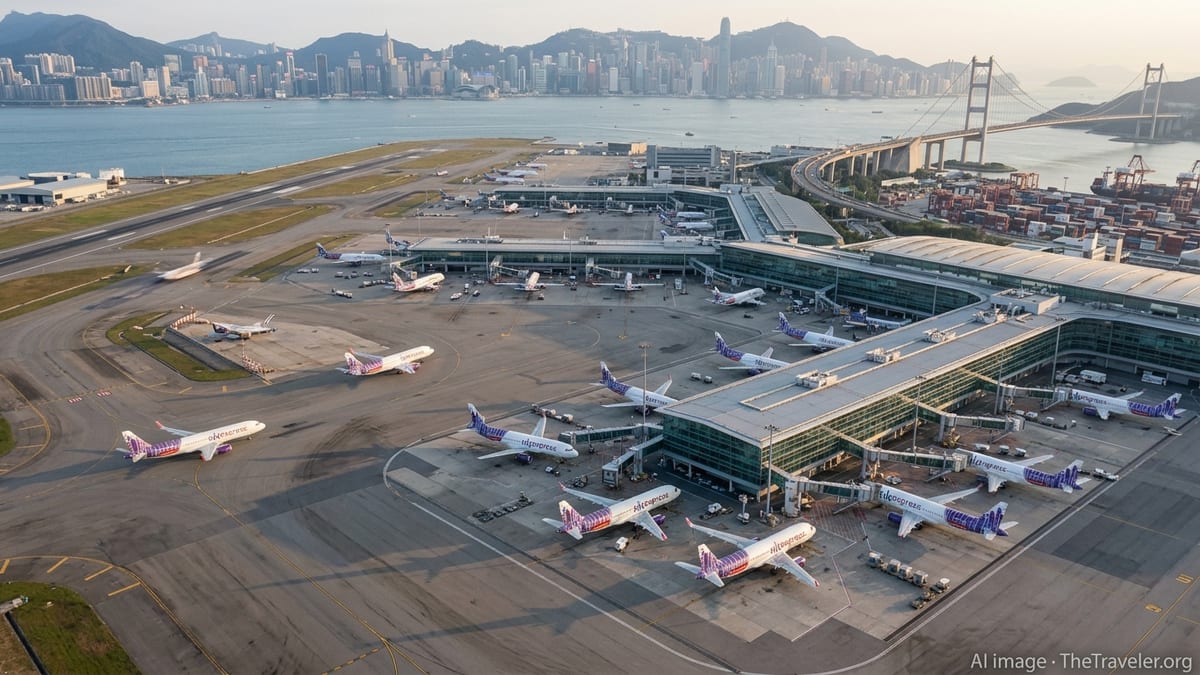
Publicly available industry data shows that HK Express, the low cost subsidiary of Cathay Pacific, has been one of the fastest growing airlines in the world as Asia’s travel recovery has gathered pace. The carrier carried more than 6 million passengers in 2024, a record for the airline and about 40 percent higher than the previous year, according to published coverage of OAG rankings and company disclosures.
By early 2025 HK Express had converted that growth into a series of accolades from aviation analysts, including recognition as one of the world’s top low cost carriers in safety and service league tables as well as being named the fastest growing airline globally in 2024. Air travel intelligence providers highlight the carrier’s expanding network and strong load factors as key reasons it now appears alongside established budget brands in global rankings.
Traffic momentum has continued into 2025 and 2026. Group statistics released through Cathay indicate that combined passenger volumes for Cathay Pacific and HK Express have been running more than 20 percent above year earlier levels in multiple recent months, with low cost operations contributing a growing share of that total.
During the 2026 Lunar New Year peak alone, HK Express reported carrying more than 280,000 passengers and a 15 percent year on year increase in traffic, underlining how quickly demand has returned on regional leisure routes.
China, Japan and Australia Drive Network Expansion
Much of HK Express’s growth is being driven by short haul markets that link Hong Kong with tourism and business hubs in mainland China, Japan and Australia. Network data collated by aviation analytics firms shows that in the year to mid 2025 the airline added more than a dozen new routes across Northeast and Southeast Asia, with a particular concentration on secondary and regional cities.
Japan has long been the core of the carrier’s network, and publicly available schedules show that HK Express has steadily added new destinations such as Sendai, Shizuoka, Ishigaki and Komatsu. These routes tap into strong two way leisure demand, with Hong Kong residents seeking seasonal getaways and Japanese travellers drawn to the city’s shopping, dining and theme parks.
Mainland China has emerged as an equally important pillar of growth. Travel industry reports note that new routes to cities including Guiyang and additional points in the Greater Bay Area and western China are feeding more visitors into Hong Kong International Airport, complementing the high speed rail and cross boundary bus network. Liberalised travel policies and promotional campaigns have helped sustain a high level of cross border movements even as geopolitical conditions fluctuate.
While HK Express remains primarily an intra Asia carrier, the broader Cathay Group’s renewed focus on Australia and other long haul markets is also feeding traffic into Hong Kong. Industry commentary points out that the resumption and expansion of services to cities such as Sydney, Melbourne and seasonal Australian gateways are reinforcing Hong Kong’s role as a stopover and short break destination for Australian travellers heading into North Asia.
Hong Kong Visitor Numbers Rebound on Regional Tourism Wave
The aviation upswing is closely tied to a broader tourism rebound in Hong Kong. Government statistics for 2024 and the first half of 2025 show that visitor arrivals have climbed steadily since borders fully reopened, with total arrivals reaching the tens of millions and continuing to edge closer to pre pandemic levels.
Mainland China remains the dominant source, accounting for roughly two thirds to three quarters of total arrivals in many recent reporting periods. However, official tourism and economic reports also highlight healthy growth from North Asia, which includes Japan, and from long haul markets such as Australia, New Zealand and the South Pacific.
Golden Week holidays in China and Japan, along with major events and trade fairs in Hong Kong, have produced pronounced peaks in hotel and flight demand. During national holidays in late 2025, immigration data cited in public reports indicated double digit percentage growth in mainland visitor arrivals compared with the previous year, suggesting that Hong Kong is firmly back on the radar for short leisure trips.
At the same time, Japan’s own record tourism year in 2024 and a recovery in outbound travel from Australia have created more multi stop itineraries that route through Hong Kong. Travel analysts point to the city’s extensive low cost and full service networks as a reason it is increasingly used as a hub for triangle trips linking China, Japan and Australia.
Hotel Occupancy and Room Rates Climb Across the City
The resurgence of regional tourism is now clearly visible in Hong Kong’s hotel performance metrics. Interim financial statements from major listed hotel owners show that citywide occupancy surged through 2024 and into 2025 as both leisure and business travel returned. In some portfolios, occupancy exceeded 80 percent on average, with prime properties in core districts regularly running near full during peak periods.
Higher occupancy has translated into robust increases in average daily rate and revenue per available room. Real estate investment and hospitality groups that report their Hong Kong hotel performance have cited double digit percentage growth in room revenues, assisted by strong demand over weekends, public holidays and major convention dates.
Industry commentary notes that budget and midscale hotels have benefited from the revival of group and value conscious travel from mainland cities, while upscale and luxury properties are seeing more bookings from Japan, Australia and long haul markets. The mix has enabled operators to push rate while still maintaining high utilisation, particularly in districts close to shopping belts, theme parks and transport interchanges.
Market observers add that continued capacity discipline has also played a role. While a handful of new hotels have opened or been converted from other uses, the overall room supply has not grown as quickly as arrivals, giving existing properties more pricing power.
Low Cost Model Reshapes Spending Patterns in Hong Kong
The rise of HK Express and other budget carriers serving Hong Kong is helping to reshape how visitors allocate their travel budgets. With more consumers able to secure relatively low airfares from mainland China, Japan and Australia, tourism economists suggest that a greater share of overall trip spending is now flowing into accommodation, dining, retail and attractions.
Retail and catering associations in Hong Kong have reported that spending by overnight visitors has strengthened alongside the tourism rebound, even as same day visits remain popular. Hotels located near major shopping districts and entertainment zones report stronger demand for bundled packages that combine rooms with experiences, a trend made more viable by affordable point to point air tickets.
Analysts also highlight the strategic role that HK Express plays in Hong Kong’s positioning as a competitive hub in the low cost segment. By offering dense frequencies to popular destinations in China and Japan and feeding passengers into the city’s wider network, the carrier supports not only the airport’s traffic figures but also the performance of hotels, restaurants and attractions that depend on steady visitor flows.
With Asia’s travel recovery still unfolding and infrastructure enhancements such as Hong Kong International Airport’s third runway coming on stream, industry experts expect the mutually reinforcing growth of low cost aviation and the hotel sector to remain a central theme. For now, at least, the surge in demand from China, Japan and Australia is propelling HK Express into the ranks of the world’s leading low cost carriers while sending Hong Kong’s hotel market to some of its strongest post pandemic highs.