

More news on this day
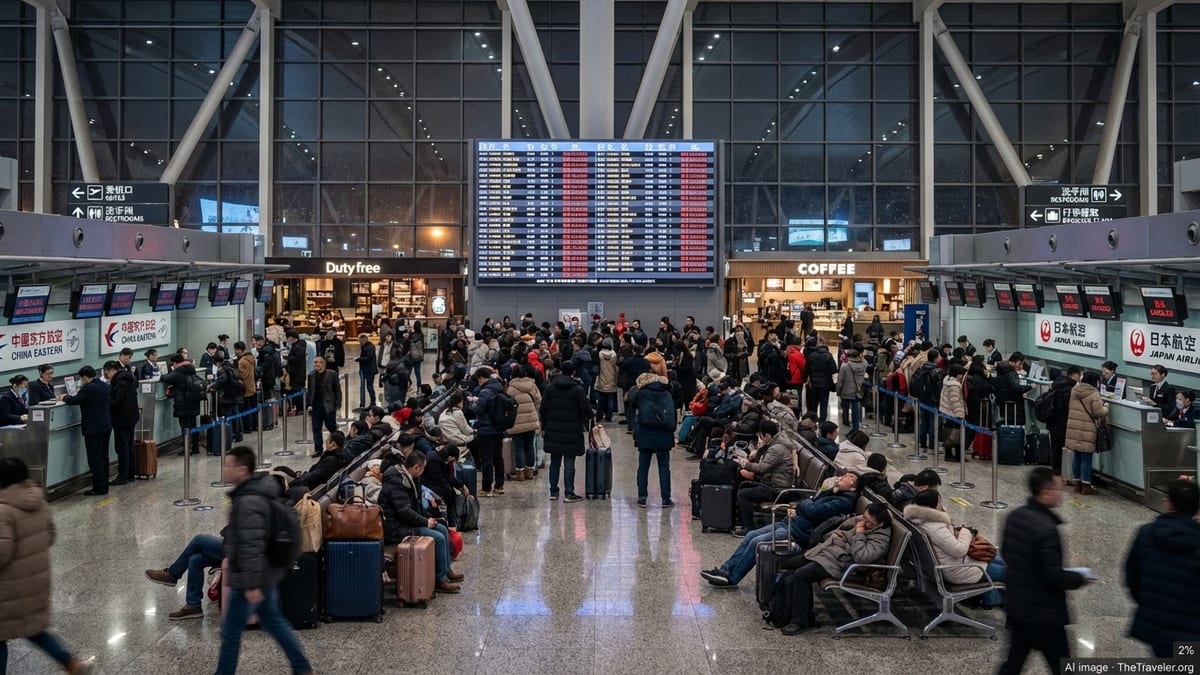
Flight operations across parts of China and Japan have entered another turbulent stretch this February, as China Eastern, Japan Airlines and Shanghai Airlines report more than 23 cancellations and over 550 delays concentrated on routes linking Shanghai, major Chinese hubs and key Japanese cities.
Latest Disruptions: What the Numbers Really Show
Operational data compiled over the past several days point to a new spike in irregular operations for flag and major carriers serving East Asia’s busiest corridors. China Eastern, Japan Airlines and Shanghai Airlines together account for more than 23 freshly halted services and in excess of 550 delayed flights on selected days in mid February, according to timetable analysis and airport movement logs. While these figures represent only a slice of the wider regional disruption, they underscore how fragile the network between mainland China and Japan has become.
China Eastern and its Shanghai Airlines subsidiary are bearing much of the burden at Shanghai’s twin airports, Pudong and Hongqiao. Weather related slowdowns, air traffic flow controls and congestion at downstream hubs have resulted in clusters of same day cancellations affecting both domestic trunk routes and international sectors to Japan. At the same time, Japan Airlines has reported elevated delay totals on flights touching Chinese gateways, with knock on effects across its tightly scheduled domestic system.
In numerical terms, the current wave of disruption is modest compared to mass shutdowns seen at the height of the pandemic years, yet the impact on travelers is magnified by the fact that the China–Japan network is already operating with sharply reduced capacity. With far fewer alternative departures than before, every canceled or significantly delayed flight translates into longer rebooking queues, fuller standby lists and more passengers stranded overnight.
Shanghai at the Epicenter of Operational Strain
Shanghai’s role as a primary hub for both China Eastern and Shanghai Airlines means that even localized weather or air traffic constraints have outsized consequences. Pudong International Airport, in particular, has seen elevated average delays this winter, with some days recording more than two hours of average hold time for departing services. Those delays cascade quickly across the network, especially on short haul routes to Japan with rapid aircraft turnarounds.
Recent operational snapshots show that while outright cancellation rates at Shanghai can remain in single digits on a given day, the proportion of flights pushed back well beyond their scheduled departure is far higher. When departure banks to Tokyo, Osaka, Fukuoka and Sapporo slip by one or two hours, connecting itineraries unravel. Aircraft and crew scheduled to operate later domestic flights from Shanghai to cities such as Chengdu, Xi’an or Harbin are forced into rolling delays or, in tighter cases, last minute cancellations.
Shanghai Hongqiao, traditionally focused on high density domestic services but also handling selective Japan flights, has faced similar constraints. As traffic has rebounded on popular intra China routes, spare capacity to absorb irregular operations has shrunk. For passengers, that has meant lengthy queues at transfer counters, crowded holding areas and, increasingly, advisories from airlines encouraging travelers to build in longer connection windows when routing through either of the city’s airports.
China–Japan Routes Under Structural Pressure
Overlaying the day to day operational challenges is a deeper structural reshaping of air links between China and Japan. Since late 2025, Chinese carriers have been steadily cutting scheduled capacity to Japanese destinations, responding to a mix of geopolitical tension, regulatory signals and shifting outbound travel demand. Industry schedule data for early 2026 show that overall China–Japan flight capacity is down by around 40 percent compared with late 2025 levels, with some analyses pointing to more than 2,000 individual flights removed from airline systems over January alone.
China Eastern, historically one of the dominant players on the Shanghai–Japan axis, has implemented particularly steep reductions. For the upcoming northern summer 2026 season, the carrier has filed plans that amount to a 55 percent cut in its one way China to Japan flights versus earlier schedules. Secondary routes such as Hefei–Osaka Kansai, Kunming–Tokyo Narita, Qingdao–Tokyo Narita and multiple Shanghai Pudong links to regional Japanese airports including Kagoshima, Komatsu, Nagasaki, Niigata and Okayama have been pulled entirely.
Shanghai Airlines, closely integrated with China Eastern’s network, has mirrored this retrenchment. Its summer schedule update confirms that Japan flying will be pared back from 45 weekly services to 21, with routes such as Shanghai Pudong–Fukuoka, Nagoya and Toyama canceled and frequencies on Shanghai Pudong–Osaka Kansai trimmed. The result is that passengers from Shanghai and a host of inland Chinese cities now rely on a narrower set of nonstop options, often funneled through Tokyo or Osaka on fewer daily departures.
Japan Airlines Balances Reliability and Reduced Options
Japan Airlines has maintained comparatively strong operational reliability through past years, consistently reporting on time performance above three quarters of its schedule in typical months and keeping cancellation rates low. Even so, the carrier is not immune to the current regional turbulence. Severe winter weather outbreaks in northern Japan and air traffic restrictions in crowded terminal areas like Tokyo Haneda have produced pockets of delays and the occasional cancellation on services that connect with China.
When JAL flights into Shanghai or other Chinese gateways arrive late or are scrubbed from the schedule, the impact spreads quickly across its domestic network. Aircraft that would typically cycle between China, Tokyo and regional Japanese cities in the same day are forced into unscheduled ground time, displacing capacity from routes such as Sapporo–Tokyo, Fukuoka–Tokyo or Osaka–Tokyo. While the absolute number of affected flights may be limited to a few dozen over a short period, the knock on effects can be felt by hundreds of passengers whose travel has no direct connection to China.
In the current environment of reduced China–Japan capacity, JAL and its partners also have less flexibility to reaccommodate disrupted travelers. Where multiple daily departures once provided resilience, many city pairs now see just one or two flights per day, shared among alliance and codeshare partners. That makes it harder to offer same day alternatives when a flight is canceled outright, and raises the likelihood of passengers being rebooked via third country hubs in Korea or Southeast Asia, lengthening journey times.
Weather, Airspace Controls and the Winter Travel Peak
The timing of this latest wave of cancellations and delays is particularly challenging for airlines and travelers alike. February encompasses both the peak of the winter season and the core of the Spring Festival travel period in China, one of the world’s largest annual population movements. Icy conditions, low visibility and snow events have affected airports from Harbin and Beijing in the north to Chengdu and Wuhan further south, while also periodically disrupting operations in parts of Japan.
Severe weather has triggered successive rounds of ground stops, runway inspections and de icing backlogs at major Chinese hubs. Carriers including Air China, China Eastern and China Express have chalked up double digit clusters of cancellations and hundreds of delays on individual days as a result. Because Shanghai is a central node linking these domestic flows with international services to Japan and beyond, any restriction upstream quickly manifests as network wide disruption.
At the same time, tighter airspace controls and flow management measures over busy corridors between eastern and central China have contributed to airborne holding and rerouting, further eating into timetable buffers. With aircraft and crew utilization already high to accommodate Spring Festival demand, even short disruptions can lead to rotations being curtailed. In some cases, airlines have opted to proactively cancel thinner routes or late evening services to protect the integrity of their core daytime banked departures.
Impact on Travelers: From Shanghai Hubs to Regional Cities
For travelers moving between China and Japan or connecting through Shanghai, the combined effect of structural capacity cuts and day to day disruptions is a travel experience that requires more planning and flexibility than in previous years. Passengers originating in secondary Chinese cities such as Wuhan, Xi’an, Nanjing or Qingdao have been particularly exposed. Routes that once offered nonstop links to Osaka or Tokyo have been withdrawn, forcing many itineraries to be restructured around connections in Shanghai or Beijing.
When irregular operations hit those hubs, travelers on rerouted itineraries are often among the first to feel the strain. Longer minimum connection times, missed onward flights and difficulty securing hotel accommodation near major airports have become more common complaints this winter. Travel agents in both China and Japan report a rise in last minute rebookings via Seoul, Bangkok and Singapore as passengers look for more reliable multi leg journeys using carriers whose schedules have been less affected by bilateral tensions.
At the airport level, crowding at transfer desks, extended waits at immigration and security, and challenges managing baggage for disrupted passengers have placed additional pressure on ground handling teams. While airlines have ramped up use of mobile apps and messaging to push real time updates and rebooking options, many travelers still prefer in person assistance, particularly when dealing with cross border itineraries and complex visa or entry requirements.
Key Routes and Airports Most Affected
The squeeze on China–Japan connectivity and the concentration of cancellations and delays have not been evenly distributed. Shanghai Pudong, as the primary international gateway, has seen the highest absolute number of halted flights and late operations touching Japan. High profile routes such as Shanghai Pudong–Tokyo Haneda and Shanghai Pudong–Tokyo Narita retain multiple daily services on China Eastern and partner airlines, but frequencies to other Japanese cities have been sharply reduced.
Osaka Kansai has also emerged as a focal point of cuts. Multiple routes linking regional Chinese cities to Osaka have disappeared from schedules, and even services from Shanghai have seen reductions. Further afield, regional Japanese airports including Fukuoka, Sapporo New Chitose and several smaller cities have lost some or all of their direct links to China Eastern and Shanghai Airlines for the current season, leaving travelers to backtrack through Tokyo or connect via other carriers.
Within China, the latest rounds of disruptions have intersected with earlier capacity reductions to isolate some passengers in cities like Chengdu, Harbin and Dalian when weather or air traffic snarls occur. Although core trunk routes continue to operate, the trimming of thinner services means that, on difficult days, there may be few if any remaining seats for rebooked travelers once cancellations are announced. That reality has encouraged many frequent flyers to build in additional flexibility, such as arriving a day early for important connections or choosing routings with multiple daily frequencies where possible.
What Travelers Should Watch in the Coming Weeks
Looking ahead through late February and into March, travelers between China and Japan should expect continued volatility, even if the worst of the winter weather gradually recedes. Airlines have already locked in most of their Spring Festival period schedules, but network planners continue to adjust specific frequencies and aircraft types in response to demand and any new regulatory guidance. Further selective cancellations on underperforming or politically sensitive routes cannot be ruled out.
For passengers, that makes proactive planning essential. Monitoring flight status closely in the days and hours before departure, allowing extra time for connections through Shanghai and other congested hubs, and considering alternative routings via Seoul, Hong Kong or Southeast Asian gateways are all strategies that can reduce the risk of severe disruption. Where possible, choosing earlier departures in the day and flights with historically strong on time performance can also help.
Industry analysts note that the underlying drivers of the current turbulence extend beyond a single weather event or traffic spike. A combination of geopolitical tension between China and Japan, evolving outbound travel preferences among Chinese tourists, and competitive pressures from other Asian hubs is reshaping the regional map. Until those forces stabilize, episodes of widespread cancellations and delays such as the latest cluster affecting more than 23 flights and over 550 delays on selected days are likely to remain a recurring feature of travel between the two countries.