

More news on this day
China, Japan and South Korea are emerging as one of the world’s busiest cruise triangles as Royal Caribbean positions Vision of the Seas in Tianjin, underscoring a sharp rebound in regional tourism and intensifying competition among Northeast Asia’s ports.
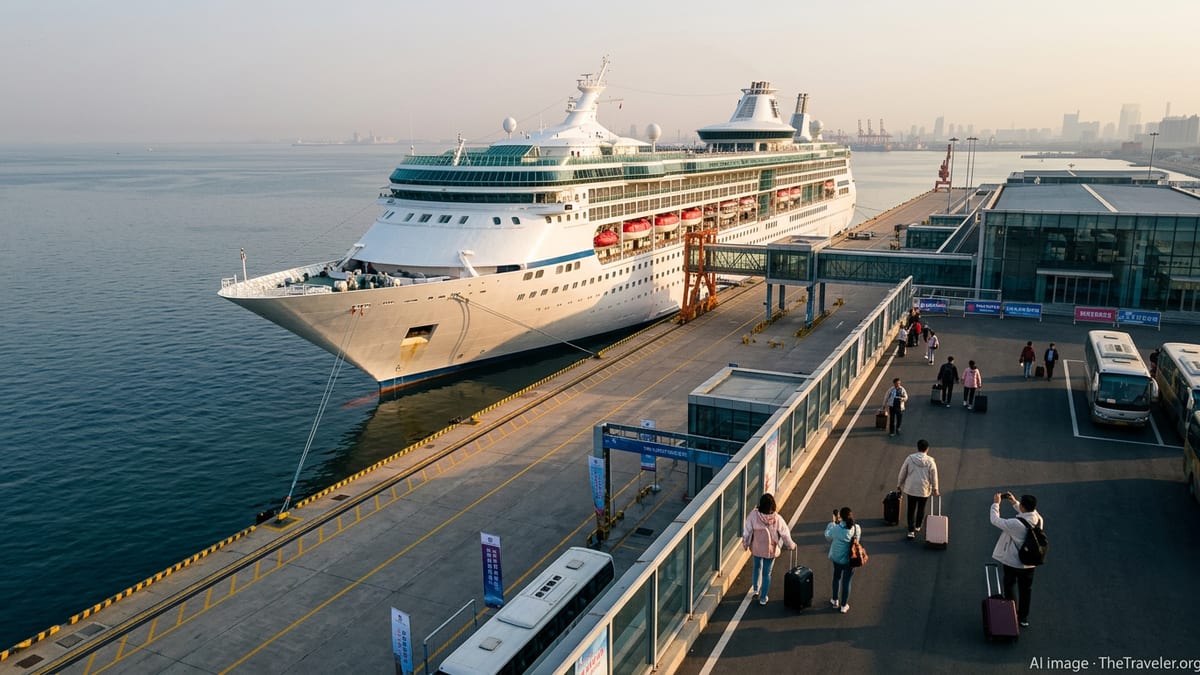
A Strategic Homeport Debut in Tianjin
Royal Caribbean’s decision to base Vision of the Seas in Tianjin for upcoming Northeast Asia sailings signals renewed confidence in China’s cruise market and its role as a regional hub. The mid-sized ship will operate a series of short and medium-length itineraries aimed primarily at Chinese travelers, connecting Tianjin to ports in Japan and South Korea during peak spring, summer and Golden Week seasons.
Tianjin International Cruise Home Port, which serves the wider Beijing–Tianjin–Hebei metropolitan area, has been ramping up operations as cruise lines bring more capacity back to northern China. The arrival of a globally recognized brand and vessel is expected to lift passenger volumes further, with local tourism boards and retail operators preparing for a surge in hotel stays, shopping and pre- and post-cruise excursions in both Tianjin and Beijing.
Industry analysts say the deployment aligns with a broader “China cruise renaissance,” as major lines reposition ships to Asia to tap into pent-up demand for international travel. While Shanghai continues to dominate in terms of scale, Tianjin’s growing schedule of sailings to Japan and South Korea is helping to rebalance traffic across China’s northern seaboard.
For Royal Caribbean, Vision of the Seas fills an important niche: offering a more intimate ship experience while still providing marquee features and a familiar Western brand. That positioning is designed to appeal both to first-time cruisers from inland Chinese cities and to experienced travelers seeking convenient, visa-friendly routes to nearby countries.
Tourism Surges Across the China–Japan–Korea Triangle
The deployment of Vision of the Seas comes as tourism flows between China, Japan and South Korea surge back toward and, in some corridors, beyond pre-pandemic levels. Data from aviation and tourism agencies show South Korea has recently overtaken Japan as the top outbound destination for Chinese travelers by flight volume, while Japan continues to draw strong visitor numbers from across the region, including South Korea.
Japan’s inbound recovery has been driven by the return of regional markets such as mainland China and South Korea, which together account for a significant share of total arrivals. City destinations including Fukuoka, Nagasaki, Kobe and Osaka feature heavily on cruise itineraries, offering compact shore excursions focused on shopping streets, historic districts and hot-spring towns that can be comfortably explored within a single port day.
South Korea, for its part, has seen sharp growth in Chinese arrivals, supported by dense air connectivity and a wave of cruise calls into Busan, Incheon and Jeju Island. Ports are investing in upgraded terminals, multilingual signage and new sightseeing products to capture higher onshore spending from passengers stepping off large international ships.
China itself is also benefiting from increased intra-Asian tourism, with visitors from Japan and South Korea returning to cities such as Beijing, Tianjin, Qingdao and Dalian. Cruise itineraries beginning or ending in China often package city tours of the Forbidden City, sections of the Great Wall or coastal heritage districts, turning homeports into destinations in their own right.
What Travelers Can Expect Onboard and Onshore
Vision of the Seas will focus on compact itineraries that maximize time in port while keeping sea days short, a format that has tested well with Asian travelers who prioritize destination-heavy schedules. Typical routes are expected to include combinations of Japanese ports such as Fukuoka, Nagasaki and Sasebo, along with South Korean favorites like Busan and Jeju, often on five- to nine-night cruises.
Onboard, Royal Caribbean is tailoring entertainment, dining and retail to match the preferences of a largely Asian passenger base while still maintaining the brand’s international character. Guests can anticipate a mix of Chinese and Western cuisine, duty-free luxury shopping, family-friendly activities and late-night entertainment calibrated to shorter holiday windows and multi-generational groups.
Onshore, city tourism boards and local tour operators are actively curating cruise-specific products. In Japan, that means themed walking tours through historic quarters, visits to shrines and temples, and food-focused excursions featuring ramen alleys, street markets and sake tastings. In South Korea, K-culture experiences from K-pop dance classes to beauty and skincare tours sit alongside classic itineraries to markets, palaces and coastal viewpoints.
Because many cruises operate as “floating city breaks,” passengers are increasingly booking pre- and post-cruise stays. Near Tianjin, travelers commonly add nights in Beijing for cultural sightseeing, while others overnight in Osaka, Fukuoka, Busan or Seoul to extend their trip beyond the hours available during a port call.
Visa Policies, Tensions and Shifting Route Patterns
While demand is strong, the regional tourism landscape is being reshaped by shifting visa rules and political tensions, particularly between China and Japan. Recent advisories and diplomatic strains have prompted some Chinese travelers to redirect their trips from Japan to South Korea and other nearby countries. Cruise lines, which must plan itineraries months in advance, are adjusting accordingly.
In some cases, sailings that once featured multiple Japanese ports are being rebalanced with additional stops in South Korea, or with longer calls in a single Japanese port instead of several. Industry forums and passenger reports indicate that itinerary tweaks have become more frequent as operators seek to manage both regulatory risk and customer sentiment while preserving attractive products.
At the same time, efforts to streamline travel are ongoing. Short-cruise formats from Chinese ports have benefitted from more flexible entry policies and simplified procedures in parts of Japan and South Korea, particularly for group travelers. For many Chinese guests, cruising offers a relatively low-friction way to sample multiple countries in a single trip, compared with arranging separate flights, hotels and visas.
Analysts note that these dynamics could make cruise flows more volatile in the near term, with routes and port mixes changing quickly in response to policy shifts. Yet the underlying appetite for regional leisure travel remains robust, suggesting that any redirection in flows is more likely to reshape itineraries than to suppress overall demand.
Economic Stakes for Ports and Cities
The arrival of Vision of the Seas in Tianjin underscores the sizable economic stakes for ports around the Bohai Sea, the Sea of Japan and the Korea Strait. Each new homeported ship can translate into hundreds of thousands of passenger movements per year, supporting jobs in terminal operations, transport, hospitality, retail and tours.
Ports in China, Japan and South Korea are racing to capture that traffic by expanding berths, modernizing terminals and offering incentives for cruise lines to schedule more calls. Tianjin has invested in improved rail and highway connections to central Beijing, while regional rivals such as Busan, Fukuoka and Yokohama tout seamless urban access and rich cultural offerings as competitive advantages.
Local businesses stand to gain as well. Shopping districts near cruise terminals are adapting with multilingual staff, tax-refund services and curated product ranges aimed at short-stay visitors. Restaurants are adjusting opening hours to match ship schedules, and independent operators are designing small-group tours that can be completed within a four- to eight-hour port window.
For tourism planners across Northeast Asia, Royal Caribbean’s Tianjin deployment is another sign that cruising is becoming a core pillar of regional travel rather than a niche segment. As Vision of the Seas begins its season linking China, Japan and South Korea, the ship will serve not only as a floating resort, but as a barometer of how quickly and how durably the region’s tourism corridors can grow in a shifting geopolitical climate.