

More news on this day
International passenger rail services between China and North Korea are set to resume this week for the first time in six years, reopening a tightly controlled but symbolically important overland route for travelers between Beijing, Dandong and Pyongyang following a prolonged shutdown during the COVID-19 pandemic.
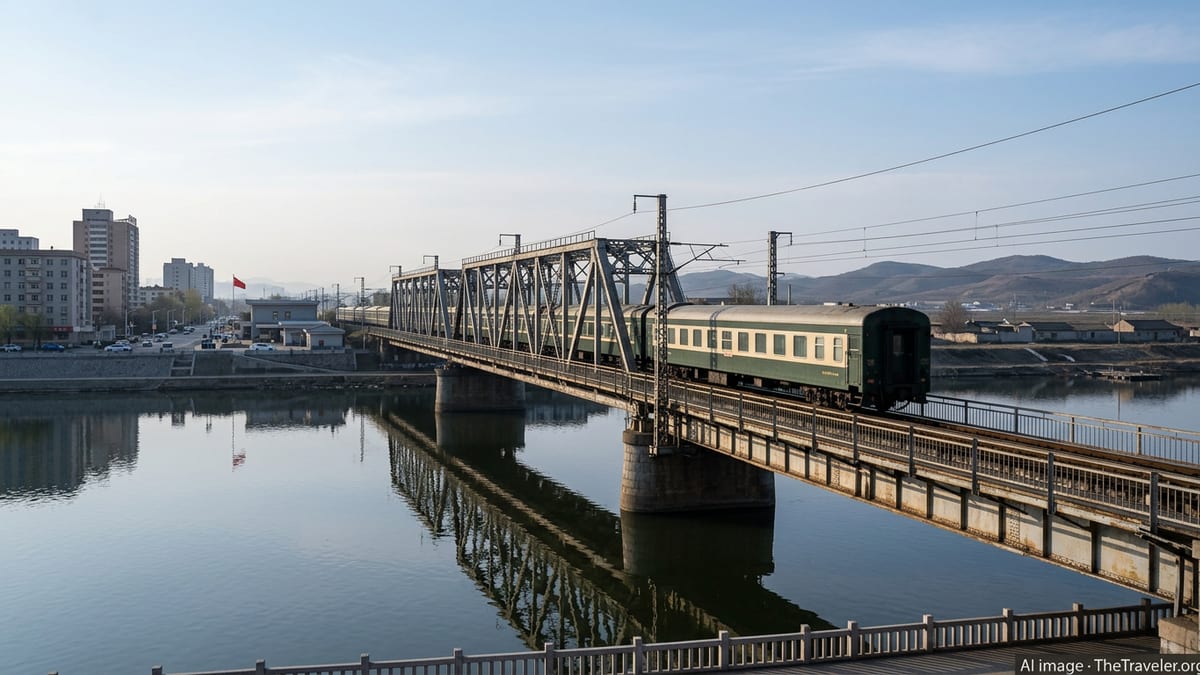
Beijing–Pyongyang Link Returns to the Timetable
China’s state railway operator has confirmed that international passenger trains between Beijing and Pyongyang will restart on March 12, restoring a corridor that had been dormant since borders slammed shut in early 2020 amid the pandemic. The move ends one of the world’s longest-running COVID-era closures of an international rail service and marks a tentative revival of people-to-people exchanges between the two neighbors.
The flagship service, historically designated as an overnight connection between the Chinese and North Korean capitals, is expected to operate four times a week according to rail service centers in China. Only part of the train’s consist will be allocated to passengers, with the remaining cars likely reserved for diplomatic and official use, reflecting the limited and highly managed nature of cross-border travel into North Korea.
Officials in Beijing have framed the decision as a step toward deepening cooperation, saying regular rail links will help facilitate exchanges in tourism, education and commerce. In Seoul, South Korea’s unification ministry has noted the planned restart while pledging to closely monitor how the renewed traffic affects regional dynamics and sanctions enforcement.
For now, ticketing will remain strictly controlled, with sales available only through designated counters inside China rather than online platforms, reinforcing that the service is aimed at a narrow pool of travelers ranging from North Korea specialists and tour groups to students and workers with special permission to cross the border.
Dandong–Pyongyang Border Trains Also Set to Restart
Alongside the capital-to-capital route, daily passenger trains are also due to resume running between the Chinese border city of Dandong and Pyongyang, reinstating a shorter but strategically important link that crosses the Yalu River bridge. Before the pandemic, this train was a key gateway for Chinese tourists entering North Korea and for North Korean nationals traveling for study, work and official business.
Rail authorities and travel operators say the Dandong–Pyongyang train will again function as a primary artery for cross-border movement, complementing limited flights operated by North Korea’s Air Koryo. With North Korea’s aviation network still sparse and subject to sudden changes, the return of rail offers a more predictable if still highly restricted option for visitors arriving from China.
During the pandemic years, freight trains were the first to return to the Yalu crossing, carrying vital goods and supplies into North Korea under strict disinfection regimes. Passenger traffic remained suspended, however, as Pyongyang pursued one of the world’s most stringent border closure policies, effectively sealing off the country for years. The reintroduction of passenger coaches marks a notable shift in how the North Korean leadership is calibrating its balance between disease control and economic necessity.
Local businesses in Dandong that once catered to rail-borne tour groups are watching the restart closely. While few expect an immediate return to pre-2020 volumes, the resumption of scheduled passenger services is seen as a prerequisite for any broader revival in border tourism along this historically busy frontier.
What the Reopening Means for Travelers
For international travelers, the return of China–North Korea passenger trains restores one of the most distinctive rail journeys in Asia: an overnight ride that combines classic international sleeper-car travel with rare access to one of the world’s most isolated states. Before the suspension, foreign tourists could typically book soft-sleeper berths from Beijing through specialized agencies that bundled the rail ticket with a North Korean visa and tightly controlled itinerary.
Tour operators now expect a phased reopening. North Korea first allowed in limited tour groups from Russia after lifting its blanket tourism ban in 2024, and specialists say Chinese tourists, who once made up the overwhelming majority of visitors, are likely to follow as Pyongyang grows more confident about managing inbound flows. The restart of regular trains from Beijing and Dandong is a logistical foundation for that shift, even if seat allocations for foreign travelers remain modest at the outset.
Practicalities will be familiar to seasoned overland travelers in the region. Ticket purchases must currently be made in person inside China, with agencies handling most bookings for foreigners. On board, passengers can expect standard Chinese and North Korean rolling stock, including shared compartments, border checks conducted at night or in the early morning, and lengthy inspection stops as both sides process passengers and luggage.
Health-related protocols are also likely to remain tighter than on other international routes. While China has largely normalized cross-border travel, North Korea’s health screening and quarantine rules have been among the strictest in the world, and travelers should anticipate additional documentation requirements as well as temperature checks and possible testing at the frontier.
Strategic and Economic Stakes Behind the Tracks
Beyond the romance of long-distance rail, the restoration of passenger services carries clear strategic and economic significance. The Beijing–Pyongyang line has long been a symbol of the political partnership between China and North Korea, and its six-year interruption underscored how far Pyongyang was willing to go in isolating itself during the pandemic. Its revival signals a desire to reengage, at least selectively, with the outside world, starting with its most important ally and trading partner.
Analysts note that the timing aligns with broader efforts by both countries to stabilize trade flows and coordinate policy in the face of continuing sanctions on North Korea and geopolitical tensions with the United States and its allies. Rail links provide a discreet, controllable channel for movement of people that sits alongside more extensively monitored cargo operations, offering flexibility for official delegations, students and workers.
The resumption could also bolster sanctioned sectors of the North Korean economy that depend heavily on visitors, from state-run hotels and restaurants in Pyongyang to souvenir shops and cultural performance troupes. Even a modest uptick in Chinese tourism can provide valuable foreign currency earnings, while Chinese travel agencies gain a unique product to differentiate their offerings in an increasingly competitive outbound market.
At the same time, the renewed services are unlikely to usher in mass tourism or a radical opening of North Korea’s borders. Seat numbers are expected to remain limited, and both Beijing and Pyongyang retain broad discretion to adjust or suspend operations if health concerns or political tensions rise. For now, the trains’ greatest significance may be symbolic: steel rails quietly reconnecting two capitals that spent much of the past six years apart.
Regional Rail Links Slowly Reconnect After COVID
The restart of China–North Korea passenger trains fits into a wider pattern of international rail corridors in Northeast Asia creaking back to life after years of disruption. North Korea has already restored direct rail and air links with Russia, while China has steadily rebuilt its own network of cross-border passenger services with neighboring countries as pandemic controls have eased.
Travel industry observers say such reopenings are being closely watched by rail enthusiasts and overland travelers who favor trains as a lower-emission alternative to flying. For those mapping trans-Eurasian journeys, the revival of a Beijing–Pyongyang–Russia axis, combined with China’s extensive domestic high-speed and conventional rail grid, offers intriguing possibilities, even if most of North Korea’s territory remains firmly off-limits to independent exploration.
Despite the constraints, the return of scheduled passenger rail between China and North Korea is a reminder of how central trains remain to the region’s infrastructure and diplomacy. In a part of the world where borders are often defined by barbed wire and military stand-offs, the image of an international sleeper rolling across the Yalu River encapsulates a different story: one of cautious reconnection, slow and heavily supervised, but moving once more along its historic tracks.