

More news on this day
Air China has resumed direct commercial flights between Beijing and Pyongyang after a six-year suspension, a milestone move that is expected to reshape controlled tourism flows into North Korea and recalibrate regional travel links following years of pandemic isolation.
Get the latest news straight to your inbox!
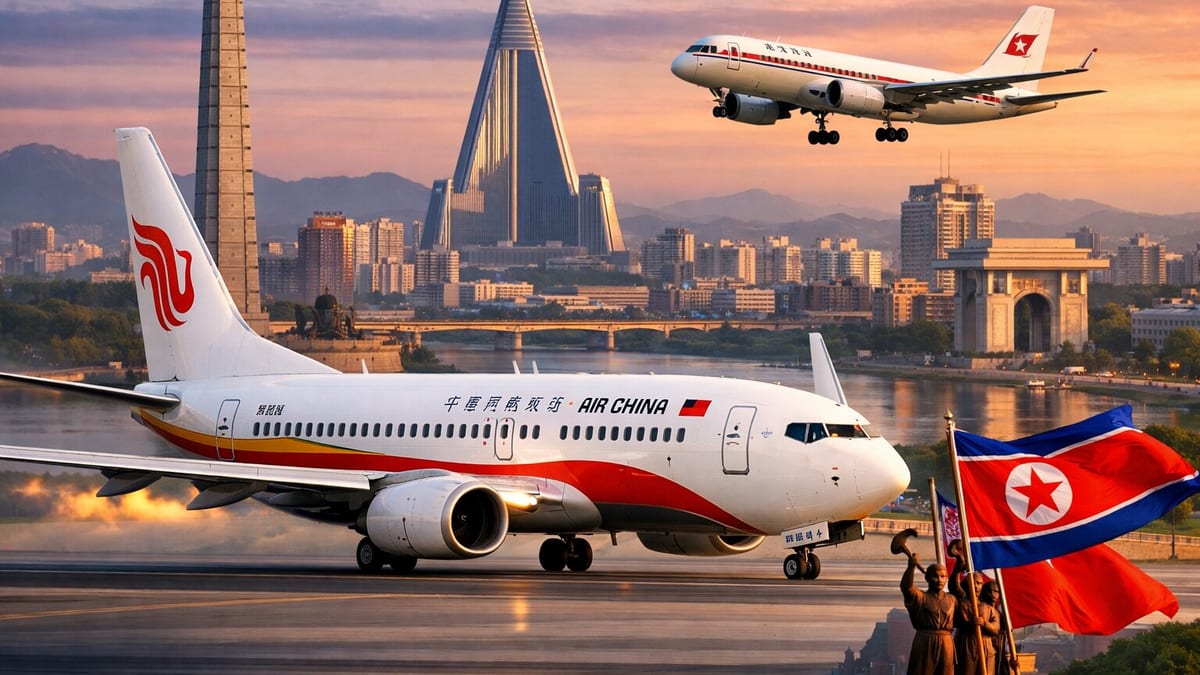
Image by Travel And Tour World
Historic Route Returns After Prolonged Shutdown
The first restored Air China flight departed Beijing Capital International Airport for Pyongyang Sunan International Airport on March 30, marking the flag carrier’s return to a route that had been dormant since the onset of strict COVID-19 controls. Publicly available timetables and media coverage indicate that regular passenger flights and trains between China and North Korea were halted in early 2020 as Pyongyang sealed its borders.
The resumption follows the restart of passenger train services between Beijing and Pyongyang and daily rail connections from the border city of Dandong. Reports indicate that North Korea, which had banned foreign tourists for nearly five years, has been cautiously reopening in stages since limited foreign tour groups began entering in 2024.
North Korea’s own carrier, Air Koryo, had already reactivated some international services, including flights from Beijing and the Russian city of Vladivostok, in 2023. However, the relaunch of Air China’s Beijing–Pyongyang service is being viewed by analysts and travel industry observers as a more visible signal that North Korea is ready to welcome a broader flow of visitors, particularly from its largest neighbor.
Chinese Travelers Poised to Reclaim Dominant Role
Before the pandemic, Chinese travelers accounted for the overwhelming majority of visitors to North Korea, often estimated at close to 90 percent of inbound tourist traffic. According to historical tourism data cited in industry research, tens of thousands of Chinese leisure travelers visited destinations such as Pyongyang, Kaesong, Mount Myohyang and the eastern coastal city of Wonsan each year.
Those flows were abruptly cut in January 2020 when North Korea became one of the first countries to close its borders in response to the coronavirus. While the country has since hosted small numbers of Russian visitors and select groups on tightly controlled itineraries, Chinese group tours remained notably absent even after other restrictions began to ease.
With direct flights and rail links now operating again, Chinese tour agencies that specialized in North Korea before 2020 are expected to begin rebuilding their programs. Travel trade publications describe rising inquiry levels for short, tightly curated itineraries built around Pyongyang city tours, war memorial sites and coastal excursions, although departures will depend on how quickly group visas and ground logistics are normalized.
New Options for Rail and Air Itineraries
The combination of restored flights and cross-border trains is opening new possibilities for multi-mode journeys between the two countries. Railway announcements in China show that passenger services between Beijing and Pyongyang, as well as Dandong and the North Korean capital, are once again listed on schedules, allowing travelers to mix overnight rail segments with the shorter air connection.
Travel analysts suggest that these options could create distinctive “rail-in, fly-out” or “fly-in, rail-out” products targeted at more adventurous travelers within China, especially those interested in tracing historic trade routes or Cold War-era landmarks. The ability to pair an outbound flight with an inbound train, or vice versa, is likely to appeal to niche tour operators looking to differentiate their offerings.
At the same time, airline scheduling data from China points to a broader effort to rebuild regional networks across Northeast Asia as domestic air travel rebounds and international routes are gradually reinstated. The Beijing–Pyongyang corridor, while relatively small in absolute passenger numbers, carries outsized symbolic weight due to its political and historical significance.
Tourism Reopening Remains Highly Controlled
Despite the excitement surrounding the first Air China flight in six years, travel to North Korea remains among the most regulated in the world. Tourists are required to join organized tours, follow fixed itineraries and adhere to strict rules on photography, movement and interaction with local residents. Independent travel is not permitted.
Specialist tour firms that monitor developments in the country note that border reopening has been phased and uneven. Certain regions, such as the Rason Special Economic Zone in the northeast and the newly promoted Wonsan Kalma coastal resort on the east coast, have hosted limited foreign groups ahead of a full-scale return to nationwide tourism. Access to some parts of the country, and the pace at which they reopen, remains uncertain.
Travel advisories issued by foreign governments continue to warn of significant legal and security risks, including the possibility of sudden policy changes, restrictions on consular access and the potential for rapid border closures. These notices are especially strict in jurisdictions such as the United States, where a long-standing prohibition on the use of U.S. passports for travel to North Korea has been repeatedly extended.
Regional Tourism Dynamics Enter a New Phase
The restoration of China–North Korea air links comes as Northeast Asia’s broader tourism landscape is rapidly shifting. South Korea and Japan are competing aggressively for Chinese visitors, rolling out visa facilitation measures, promotional campaigns and expanded flight capacity. Industry forecasts for 2026 point to a sharp rise in Chinese outbound travel to popular destinations such as Seoul, Busan, Tokyo and Osaka.
In this context, North Korea’s renewed connectivity with Beijing is unlikely to reshape mass-market tourism but could carve out a small, distinct segment within the Chinese outbound market. Analysts expect demand to come primarily from repeat travelers looking for unique destinations, history enthusiasts, and those drawn by curiosity about one of the world’s most closed societies.
Economic observers also highlight the potential for increased business travel and official delegations between the two capitals as trade and cooperation projects regain momentum. The combination of revived trains and scheduled flights is seen as a practical platform for discussions on infrastructure, energy and border trade, even as international sanctions and geopolitical tensions continue to limit the scope of economic engagement.
For now, the reappearance of a Chinese commercial jet on the Beijing–Pyongyang route stands as one of the clearest signs yet that North Korea’s long pandemic-era isolation is easing. How far this opening extends into mainstream tourism will depend on the evolution of both domestic policies in Pyongyang and the wider security climate in the region.