

More news on this day
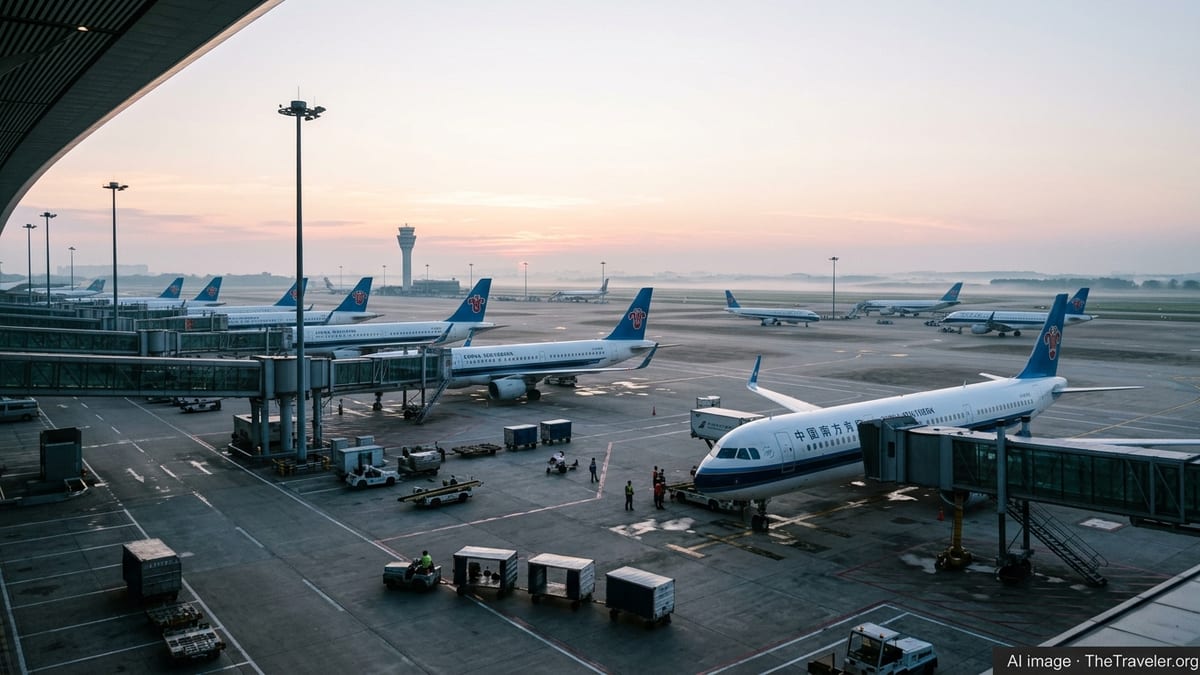
China Southern Airlines is preparing one of its most ambitious international schedules yet for 2026, unveiling new routes and extra flights that promise faster links between China and a growing list of global destinations.
Get the latest news straight to your inbox!
New long haul links put Europe and the Nordics within easier reach
China Southern’s 2026 summer–autumn timetable is set to reshape travel options between China and northern Europe, with a new nonstop service between Beijing Daxing International Airport and Helsinki scheduled from 29 March 2026. Publicly available information indicates that this will be the airline’s first route to Finland and its debut in the Nordic region, positioning Beijing Daxing as a fresh gateway for Chinese and European travelers alike.
Reports from aviation and regional media describe the Beijing Daxing–Helsinki service as part of a broader effort to expand China Southern’s long haul network and diversify beyond its traditional strongholds in East and Southeast Asia. Helsinki’s role as a major transfer point for northern Europe is expected to offer smoother one stop itineraries to destinations across Scandinavia and the Baltics.
The carrier is also deepening its footprint in southern Europe. New Guangzhou–Madrid flights, introduced as part of an expanded cooperation with a European partner airline, create a direct link between southern China and Spain’s capital. Coverage of the agreement notes that the route is intended to feed onward connections from Madrid to Latin America and North America, giving China Southern customers new one ticket options to the Americas via Spain.
Taken together, these additions signal a clear push to turn both Beijing Daxing and Guangzhou into more competitive hubs for east west flows, giving travelers alternative routings at a time when capacity on traditional trans Eurasian corridors is still recalibrating.
Central Asia and the “Air Silk Road” gain fresh momentum
Central Asia is emerging as one of China Southern’s most dynamic growth regions, with 2026 shaping up as a pivotal year. According to municipal and industry updates, the airline plans to launch a new Guangzhou–Bishkek route in March 2026, offering a direct connection between southern China and the Kyrgyz capital. Travel media reports highlight that the service will sharply cut journey times for both tourists heading to Kyrgyzstan’s mountain landscapes and traders moving between the Pearl River Delta and Central Asia.
The Bishkek launch builds on a wave of recent openings linking Guangzhou and Beijing Daxing to cities such as Dushanbe, Almaty and Tashkent. Chinese and international coverage has described these moves as part of a growing “Air Silk Road,” in which carriers like China Southern stitch together air corridors paralleling overland trade routes across Eurasia.
For travelers, the practical result is a wider choice of one stop itineraries that pair Central Asian cities with destinations in East Asia, Australia and, increasingly, Europe. By routing these flights through Guangzhou and Beijing Daxing, China Southern is also strengthening its hubs against rising competition from Middle Eastern and Turkish carriers that have long dominated Central Asia connections.
Industry analyses suggest that the expansion into Central Asia aligns with China Southern’s wider strategy of focusing new capacity on markets where geography strongly favors air travel and where tourism, student flows and business traffic are all showing recovery after the pandemic.
Australia and the South Pacific see record capacity
China Southern is also setting new records on its China–Australia network in 2026. Reports from Australian airports and specialist travel outlets indicate that the airline intends to lift its Guangzhou–Sydney service to three daily flights on a year round basis from late March 2026, with a temporary fourth daily rotation planned around the Chinese New Year peak.
In parallel, the carrier is expanding beyond Australia’s largest gateways. Newly launched Guangzhou–Darwin flights have created the airline’s shortest link to the country, while reinstated services to Perth and Adelaide are being extended from seasonal to year round operation from March 2026, according to airport announcements. Combined, these adjustments are expected to push China Southern’s Australia operations to dozens of weekly rotations, offering more flexibility on departure times and smoother onward connections within both countries.
Tourism authorities and aviation analysts point out that this surge in capacity dovetails with a rebound in Chinese outbound travel and growing Australian interest in visiting China’s lesser known destinations. With Guangzhou acting as the main hub, travelers from across Australia gain access to a broad Chinese domestic network as well as same day links to Europe and Central Asia.
For leisure and business passengers alike, the additional flights mean more competition on fares, improved chances of securing award seats and a wider range of routing options, especially during peak holiday periods when seats on China–Australia services have historically been scarce.
Short haul growth and seasonal peaks reshape regional travel
Beyond headline long haul routes, China Southern is using 2026 to substantially increase overall capacity. Data compiled by airline and travel information providers shows that the carrier plans to operate more than 456,000 flights over the year, with a particularly intense focus on peak travel windows such as the Spring Festival migration period.
For the 40 day Spring Festival travel season running from early February to mid March 2026, publicly available schedules indicate that China Southern alone is planning around 126,000 passenger flights, including some 16,000 international services. New and recently added routes such as Guangzhou–Madrid and Guangzhou–Darwin, along with boosted frequencies on existing links to Sydney, Perth and Adelaide, are highlighted as key contributors to this surge.
Domestically and within the wider Asia Pacific region, the airline is also reinforcing its network from Beijing Daxing and Guangzhou to popular winter and summer destinations, ranging from China’s far west to island and coastal resorts. Industry briefings describe a strategy of channeling more capacity onto routes where rail or road alternatives are limited, and where demand from leisure travelers, students and migrant workers is recovering fastest.
For regional travelers, the impact will be felt in more direct city pair options and shorter layover times, particularly on journeys that once required multiple changes within China before connecting internationally.
Fleet upgrades promise a fuller experience in the skies
The network build out is being accompanied by investments in hardware and onboard experience that are expected to come into service from 2026 onward. Aircraft manufacturer communications note that China Southern has ordered additional long haul widebodies equipped with new generation high bandwidth satellite connectivity, with the first such aircraft due to enter service in 2026. These jets are designed to support faster, more reliable in flight internet across intercontinental routes.
At the same time, design and aviation industry coverage has showcased new cabin interiors for forthcoming Airbus A350 aircraft and updated narrowbody jets, featuring redesigned business class seats and refreshed cabins in other classes. The initial aircraft fitted with these products are scheduled for delivery from late 2026, meaning travelers booking toward the end of the year or into 2027 may start to experience the changes on select routes.
While exact aircraft allocations for individual routes in 2026 have not yet been fully detailed, analysts suggest that China Southern is likely to prioritize its most competitive long haul services, including those to Europe and Australia, for the earliest cabin upgrades and connectivity enhancements.
For passengers planning trips in 2026, the overall picture is one of expanded choice: more nonstop routes, extra frequencies on established city pairs and gradual improvements to the onboard experience, collectively signaling that China Southern aims to be a central player in the next phase of global travel recovery.