

More news on this day
China Southern Airlines has agreed to sell its entire fleet of 10 Boeing 787-8 Dreamliners through an unprecedented online auction, with the aircraft now set to join Thai Airways via a leasing deal that tightens aviation ties between China and Thailand and reshapes regional widebody capacity.
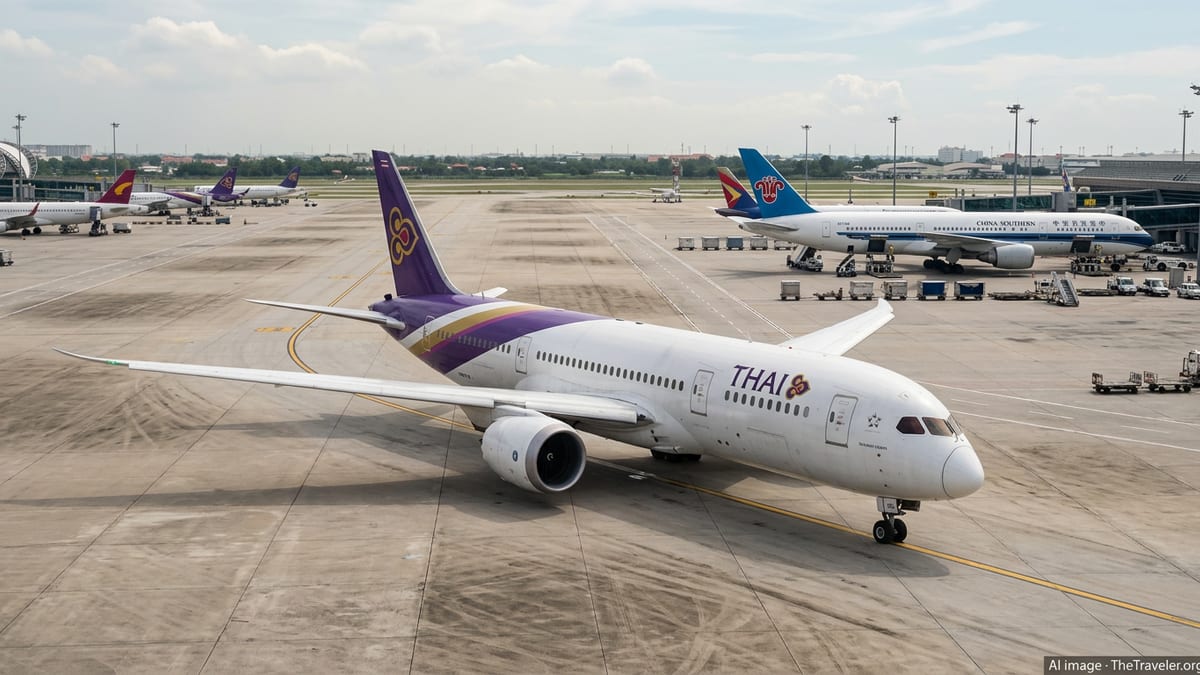
Landmark Deal Connects Chinese Seller, Global Lessor and Thai Flag Carrier
The transaction, confirmed in recent disclosures from Chinese and regional aviation sources, sees China Southern offload all 10 of its Boeing 787-8s, together with two spare GEnx-1B engines, to Bohai Leasing. The Chinese lessor, through its subsidiary Avolon, signed a master sale and purchase agreement on 27 February covering the full package, with a market value estimated at about 532 million US dollars.
The aircraft, delivered in 2013 and 2014 and averaging more than 12 years of age, had primarily been based at Ürümqi Diwopu International Airport in western China, operating a mix of domestic and regional routes for China Southern. Their sale closes a multi-year divestment push by the Guangzhou-based carrier, which first floated plans to dispose of the subfleet in 2024 and revived the process in late 2025 after earlier delays.
Thai Airways, meanwhile, has secured board approval to lease the same 10 787-8s from Avolon, confirming that it is in advanced talks to add the mid-life Dreamliners as part of a broader fleet rebuild. The aircraft are expected to begin arriving from mid-2026, giving the Bangkok-based airline an immediate capacity injection years ahead of its own factory-fresh widebodies.
While the deal is structured through a leasing intermediary, it effectively links China Southern’s fleet streamlining with Thai Airways’ growth strategy, underscoring how asset transfers within Asia are increasingly channeled through global lessors rather than direct airline-to-airline sales.
Online Auction Sets New Precedent for Widebody Sales
What sets this transaction apart is the mechanism. China Southern chose to market the entire 787-8 package via a public online auction on a Chinese property and equity exchange, an approach rarely seen for long-haul aircraft of this size and value. The airline set strict conditions that the jets and spare engines be sold only as a complete portfolio, an all-or-nothing structure aimed at simplifying exit from a small, non-core subfleet.
The online bidding process drew interest from multiple buyers before Bohai Leasing emerged as the successful bidder. Final pricing was tied to the outcome of the exchange’s bidding mechanism, rather than a traditional negotiated sale. For an asset class that typically changes hands through confidential, brokered deals, the transparent auction format signals a potential shift in how surplus aircraft may be traded in China and beyond.
Aviation analysts note that the timing was favourable. Global demand for widebody lift has been climbing as international travel recovers, while production slots for new long-haul aircraft remain constrained. That imbalance has pushed up values of serviceable mid-life jets and created incentives for lessors like Bohai to secure feedstock whenever sizeable, homogenous portfolios become available.
The success of the China Southern online auction is likely to be closely watched by other carriers in the region holding ageing widebody types. If secondary market appetite remains strong, more airlines could opt for similar portfolio-style disposals to accelerate fleet renewal and unlock capital.
Thai Airways Accelerates Rebuild of Long-Haul Network
For Thai Airways, the 10 additional Dreamliners are a cornerstone of an aggressive plan to restore and expand its long-haul network from Bangkok Suvarnabhumi. The flag carrier has outlined ambitions to bring its total fleet close to 100 aircraft, supported by a mix of leased 787-8s and new narrowbody Airbus A321neos, as it emerges from restructuring and capitalises on resurgent travel demand across Asia.
The airline already has orders in place for 45 new Boeing 787s, predominantly larger 787-9s, but deliveries are not scheduled to begin until late this decade. Leasing mid-life 787-8s from Avolon provides an interim bridge, allowing Thai to restore long-haul frequencies and open new routes without waiting years for factory slots.
Industry observers expect the ex-China Southern aircraft to be deployed on high-demand regional and intercontinental sectors from Bangkok, potentially including routes to China, Japan, India, the Middle East and select European gateways. Their arrival will also enable Thai Airways to retire older, less fuel-efficient widebodies while maintaining overall capacity, improving unit costs and reliability.
Operationally, the 787-8s offer Thai a modern, composite-bodied platform with competitive fuel burn, even if their interiors are unlikely to match the latest-generation cabins on new-build aircraft. The carrier has historically operated with a mix of cabin products across its fleet, so major reconfiguration of the ex-China Southern jets is seen as unlikely in the near term.
China Southern Streamlines Fleet Amid Broader Boeing Headwinds
For China Southern, shedding the 787-8s is part of a wider effort to simplify its long-haul fleet and reduce complexity in maintenance, training and scheduling. The airline has been gradually pivoting toward larger and more efficient aircraft types, while also managing exposure to changing political and trade dynamics that have complicated deliveries of US-built jets to Chinese carriers.
The sale removes an orphan subfleet of just 10 787-8s from China Southern’s books, enabling resources to be concentrated on more numerous widebody types and an overwhelmingly narrowbody-dominated operation. Analysts say the cash raised from the auction, when combined with savings from reduced complexity, strengthens the carrier’s balance sheet and supports ongoing fleet renewal.
The deal also unfolds against a backdrop of ongoing strain between China and the United States over aircraft deliveries and technology exports. Although the 787-8s involved are existing in-service aircraft, not new deliveries, their exit from a major Chinese airline points to a gradual recalibration of widebody exposure while maintaining flexibility through leasing and secondary trading channels.
China Southern’s willingness to use an online auction and accept a complete portfolio sale suggests a pragmatic approach: prioritising speed and certainty of execution over maximising potential piecemeal proceeds, and signalling readiness to leverage China’s domestic financial infrastructure for large-scale aviation transactions.
Strategic Implications for China–Thailand Aviation Links
Beyond fleet metrics, the movement of 10 Dreamliners from a Chinese operator to Thailand, via a Chinese-owned lessor, highlights the deepening economic and aviation ties between the two countries. China remains one of Thailand’s largest tourism source markets, and Bangkok has long served as a key Southeast Asian hub for Chinese travellers connecting onward to South Asia, Australia and Europe.
As Thai Airways rebuilds, additional 787 capacity will support more frequencies and new city pairs linking Bangkok with second-tier Chinese cities as well as major coastal hubs. That expanded connectivity stands to benefit both inbound tourism to Thailand and outbound travel from China, reinforcing Bangkok’s status as a regional crossroads.
For Chinese leasing firms like Bohai, placing former China Southern aircraft with Thai Airways demonstrates their growing role as facilitators of intra-Asian connectivity, not merely as financiers serving Western carriers. By recycling assets within the region, they help match surplus capacity from restructuring airlines with the growth ambitions of recovering or expanding operators.
The China Southern auction and subsequent Thai Airways lease deal encapsulate a post-pandemic trend: rather than scrapping or parking mid-life long-haul jets, Asian carriers and lessors are redeploying them to markets where demand has bounced back fastest. In this case, the winners are Thai Airways, which gains much-needed widebody lift, and travellers across Asia, who can expect more choice and frequency on key routes linking China and Thailand in the years ahead.