

More news on this day
China is set to play a central role in shaping Asia-Pacific air connectivity as Xi’an prepares to host Routes Asia 2026 from April 14 to 16, bringing together airlines, airports and tourism bodies from across the region and key long-haul markets including the United States, Canada, the United Kingdom, Japan, Thailand, the Philippines and Australia.
Get the latest news straight to your inbox!
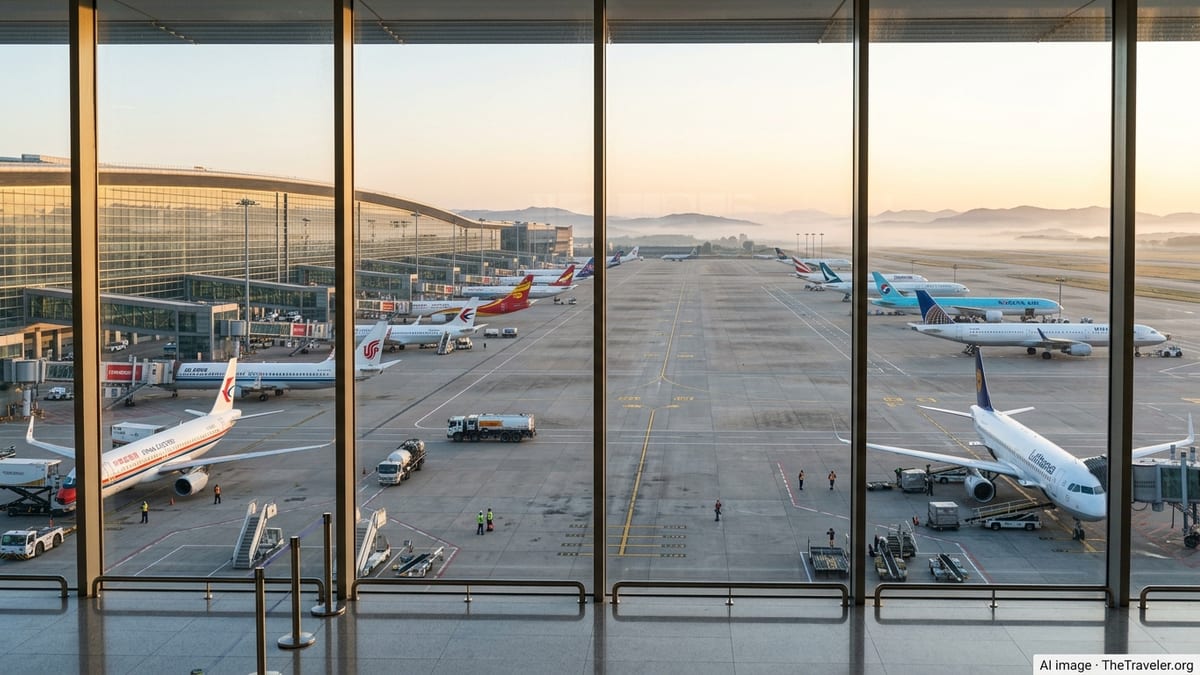
Xi’an Steps Into the Spotlight as Regional Air Hub
Routes Asia 2026 will take place in Xi’an, capital of China’s Shaanxi province and one of the country’s fastest-rising aviation gateways. Publicly available information indicates that the event is scheduled for April 14 to 16, 2026, positioning the city as a focal point for discussions on new and restored air services across the Asia-Pacific region.
The forum will be hosted by China West Airport Group and Xi’an Xianyang International Airport, which oversee one of western China’s most important aviation hubs. Xi’an Xianyang has expanded rapidly in recent years, developing routes to major Chinese cities, key Asian markets and selected long-haul destinations, with an eye on building stronger links to Central Asia, the Middle East and Europe.
By welcoming airline and airport leaders to its home market, China is signaling an ambition to move beyond its traditional coastal gateways and highlight the role of inland hubs in the country’s next phase of aviation growth. For Xi’an, the event is expected to support its broader strategy to become a pivotal node on modern trade and travel corridors that build on its historic position along the Silk Road.
Industry coverage suggests that Routes Asia 2026 will focus on network recovery and expansion following years of disruption, underscoring Xi’an’s importance as a platform for reconnecting secondary Chinese cities with the wider region and beyond.
Broad International Participation from North America, Europe and Asia-Pacific
Routes-branded events routinely attract a wide cross-section of global aviation stakeholders, and early indications for Routes Asia 2026 point to strong engagement from carriers and airports representing North America, Europe and the broader Asia-Pacific region. Participants are expected to include organizations based in the United States, Canada, the United Kingdom, Japan, Thailand, the Philippines and Australia, alongside a large contingent from within China.
These markets are among the most important long-haul and regional contributors to Asia’s air traffic. North American and European airlines view Asia as a key driver of premium demand and connecting flows, while Asia-Pacific carriers are rebuilding networks and seeking new partnerships to capture returning tourism and business travel. Routes Asia 2026 offers a concentrated environment in which these stakeholders can evaluate traffic forecasts, assess capacity needs and consider new city pairs.
According to published event information, the three-day programme will feature one-to-one meetings, conference sessions and briefings designed to support route negotiations and long-term planning. For destinations and tourism boards seeking to attract new flights, the event provides an opportunity to present market data and showcase infrastructure investments directly to airline decision-makers.
The presence of stakeholders from Thailand, the Philippines, Japan and Australia is also significant for regional connectivity. These countries sit on some of the busiest leisure and labor-travel corridors in Asia, and their engagement in Xi’an points to ongoing interest in expanding both point-to-point and connecting services through Chinese hubs.
Strategic Timing for China’s Aviation and Tourism Recovery
The timing of Routes Asia 2026 aligns with a broader phase of recovery and recalibration for China’s aviation sector. Publicly available data from Chinese carriers and airports shows that international capacity has been rebuilding as travel restrictions ease and economic activity stabilizes. Hosting a major route development forum in April 2026 gives the market a platform to consolidate gains and plan for the next wave of growth.
Chinese airlines have been restoring services to key intercontinental markets, while also adding frequencies on routes linking major coastal cities with Southeast Asia, Japan and South Korea. At the same time, there has been a focus on strengthening connectivity from emerging hubs such as Xi’an to cities in Central Asia and the Middle East, reflecting shifting trade and tourism patterns.
For China’s tourism industry, Routes Asia 2026 is expected to support national and provincial efforts to attract more international visitors. Xi’an, best known globally for the Terracotta Warriors and its historic city walls, has been investing in modern hotels, convention facilities and transport infrastructure to complement its cultural attractions. By hosting aviation and tourism planners in the city itself, local authorities and airport operators can highlight product improvements that may underpin new services.
The event’s placement in mid-April, at the start of the traditional peak planning window for the northern summer season, also allows airlines to refine short-term capacity decisions while mapping out longer-term network strategies into 2027 and beyond.
Focus on Network Rebuilding, Dual-City Airports and New Corridors
Preliminary conference programme outlines for Routes Asia 2026 indicate that key discussion themes will include network rebuilding, the role of dual-city and multi-airport systems, and the development of new trade and tourism corridors across Asia. These topics reflect the realities facing airlines as they balance cost pressures, evolving passenger demand and infrastructure constraints.
One area of particular interest is the optimization of routes that connect large metropolitan regions served by more than one major airport. For China, this is relevant not only for coastal conurbations such as the Yangtze River Delta and the Greater Bay Area, but also for inland clusters where high-speed rail and air links increasingly intersect. Sessions on dual-city airports are expected to explore how schedules, slot coordination and ground transport integration can enhance the appeal of such networks.
Another focus is the emergence of new corridors linking secondary and tertiary cities across Asia and into Europe, Central Asia and the Middle East. As airlines reassess traditional hub-and-spoke models, there is growing interest in thinner routes that can be sustained with new-generation narrowbody aircraft and flexible partnership structures. Routes Asia 2026 offers a venue for airports from smaller markets to present their cases alongside larger hubs.
Publicly shared agenda details also point to sessions examining sustainability, fuel costs and regulatory developments, all of which are reshaping fleet planning and route economics. These broader themes are likely to influence the pace and direction of new air service announcements emerging from the event.
Implications for Travelers and Tourism Markets Across the Region
While Routes Asia 2026 is an industry-focused forum, outcomes from the negotiations in Xi’an could translate into tangible changes for travelers over the subsequent seasons. Historically, route development events have helped catalyze new city pairs, additional frequencies on existing routes and improved connectivity via intermediate hubs.
For passengers in the United States, Canada and the United Kingdom, expanded cooperation with Asian and Chinese carriers may result in more one-stop options to inland Chinese cities and secondary destinations in Southeast Asia. For travelers in Japan, Thailand, the Philippines and Australia, enhanced links to Xi’an and other Chinese hubs could shorten overall journey times to parts of Central Asia, the Middle East and Europe.
Tourism markets around the region may also benefit from a renewed focus on diversification. Destinations that have historically relied on a narrow set of source markets are increasingly seeking to broaden their visitor base by securing services from multiple regions. Routes Asia 2026 offers such destinations an opportunity to position themselves within multi-country itineraries and airline network strategies.
As airlines, airports and tourism organizations gather in Xi’an from April 14 to 16, 2026, publicly available information suggests that China will leverage its role as host to showcase both its aviation ambitions and its tourism assets. The event is poised to become a reference point in the ongoing reshaping of travel patterns across the Asia-Pacific and beyond.