

More news on this day
China’s record-long nine-day Spring Festival holiday in 2026 is triggering a powerful outbound travel boom, with unprecedented cross-border passenger flows propelling destinations from South Korea and Thailand to Europe and Australia into one of their busiest Lunar New Year seasons on record.
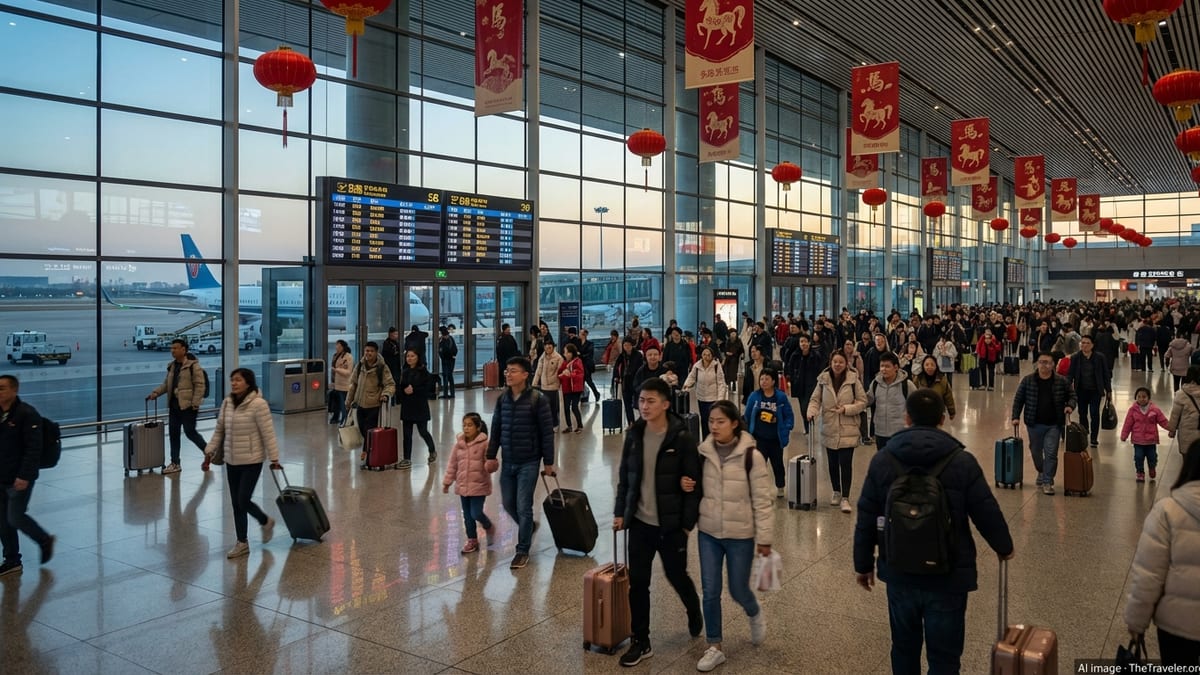
Record Holiday, Record Flows: A New Benchmark for Chinese Outbound Travel
China’s 2026 Spring Festival, running from February 15 to 23, is not only the country’s longest Lunar New Year break on record but also the most globally consequential in years for tourism. Border authorities expect average daily inbound and outbound passenger volumes to exceed 2.05 million during the holiday, up more than 14 percent from a year earlier, underscoring how quickly international mobility has roared back for Chinese travelers.
The National Immigration Administration forecasts that the broader Spring Festival travel rush period will see a historic peak in cross-border movements, riding on pent-up demand, rising flight capacity, and increasingly liberal visa rules. For destinations that rely heavily on Chinese visitors, the timing could not be better. Many Asian tourism economies are still rebuilding balance sheets and workforces after the pandemic, and a resurgent China market is emerging as the pivotal driver of their 2026 outlook.
Industry analysts say the combination of a stronger yuan, growing middle-class wealth, and travel now firmly restored as a “must-have” discretionary expense is setting the stage for a breakout year. Surveys by Chinese tourism research bodies indicate that a majority of urban consumers plan at least one overseas trip in 2026, with a sizable share targeting two or more, and a clear tilt toward higher travel budgets compared with 2024.
That spending power, compressed by years of restrictions and economic caution, is now being unleashed in a single, concentrated burst over the Spring Festival. Airlines, tourism boards, and hotel groups across the region are racing to capture the wave, from Seoul’s shopping streets and Thai beach resorts to Alpine ski towns and Mediterranean city breaks.
South Korea Surges as Top Short-Haul Winner
Among short-haul markets, South Korea has emerged as one of the biggest immediate winners of China’s 2026 Spring Festival boom. Flight-tracking and aviation data show that in the first week of 2026, South Korea was already the leading outbound flight destination from China, ahead of both Thailand and Japan, signaling how strongly demand was building into the holiday season.
Online travel platforms in China report that Seoul, Busan, and Jeju are topping hotel and package booking charts, driven by a mix of K-culture appeal, shopping opportunities, winter landscapes, and convenient, relatively short flight times. The country’s ease of access and streamlined visa procedures have added to its appeal, particularly for younger travelers looking for quick, high-value getaways during the nine-day break.
Tourism operators in South Korea describe a sharp upswing not only in group tours but also in independent Chinese travelers opting for flexible itineraries. Duty-free districts, beauty and fashion retailers, and popular filming locations for Korean dramas are preparing for some of their highest Lunar New Year footfall since before the pandemic. Local hospitality businesses, from mid-range hotels to upscale dining, are adjusting staffing and inventory to handle the renewed influx.
The surge also carries strategic significance for South Korea’s broader tourism revival. After years of volatility in Chinese arrival numbers due to political tensions and border controls, the 2026 Spring Festival performance is being viewed by industry observers as a bellwether for whether the market can stabilize into a more predictable, high-volume growth trajectory through the rest of the year.
Thailand Dethrones Japan as Spring Festival Favorite
If South Korea is the breakout short-haul star, Thailand is the clear headline leader of China’s 2026 Spring Festival outbound story. Data from major Chinese booking platforms show that Thailand has overtaken Japan as the top destination for hotel bookings through the mid-January to Spring Festival window, a sharp reversal from the hierarchy seen during the 2025 Lunar New Year and Golden Week periods.
Bangkok, Phuket, Chiang Mai, and Pattaya are among the biggest beneficiaries, buoyed by Thailand’s visa-free arrangements for Chinese visitors, a warm winter climate, and a deeply familiar tourism infrastructure that caters extensively to Chinese language and payment systems. Airlines have ramped up frequencies on China–Thailand routes, and both low-cost and full-service carriers are reporting load factors near holiday peaks.
For Thailand, which has grappled with uneven Chinese arrival trends over the past two years, this Spring Festival represents a decisive step back toward the market’s previous scale. Tourism authorities have set ambitious arrival and revenue targets for 2026, banking on the Lunar New Year surge as a launchpad for sustained growth into the Songkran and summer seasons. Hotel operators from beach resorts to city properties are signaling strong occupancy, with premium beachfront and pool-villa categories particularly favored by family and multi-generational groups from China.
Travel analysts note that Chinese visitors to Thailand are increasingly shifting from purely price-driven mass tours to more segmented travel, ranging from wellness-focused retreats and diving trips to culinary tourism and heritage exploration in northern regions. The Spring Festival boom is amplifying these trends, with on-the-ground operators reporting greater demand for customized day tours, private transfers, and higher-end experiences compared with earlier recovery phases.
Visa-Free Policies and Air Capacity Unlock a New Travel Era
Behind the headline booking numbers lies a structural shift that is reshaping Chinese outbound travel: unprecedented expansion in visa-free and visa-on-arrival access, combined with near-full restoration of international air capacity to and from China. Over 50 countries now offer simplified entry for Chinese passport holders, markedly reducing friction for last-minute or first-time outbound travelers.
Across Southeast Asia, Thailand, Malaysia, and Singapore are among the clear beneficiaries of these policy shifts, reporting double-digit growth in Chinese arrivals since visa rules were relaxed. In the Middle East, the United Arab Emirates continues to capitalize on visa-free entry, with Dubai and Abu Dhabi acting as both destination draws and major transit hubs onward to Europe and Africa. New e-visa systems in destinations such as Saudi Arabia are also opening fresh corridors for themed and religious tourism.
On the aviation side, international seat capacity to and from China has rebounded to around 90 percent of 2019 levels, and industry projections suggest that by mid-2026, bottlenecks on key long-haul routes will largely have eased. Gulf carriers have already exceeded pre-pandemic frequencies on China routes, while Chinese and European airlines are steadily rebuilding direct links to major tourism and business hubs. During the Spring Festival period, many airlines have scheduled additional charter and extra sections to cope with peak demand.
For Chinese consumers, the practical effect is that outbound travel now feels logistically almost as easy as it did before the pandemic, but with more destination choice and often more competitive pricing. Combined with a slightly stronger yuan, which improves spending power in dollar- or euro-linked economies, this backdrop is reinforcing travel as a preferred outlet for discretionary income during the Lunar New Year holiday.
Asia-Pacific Reaps the First, Biggest Gains
While China’s outbound boom has global implications, the immediate and most intense impact is being felt across the Asia-Pacific region. Short-haul destinations that can be reached within four to six hours are capturing the bulk of Spring Festival flows, thanks to lower ticket prices, abundant frequencies, and cultural familiarity.
Booking data from Chinese platforms point to an Asian-heavy ranking of top outbound destinations over the 2026 Spring Festival, with Thailand, South Korea, Malaysia, Hong Kong, Macao, Singapore, Vietnam, and Indonesia all featuring prominently. Resorts in Australia are also seeing strong demand, with Chinese visitors drawn to summer beach weather, coastal road trips, and wildlife experiences that sharply contrast with winter conditions at home.
Tourism boards across the region have launched targeted Lunar New Year campaigns, featuring Mandarin-language promotions, curated family itineraries, and themed events celebrating the Year of the Horse. Retailers and hospitality groups are rolling out red-themed decorations, festive menus, and tailored payment offers built around Chinese mobile wallets, aiming to convert rising arrivals into higher per-capita spending.
At the same time, governments and airports are moving to manage surging volumes, from extra immigration staffing and multilingual signage to expanded public transport services linking terminals with downtown areas. The Spring Festival has effectively become a stress test for how well Asia-Pacific’s tourism infrastructure can accommodate the next phase of China’s outbound revival.
Beyond Asia: Europe, the Middle East, and Long-Haul Comeback
Even as short-haul trips dominate in sheer volume, the 2026 Spring Festival is also catalyzing a notable revival in long-haul Chinese travel. Industry reports indicate that bookings from China to destinations such as Spain, Italy, France, Egypt, Norway, and New Zealand during the holiday period have jumped by between 1.5 and more than three times from the previous year, reflecting the return of ambitious itineraries and multi-country tours.
Europe’s tourism sector, anticipating a moderation in the post-pandemic surge of American visitors, is increasingly looking to China and India to sustain growth in 2026. Surveys from European travel industry bodies project that Chinese travelers will be a key pillar of inbound demand, particularly for cities and regions with established shopping, culture, and heritage products. However, lingering constraints in Schengen visa processing capacity mean that many would-be Chinese visitors are being forced to plan further ahead, or pivot to alternative destinations with easier entry rules.
The Middle East is leveraging its position as both a stopover and a destination. Dubai, Abu Dhabi, and Doha are using the Spring Festival window to promote desert experiences, luxury shopping, and modern attractions to Chinese consumers, with airline partnerships amplifying reach. Emerging routes to destinations in Central Asia and the Balkans are broadening the geographic spread of Chinese travel, even if these markets remain niche compared to Southeast Asia’s scale.
For the global aviation and hospitality industries, the pattern taking shape over the 2026 Spring Festival suggests that long-haul China demand is not only returning, but returning in a more diversified form. Chinese travelers are increasingly mixing classic icons such as Paris or Rome with northern lights hunting in Scandinavia, wine tourism, or adventure travel, signaling opportunities for specialized operators able to tailor higher-value, experience-driven products.
Shifts in Traveler Behavior: From Group Tours to Independent Explorers
Beneath the headline counts of flights and hotel stays, China’s 2026 Spring Festival is highlighting a continued transformation in how Chinese tourists choose to travel. Industry research points to a pronounced shift toward free independent travel, with strong growth in self-drive rentals, boutique accommodations, and bespoke excursions that can be booked via apps rather than traditional tour operators.
Major online agencies report that independent trip bookings now account for a growing majority of outbound orders, especially among travelers born after 1990. Many are opting for flexible, modular itineraries that combine several days in a major gateway city with side trips to lesser-known coastal towns, mountain areas, or cultural sites. This behavior is particularly visible in Thailand, South Korea, and parts of Europe, where high-speed rail and low-cost carriers make regional exploration relatively simple once travelers have arrived.
Spending patterns are evolving alongside these preferences. While duty-free and luxury shopping remain important, there is rising demand for local food experiences, outdoor activities, and wellness services such as spas and hot springs. Chinese mobile payment platforms continue to play a central role in enabling spontaneous purchases, making it easier for travelers to support small local businesses and diversify their spending beyond large malls and attractions.
The Spring Festival boom is also underscoring a greater emphasis on safety, quality, and value for money. After years of pandemic-related disruption and economic uncertainty, Chinese travelers are scrutinizing cancellation policies, insurance options, and health standards more closely. This has created an opening for destinations and brands that can credibly promise reliability and transparent pricing, rather than relying solely on headline discounts.
Opportunities and Strains for Global Tourism Destinations
As welcome as China’s outbound surge is for tourism-dependent economies, the 2026 Spring Festival wave is also revealing points of strain and risk. Popular Asian hotspots are once again grappling with crowded airports, congestion around landmarks, and pressure on accommodation stock, particularly in peak resort zones. Community concerns about overtourism, environmental impact, and housing affordability are resurfacing in some destinations just as they seek to rebuild visitor numbers.
Industry experts argue that the Spring Festival surge should be treated as a signal to invest in more sustainable, year-round management of Chinese demand. That includes dispersing visitors beyond flagship cities, strengthening secondary airports and transport links, and promoting shoulder-season travel. Some tourism boards are already integrating these messages into their Chinese-language marketing, encouraging travelers to explore lesser-known regions or off-peak experiences during their holiday.
At the same time, the rapid resurgence of Chinese outbound travel is prompting renewed attention to geopolitical sensitivities and regulatory risk. Shifts in bilateral relations, public health policies, or visa regimes can quickly alter travel flows, as seen in the recent anticipated decline in Chinese visits to certain markets even as overall outbound volumes rise. Destinations seeking stable growth from China are working to diversify their appeal and communication channels to reduce dependence on any single booking platform or promotion strategy.
For now, the overwhelming story of the 2026 Spring Festival is one of momentum. With record-long holidays, powerful consumer appetite, and structural tailwinds in air capacity and visa access, China’s outbound travelers are once again setting the pace for global tourism. How destinations manage and build on this Lunar New Year wave will help shape the contours of international travel for the rest of 2026 and beyond.