

More news on this day
China is accelerating a global tourism push in 2026, combining an unprecedented expansion of visa-free access with cultural promotion and digital travel technologies aimed at drawing millions of new international visitors.
Get the latest news straight to your inbox!
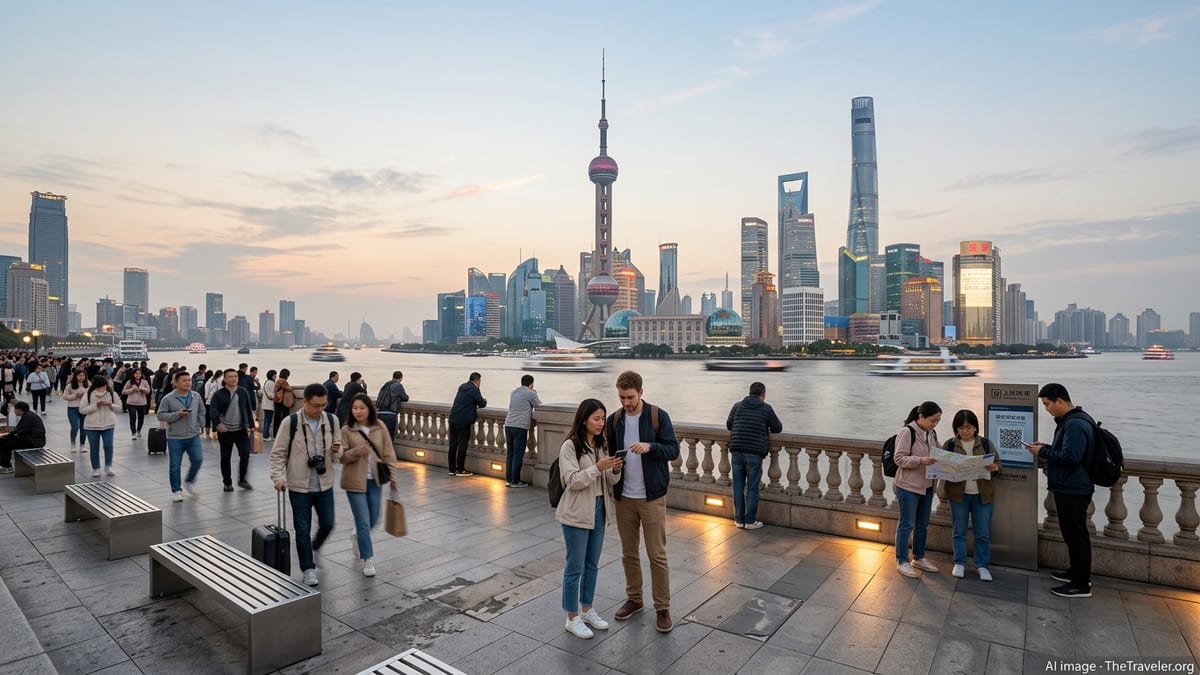
Visa-Free Expansion Puts 2026 in Focus
China’s inbound tourism strategy for 2026 is anchored in a rapid opening of its visa regime after years of tighter entry rules. Publicly available information indicates that by early 2026 China had extended unilateral visa-free entry to a growing list of countries in Europe, Asia-Pacific, the Gulf and Latin America, alongside a network of mutual visa-waiver arrangements. Many of these waivers, initially introduced as temporary measures, have now been prolonged through late 2026, signaling a medium-term shift toward easier access for short-stay visitors.
Policy trackers show that the list of visa-exempt nationalities has widened in several stages since late 2023, with successive rounds adding European Union members, regional partners and major outbound travel markets. The waivers typically allow stays of up to 30 days for tourism, business trips, family visits and transit, while work and study still require conventional visas. Extensions of these schemes through the end of 2026 are being described by industry analysts as a key pillar of China’s tourism revival plan.
At the same time, China has expanded its transit-without-visa options, including 72-hour and 144-hour stays in designated cities and a broader 240-hour transit scheme in selected regions. These policies are designed to attract travelers who are already flying between major hubs in Asia, Europe and the Americas, encouraging them to add a multi-day stopover in Beijing, Shanghai, Guangzhou or other regional gateways without the need for a full visa application.
Recent data from national authorities and industry reports suggest that these changes are already reshaping travel flows. Inbound trips in 2025 surpassed 150 million, with spending by international visitors rising sharply compared with the previous year. Analysts note that the sustained relaxation of visa rules into 2026 is intended to lock in this momentum and move arrivals closer to, and potentially beyond, pre-pandemic levels.
Cultural Wonders Repositioned for a Global Audience
Visa openness is being matched by an assertive cultural marketing campaign that seeks to reposition China’s heritage and contemporary life for a new generation of travelers. Reports describe coordinated efforts between tourism bodies, cultural institutions and local governments to package well-known landmarks with lesser-known regional experiences, from ancient water towns and Silk Road sites to minority festivals and contemporary design districts.
Promotional material and campaign overviews emphasize a narrative that combines China’s long history with fast-changing urban culture. Major cities are highlighting museum districts, performing arts venues, film and fashion festivals and creative industry zones, presenting them as integral parts of the visitor experience alongside traditional draws such as the Great Wall, classical gardens and imperial palaces. Smaller cities and rural areas are being encouraged to develop themed cultural routes around tea, ceramics, martial arts, traditional medicine and local cuisines.
International marketing in 2025 and 2026 has also shifted to digital-first channels. Social media campaigns built around travel influencers, user-generated short videos and interactive mapping tools are targeting younger travelers in Europe, Southeast Asia and the Americas. Tourism promotion agencies are working with online travel platforms to bundle high-speed rail passes, city passes and museum tickets, positioning China’s cultural offerings as accessible and customizable rather than limited to fixed group itineraries.
At the policy level, recent planning documents highlight culture as both a tourism asset and an economic sector in its own right. Revenue from culture-related industries, from publishing and entertainment to creative design and gaming, has been rising steadily. The tourism drive in 2026 seeks to connect these industries more directly with international visitation, for example by aligning cultural festivals and major exhibitions with key travel periods to encourage longer stays and higher in-destination spending.
Smart Travel: From AI Itineraries to Cashless Journeys
China’s tourism push in 2026 is also defined by the integration of digital infrastructure that has matured in the domestic market over the past decade. International visitors are increasingly able to use mobile payment platforms that were once difficult to access without a local bank account, following a wave of updates that allow foreign cards to be linked directly to major Chinese apps. This shift is easing common pain points around paying for metro tickets, ride-hailing, restaurant bills and attraction entries.
City tourism boards and technology partners are rolling out multilingual mini-programs and apps that provide real-time information on transport, crowds, ticket availability and weather, often with built-in translation and AI-powered itinerary suggestions. These tools are designed to help independent travelers navigate complex urban environments, reroute around congestion and discover lesser-known neighborhoods, while also giving authorities anonymized data for crowd management and infrastructure planning.
Airports and major railway stations have introduced more automated clearance channels, self-service kiosks and facial-recognition boarding in recent years. By 2026, these systems are being framed as part of a seamless travel chain that begins with e-visa or visa-free entry eligibility checks on airline websites and continues through biometrics-supported security lanes and smart customs declarations. While privacy advocates continue to scrutinize such technologies, industry commentary suggests that many travelers value the reduced waiting times and clearer wayfinding.
In addition, pilot projects in several tourism zones are experimenting with digital renminbi payments for small purchases, ticketing and public transport. These trials remain limited in scale, but observers see them as a testbed for future travel products that could bundle currency exchange, local promotions and tax-refund processes into a single digital wallet, further lowering friction for first-time visitors.
Regional Gateways and Thematic Routes Compete for Attention
As inbound numbers climb, regional competition within China is intensifying. Coastal hubs such as Shanghai, Guangzhou and Shenzhen are positioning themselves as entry points for multi-destination itineraries that combine megacities with nearby cultural and natural attractions. Inland provinces, meanwhile, are promoting river gorges, karst landscapes, highland trekking routes and Buddhist and Daoist heritage sites, seeking to capture visitors who want to go beyond the traditional first-time circuit.
Local governments are backing themed tourism corridors that cross provincial lines, including routes focused on high-speed rail journeys, Yellow River and Yangtze River heritage, and maritime Silk Road history along the southeast coast. These initiatives often pair infrastructure investments with marketing agreements, making it easier for travel agencies and online platforms to sell combined packages that cover several cities under one ticketing and payment system.
Hong Kong, Macao and several major border cities are also being highlighted as bridges between international and mainland markets. These destinations are leveraging established aviation networks, recognizable brands and existing popularity among regional travelers to funnel visitors deeper into the mainland via rail and intercity coach links. Industry reports suggest that coordinated ticketing and simplified transfer procedures are helping to convert short stays into longer journeys that include multiple regions.
For travelers, this regional competition translates into a wider range of niche products, from photography workshops in remote villages to wellness retreats in hot spring resorts and food-focused tours in historic neighborhoods. Observers note that China’s 2026 tourism strategy is not only about increasing headline arrival numbers, but also about diversifying where visitors go and how they spend once they arrive.
Balancing Growth With Service Quality and Sustainability
The expected rise in international arrivals in 2026 is prompting renewed attention to service standards and environmental impacts. Policy papers released over the past year emphasize the need to upgrade accommodation quality, multilingual customer service and safety protocols, particularly in smaller destinations that are newly attracting foreign tourists. Training programs for guides, hospitality staff and transport workers are being expanded, with a focus on foreign-language skills and cross-cultural communication.
Sustainability is another emerging priority. National and local plans call for better management of visitor flows at fragile heritage sites and natural reserves, including timed-entry systems, capacity caps during peak periods and incentives to travel in shoulder seasons. Some popular attractions have begun to pilot real-name booking requirements and dynamic pricing to smooth crowding and reduce pressure on local ecosystems and neighborhoods.
Analysts point out that the same data tools used to power smart tourism services can also be deployed for sustainability goals. Real-time tracking of visitor numbers, traffic flows and environmental indicators allows authorities and operators to adjust transportation, staffing and protective measures more quickly. At the same time, campaigns aimed at both domestic and international audiences are promoting responsible travel behaviors such as waste reduction, respect for local customs and support for small community-based businesses.
With global tourism volumes nearing or surpassing pre-pandemic levels, China’s 2026 tourism push is unfolding in a highly competitive environment. The combination of looser visa rules, cultural repositioning and digital innovation is designed to differentiate the country as a destination that is at once easier to enter, richer to explore and more efficient to navigate. Whether these measures translate into sustained gains in arrivals and spending will depend on how effectively policy ambitions are matched by on-the-ground service and visitor experiences in the months ahead.