

More news on this day
China’s rapid expansion of visa-free entry, which helped generate more than 30 million visa-free arrivals in 2025, is transforming inbound travel patterns and pushing global visitors beyond Beijing, Shanghai and Shenzhen toward a new wave of inland cities and regional hubs.
Get the latest news straight to your inbox!
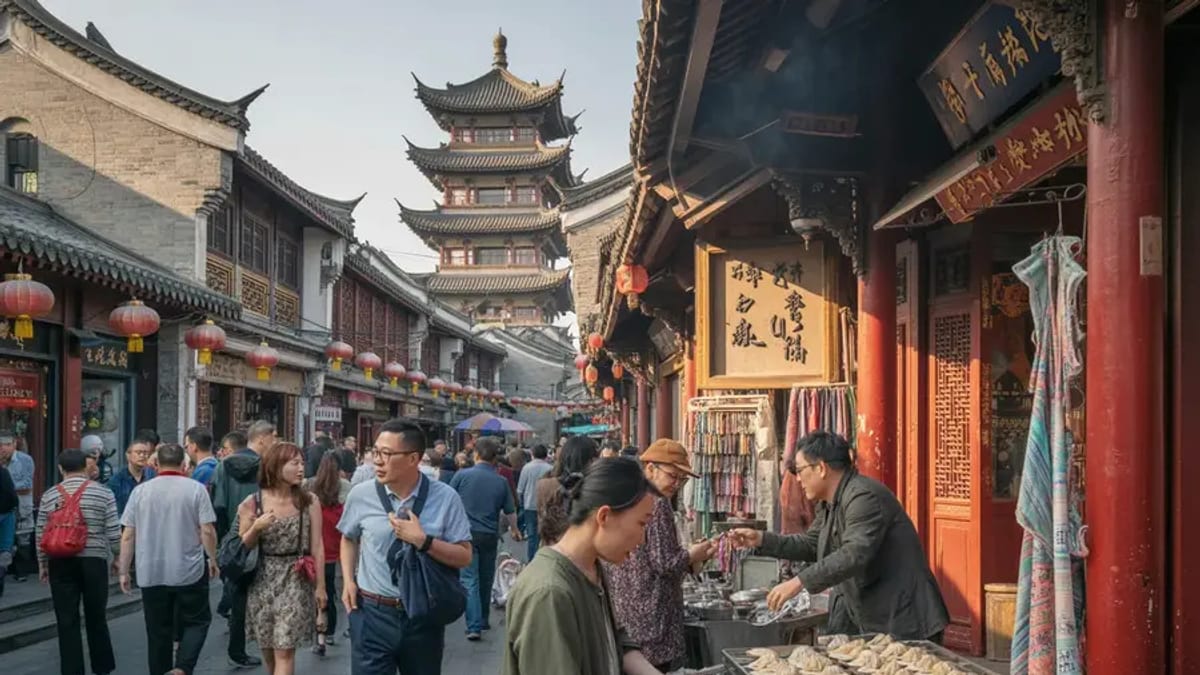
Image by Latest International / Global Travel News, Breaking World Travel News
Visa-Free Momentum Reaches a New Milestone
Publicly available data from the National Immigration Administration and industry analyses indicate that China recorded just over 30 million visa-free entries in 2025, representing more than 70 percent of all foreign arrivals and close to 50 percent growth over the previous year. This marks the first time that visa-free travelers have become the dominant share of foreign entries, underlining how policy changes are reshaping the country’s visitor profile.
The surge follows a step-by-step relaxation of entry rules that began in late 2023 and accelerated through 2024 and 2025. A growing roster of European, Asia-Pacific, Latin American and Middle Eastern countries now benefit from unilateral or reciprocal visa waivers, while travelers from dozens more use extended transit exemptions to enter for short stays. Many can remain in China for up to 30 days per visit, long enough to string together multi-city itineraries that reach far beyond the traditional coastal gateways.
Tourism and travel reports suggest that the simplified entry regime is lowering psychological and financial barriers for first-time visitors who previously viewed the visa process as complicated or unpredictable. As long-haul travelers return to Asia and airlines restore connectivity, China is repositioning itself as a competitive, easy-to-enter destination that can anchor broader regional trips.
The result is a fast-expanding pool of independent travelers, remote workers and regional visitors who are more willing to experiment with secondary and inland destinations. These visitors are increasingly likely to arrive through airports outside the best-known metropolises, a shift that is already visible in data from provincial capitals and emerging aviation hubs.
From Megacities to Inland Gateways
Official bulletins and local government statistics show that visa-free and transit-waiver travelers are helping to redistribute arrivals across China’s urban network. While Beijing, Shanghai and Guangzhou remain the primary international anchors, inland gateways such as Chengdu, Xi’an and Guiyang are registering some of the fastest growth rates in cross-border traffic and tourism consumption.
In Guiyang, a southwestern city historically better known inside China than abroad, published figures for 2025 show inbound and outbound traffic through Guiyang Port rising by nearly 200 percent year on year, with foreign entries tripling and more than one-third of those visitors using visa-free or transit-waiver channels. The city’s airport has added routes linking Southeast Asia and other regional markets, turning what was once a domestic hub into a modest but notable entry point for international travelers exploring the karst landscapes and minority cultures of Guizhou Province.
Chengdu, already a major aviation and tech center, has emerged as a natural beneficiary of 30-day visa-free stays. Industry assessments note that long-haul passengers from Europe and the Middle East are increasingly using Chengdu as a first stop before branching into the Tibetan Plateau, Sichuan’s panda reserves and neighboring Chongqing. Visa-free policies allow travelers to structure flexible itineraries that start or end in inland cities, rather than forcing all entries through coastal consulates and high-demand hubs.
Xi’an, famous for the Terracotta Warriors but historically treated as a side trip from Beijing or Shanghai, is becoming a stand-alone destination in its own right. Reports on airline capacity and tour product development point to more direct international services into Xi’an and a growing number of themed itineraries that combine Silk Road heritage sites with food-focused exploration in Shaanxi’s capital. The ability to arrive visa-free for 30 days makes it easier for visitors to devote several nights to the city without sacrificing time in other regions.
Underrated Cities Turn Cultural Assets into Lures
Underrated provincial capitals are leveraging the visa-free boom to reposition themselves as gateways to distinctive cultural and natural attractions. Guiyang has promoted its cool summer climate, nearby waterfalls and Miao and Dong minority villages as a counterpoint to the heat and crowds of coastal megacities. Tourism statistics from Guizhou Province show steady growth in both domestic and inbound arrivals, with local authorities attributing part of this momentum to visa-free travelers who now find it easier to include the region in multi-country trips.
Chengdu has long marketed its relaxed lifestyle, teahouse culture and hotpot cuisine, but recent travel industry coverage highlights a new emphasis on multi-day “city and countryside” packages built around visa-free stays. These itineraries typically pair the urban core with satellite towns, highland tea plantations and nature reserves, encouraging visitors to slow down rather than rush through on a single-day excursion. The city’s expanding network of international flights makes Chengdu a convenient base for travelers seeking a softer urban experience than Beijing or Shanghai.
Xi’an’s response has focused on deepening the narrative beyond headline sites. Museum upgrades, night-time economy projects and revived traditional quarters are designed to encourage longer stays and repeat visits. Cultural calendars increasingly feature international festivals, music events and creative-industry exchanges timed to peak travel seasons, giving visa-free visitors reasons to linger or return. These efforts align with national strategies that position culture, heritage and creative industries as pillars of post-pandemic tourism recovery.
Across these cities, hotel pipelines and short-term rental supply are expanding in tandem with new rail and air links, signaling expectations that the current visa-free momentum will be sustained. Industry observers note a particular rise in boutique and lifestyle properties aimed at younger, experience-driven travelers who are more likely to explore lesser-known districts and neighborhoods.
New Regional Hubs Redraw Visitor Itineraries
The mechanics of China’s entry regime are also fostering a new geography of regional hubs. Expanded lists of 24-hour and 144-hour transit ports, combined with 30-day visa-free stays for dozens of nationalities, are turning cities such as Xiamen, Kunming, Chongqing and Wuhan into practical stopovers or starting points for multi-country circuits across East and Southeast Asia.
Travel data from coastal second-tier cities underscores this shift. For example, Xiamen reported record inbound and outbound passenger flows in late 2025, with foreign nationals accounting for an unprecedented share of traffic. Many of these visitors arrive via short-haul flights from neighboring countries, using the city as a bridge between beach destinations in Southeast Asia and inland journeys to Fujian’s tulou villages or the high-speed rail network pointing north and west.
Kunming in Yunnan, historically a gateway to Vietnam, Laos and Myanmar, is similarly benefiting from policies that allow international visitors to enter China without a visa or on simplified transit terms. As cross-border rail and road links improve, regional travel reports describe itinerary patterns in which travelers loop through multiple countries, entering China via Kunming or Guangxi, continuing on to Guiyang or Chengdu, and then exiting through a different coastal airport to catch intercontinental flights.
These evolving routes are altering the balance of power between traditional and emerging hubs. Instead of flying into Beijing, making a brief side trip and departing from the same city, visa-free travelers increasingly design open-jaw trips that connect distant regions of China in a single visit. This trend spreads tourism spending more evenly and encourages investment in secondary airports, rail stations and tourism services far from the eastern seaboard.
Opportunities and Pressures for Sustainable Growth
The rapid rise to 30 million visa-free entries in 2025 presents both opportunities and pressures for Chinese destinations. On the upside, the expansion of visitor flows into inland and lesser-known cities can ease crowding at classic hotspots, diversify local economies and support jobs in hospitality, culture and transport. For cities like Guiyang and Xi’an, which traditionally relied more heavily on domestic tourism or industry, international arrivals represent a valuable new revenue stream.
At the same time, urban planners and tourism managers face challenges familiar to other fast-growing destinations. Local media and academic research have raised questions about whether smaller cities have sufficient English-language signage, visitor information services and sustainable infrastructure to handle rising international footfall. Balancing heritage preservation, community needs and commercialization around old towns, historic districts and minority villages is emerging as a central policy concern.
National-level policy documents emphasize “quality over quantity” in the next phase of inbound growth, signaling a focus on longer stays, higher per-capita spending and more balanced regional distribution. This aligns closely with the pattern emerging from visa-free travel, which naturally favors flexible, multi-stop itineraries over quick, single-city visits. Industry analysts expect further refinements to entry policies, digital payment tools and cross-border marketing as China competes with neighboring countries for long-haul travelers.
For now, the headline figure of more than 30 million visa-free entries in 2025 encapsulates a broader shift in how and where visitors experience China. As Guiyang, Chengdu, Xi’an and a constellation of emerging hubs gain prominence on global travel maps, the country’s tourism narrative is moving beyond a handful of iconic skylines toward a more dispersed and diverse landscape of cultural exploration.