

More news on this day
China’s high-speed rail network is entering a new phase in 2026, coupling sheer scale with upgraded onboard comfort in ways that are beginning to reset expectations for long-distance travel far beyond its borders.
Get the latest news straight to your inbox!
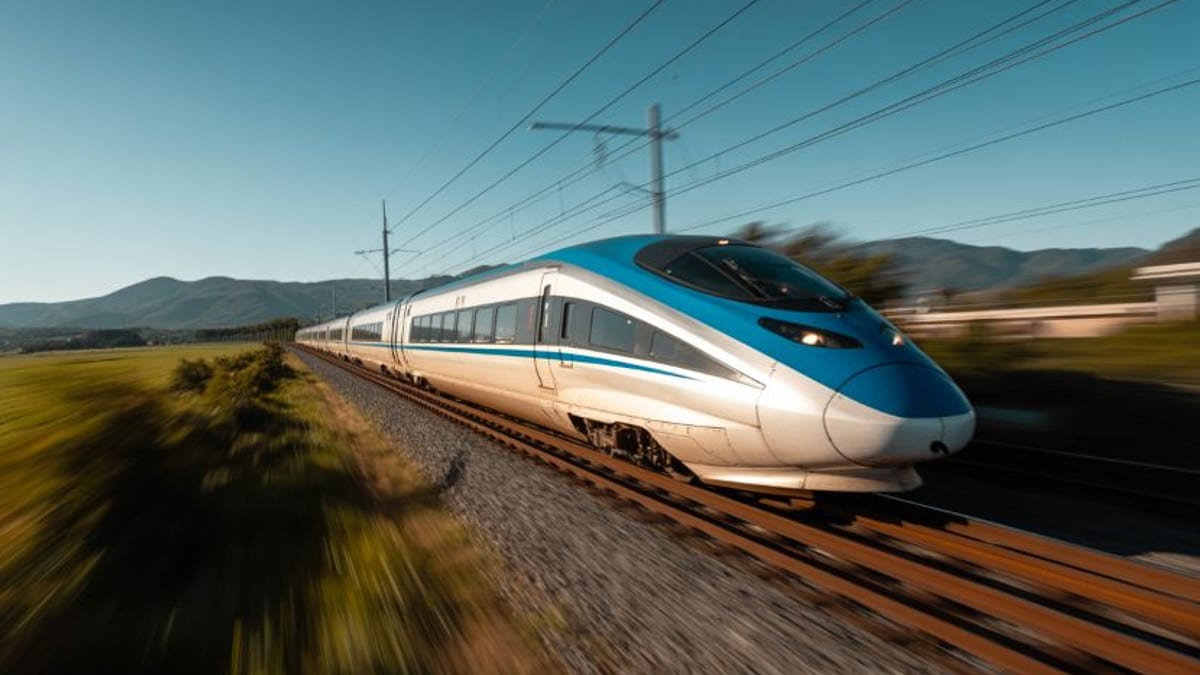
Image by Latest International Railway News, Global Rail Industry News
A Network Surpassing 50,000 Kilometers and Still Growing
Publicly available figures indicate that by the end of the 14th Five-Year Plan period in 2025, China’s railway network reached roughly 165,000 kilometers in total length, with high-speed lines exceeding the 50,000-kilometer mark. This gives the country more high-speed track than the rest of the world combined and makes it possible to link most major cities with fast, frequent services measured in hours rather than days.
China State Railway Group’s recent work plans point to a further push through 2030. The operator has outlined a target of about 180,000 kilometers of railways nationwide by the end of the decade, including some 60,000 kilometers of high-speed routes. Planning documents tie this expansion to a “1-2-3” passenger travel pattern in which trips within city clusters take about one hour, trips between regional hubs take two hours, and cross-country journeys are compressed to around three hours by the fastest trains.
New high-speed corridors coming online in 2025 and 2026, such as links in central and western provinces and infill lines that connect smaller cities to core trunk routes, are designed to close remaining gaps in the grid. Reports on provincial rail development show that regions like Shandong, Guangdong, and Guizhou are steadily moving toward full high-speed coverage of all prefecture-level cities, underscoring how the expansion is as much about density and redundancy as it is about total length.
The result is a maturing network where passengers can increasingly plan end-to-end journeys with only high-speed trains, eliminating the need to switch to conventional rail or aviation for many domestic routes. That integrated grid is the foundation for the broader transformation of travel patterns now emerging in 2026.
Comfort, Reliability and a New Benchmark for Passenger Experience
While the first decade of China’s high-speed build-out focused on coverage and speed, recent years have seen a noticeable shift toward comfort and service upgrades. Flagship routes such as Beijing–Shanghai and Beijing–Guangzhou now routinely operate at 300 to 350 kilometers per hour with reported on-time rates above 99 percent, offering a level of reliability that compares favorably with domestic air travel.
Onboard, the latest Fuxing trainsets feature multi-class cabins with layouts closer to premium airlines than traditional rail. Business-class seats are arranged in wide configurations with lie-flat or near lie-flat seating, privacy wings or suites on selected services, and at-seat dining. First class offers larger reclining seats with generous legroom, while second class provides high-density seating that still includes power outlets and folding tables at every seat. Travellers posting recent accounts of journeys on routes from Xi’an to Shanghai and along the Beijing–Shanghai corridor describe cabins that are quiet, climate controlled, and designed for work as much as leisure.
Digital connectivity has become another core element of the experience. Trials and phased rollouts of upgraded onboard Wi-Fi and 5G repeaters have improved bandwidth on key routes, allowing passengers to participate in video calls or stream media with relative consistency. Smartphone-based ticketing and facial-recognition gate systems at major stations also reduce queuing time, making the overall door-to-door journey more seamless.
For many domestic travellers, these comfort and reliability gains are recalibrating the trade-off between planes and trains. On routes of 300 to 1,200 kilometers, where gate-to-gate times for flights are eroded by airport transfers and security checks, high-speed services offering quiet cabins, stable connectivity, and city-center terminals are increasingly viewed as the more convenient option, even when ticket prices are similar.
From National Grid to Regional Spine Across Asia
The impact of China’s high-speed rail build-out is no longer confined to its domestic market. Lines developed with Chinese financing, technology, or contractors are beginning to reframe mobility in Southeast Asia, and planners are positioning these projects as the first pieces of a broader regional spine.
The Jakarta–Bandung high-speed line in Indonesia, which opened in 2023 using Chinese trainsets and systems, cut travel times between the capital and the West Java city to under an hour. Despite ongoing debate reported in regional media about project cost overruns and the scale of public debt, passenger uptake has demonstrated that demand exists for fast, comfortable rail links in crowded transport corridors traditionally dominated by buses and cars.
In mainland Southeast Asia, the China–Laos Railway, a cross-border line connecting Kunming with Vientiane, is operating as a mixed passenger and freight corridor and has become a key reference point in discussions of a future Kunming–Bangkok high-speed route. Preliminary sections of a high-speed corridor in Thailand, built with Chinese participation, are under construction and have drawn renewed scrutiny following a fatal construction-site accident in early 2026 that occurred on a conventional passenger train passing through a high-speed project segment.
These overseas projects highlight both the promise and the complexity of exporting China’s high-speed model. They showcase the same pairing of speed and comfort seen inside China while revealing how questions of governance, safety oversight, financing structures, and long-term ridership risk can shape public perception once projects move beyond China’s domestic regulatory environment.
Economic Stakes, Debt Questions and Global Competition
Domestically, China’s high-speed rail network is framed in policy documents as a core instrument for economic integration. By tightening travel times between provincial capitals and coastal megacities, planners aim to encourage labor mobility, tourism, and the spread of higher-value industries inland. Studies of passenger volumes on corridors such as Beijing–Shanghai and the growing web of lines across the Yangtze River Delta suggest that high-speed services have already shifted a significant share of trips away from slower trains and short-haul flights.
At the same time, the financial underpinnings of this expansion are drawing more attention. Analysts tracking the balance sheet of China State Railway Group point to rising debt levels linked to capital-intensive construction programs in regions where immediate demand may be limited. Commentaries in business-focused outlets argue that while dense, high-traffic corridors can cover operating and even capital costs over time, more remote lines may require ongoing fiscal support, turning the network into a long-term public service obligation rather than a purely commercial asset.
Outside China, the export of high-speed technology is unfolding in a competitive landscape. Japanese, European, and increasingly Korean suppliers are all vying for contracts in markets from Southeast Asia to the Middle East. China’s offer typically combines turnkey engineering, financing, and operations packages, which can be attractive to governments seeking rapid delivery. However, recent reporting on Indonesia’s Jakarta–Bandung line indicates that host countries are becoming more cautious about debt sustainability, contract transparency, and demand forecasting before committing to large-scale projects.
These debates are unlikely to slow the expansion of high-speed lines already under construction inside China, but they may shape the pace and scope of future cross-border initiatives. How China balances domestic connectivity goals with the financial realities of operating and exporting high-speed rail will be a central storyline for global transport watchers through 2030 and beyond.
Transforming Expectations for Travel in 2026 and Beyond
What is emerging by early 2026 is a high-speed ecosystem rather than a collection of isolated lines. In major hubs, coordinated timetables between high-speed and conventional services, urban metros, and airport links are turning stations into multimodal nodes. This connectivity supports business travelers commuting between cities for same-day meetings, families using trains instead of short-haul flights for holidays, and logistics firms experimenting with high-value, time-sensitive freight on passenger routes.
As more regions around the world study high-speed rail, China’s network provides a living test bed. Its scale offers data on how demand evolves once frequencies increase and travel times fall, how comfort enhancements affect modal choice, and how pricing strategies can balance social objectives with cost recovery. Planners in Europe, North America, and the Middle East are watching closely, even as they adapt the model to different regulatory and geographic contexts.
For travelers, the most immediate change is practical rather than abstract. In much of China, booking a high-speed seat in 2026 now means access to reliable, fast, and comparatively comfortable transport that can often outperform air travel on both time and stress. If current expansion plans hold, that experience will be available to tens of millions more people across the country by 2030, and to growing numbers of passengers on overseas corridors that adopt similar technology and service standards.
Whether other countries can replicate China’s pace of construction is uncertain, given differing political systems and funding mechanisms. Yet the combination of network depth, passenger comfort, and operational reliability that China’s high-speed rail has achieved is already influencing how governments, investors, and travelers think about the future of long-distance mobility well into the next decade.