

More news on this day
China’s commercial launch company CAS Space has completed the inaugural flight of its new Kinetica-2 rocket, marking a significant milestone for the country’s fast-growing private space sector and its push toward reusable orbital launch systems.
Get the latest news straight to your inbox!
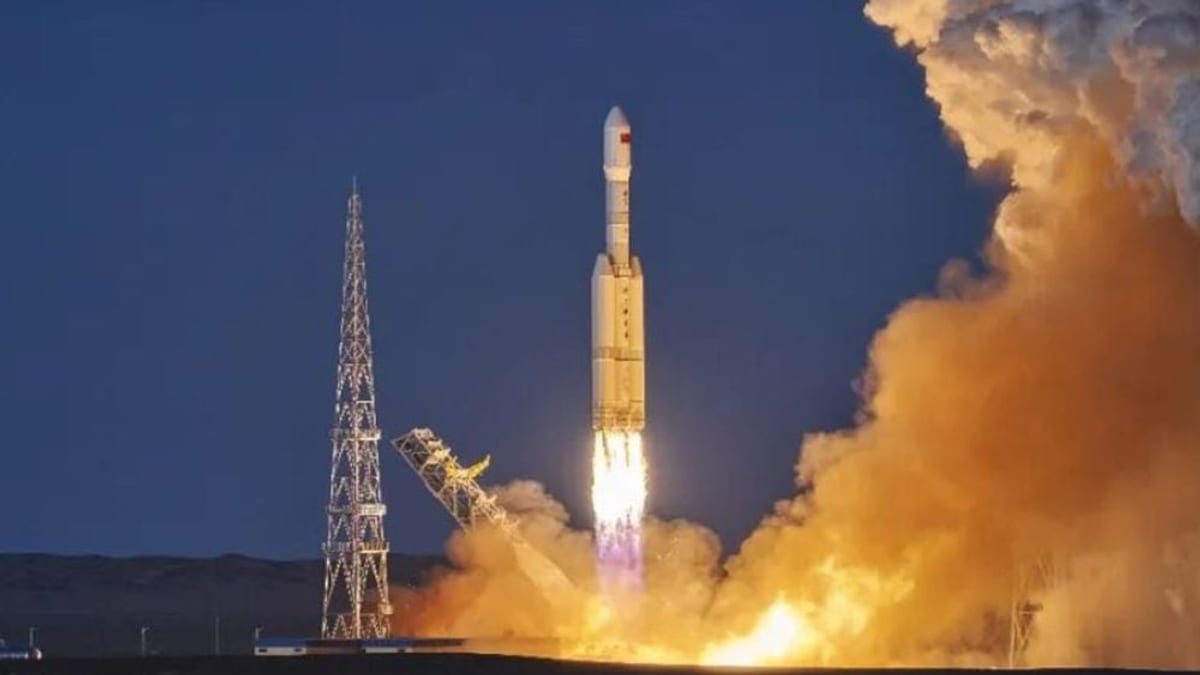
Image by AWN RSS by content source
Successful Maiden Flight from Northwest China
According to publicly available launch tracking data and Chinese media coverage, the Kinetica-2 conducted its debut mission from the Jiuquan region of northwest China in late March 2026. Reports indicate that the two-stage liquid-fueled rocket lifted off in the evening local time and reached its planned orbit, completing a key demonstration flight for CAS Space.
Initial information compiled from open sources describes the mission as a technology and capability demonstration rather than a fully commercial deployment. Launch listings and industry newsletters note the flight under the designation “demo” or “test,” reflecting its role as a proving run for the new vehicle and its associated systems.
Early summaries of the mission suggest that the rocket performed nominally throughout ascent, with no major anomalies reported in public channels. Kinetica-2’s successful debut places CAS Space among a short list of newer Chinese companies fielding orbital-class liquid rockets, a category traditionally dominated by large state-owned entities.
A Medium-Lift, Partially Reusable Design
Technical descriptions available in Chinese and international spaceflight references characterize Kinetica-2 as a medium-class launch vehicle powered by liquid oxygen and kerosene. The rocket is commonly referred to as Lijian-2 in Chinese-language materials, with Kinetica-2 used in many English summaries, and is associated with work by the Chinese Academy of Sciences and the CAS Space commercial venture.
Design outlines suggest that Kinetica-2 uses clustered engines on its first stage and is intended to evolve toward partial reusability. Studies and industry analyses published in recent years describe concepts in which the core stage and side boosters would return together as a single unit, enabling recovery and refurbishment. Publicly available commentary indicates that full-scale reusability tests are expected in later flights once the basic expendable configuration is proven.
The development path follows a pattern seen across the global launch market, where commercial and state-backed operators are converging on reusable architectures to reduce costs. For CAS Space, a working medium-lift platform with a clear upgrade path to reusability could broaden the company’s role in China’s wider space logistics plans, including support for national space station operations and commercial constellations.
Qingzhou Cargo Demonstrator Ties Flight to Space Logistics
A key feature of the inaugural Kinetica-2 mission is its link to China’s evolving low-cost cargo transportation concepts. Specialist space policy and industry newsletters published over the past year have highlighted a prototype spacecraft known as Qingzhou, described as part of a low-cost cargo system intended to support space station logistics and potential commercial uses.
Previous planning documents and analytical reports indicated that a Qingzhou test article was scheduled to ride on Kinetica-2’s first flight. While immediate post-launch details remain limited in open sources, a successful orbital insertion for the demonstrator would represent progress toward diversified cargo options beyond the country’s existing state-operated cargo spacecraft.
For China’s human spaceflight program, such commercial cargo systems promise greater flexibility in resupply planning and could create new pathways for experiments and equipment sponsored by universities, private companies, and international partners. For CAS Space, being tied directly to a cargo demonstrator strengthens the company’s position as a service provider within China’s on-orbit ecosystem.
Positioning CAS Space in a Crowded Launch Market
The Kinetica-2 debut comes during a period of intense activity among Chinese commercial and quasi-commercial launch providers. Launch roundups from international spaceflight outlets in March 2026 list a busy manifest that includes missions by established Long March vehicles as well as flights and test campaigns by newer commercial rockets.
CAS Space has already flown its Kinetica-1 solid rocket on several missions, delivering international payloads alongside domestic satellites. With Kinetica-2, the company gains a more flexible, upgradable platform that can carry heavier or more complex payloads into low Earth orbit and sun-synchronous orbits, positioning it more directly against other medium-lift providers inside and outside China.
Sector watchers note that China’s commercial launch field now includes a mix of solid and liquid-fueled vehicles, many advertising partially or fully reusable designs. In this context, Kinetica-2’s inaugural success not only validates a new rocket but also signals that CAS Space aims to remain competitive in areas ranging from rideshare missions for small satellites to dedicated flights for larger spacecraft and technology demonstrators.
Implications for Global Launch Capacity and Travelers’ Skies
The arrival of another operational medium-lift rocket adds capacity to a global launch market that has been expanding rapidly. For satellite operators and research institutions, additional options can help ease bottlenecks, diversify scheduling opportunities, and potentially apply downward pressure on launch pricing over time.
For observers on the ground, launches from China’s northwestern deserts are increasingly part of the modern travel experience in nearby regions. Travelers visiting space-adjacent destinations in Gansu and Inner Mongolia sometimes plan itineraries around visible launch windows, while local tourism boards highlight desert night skies and aerospace facilities as part of broader regional branding.
While Jiuquan and associated commercial pads remain restricted areas, surrounding towns and desert landscapes have seen growing interest from domestic tourists who combine nature, astronomy, and spaceflight watching. The successful Kinetica-2 flight adds another chapter to that evolving story, underscoring how new rockets not only reshape the space industry but also subtly influence the way people experience remote corners of the world.