

More news on this day
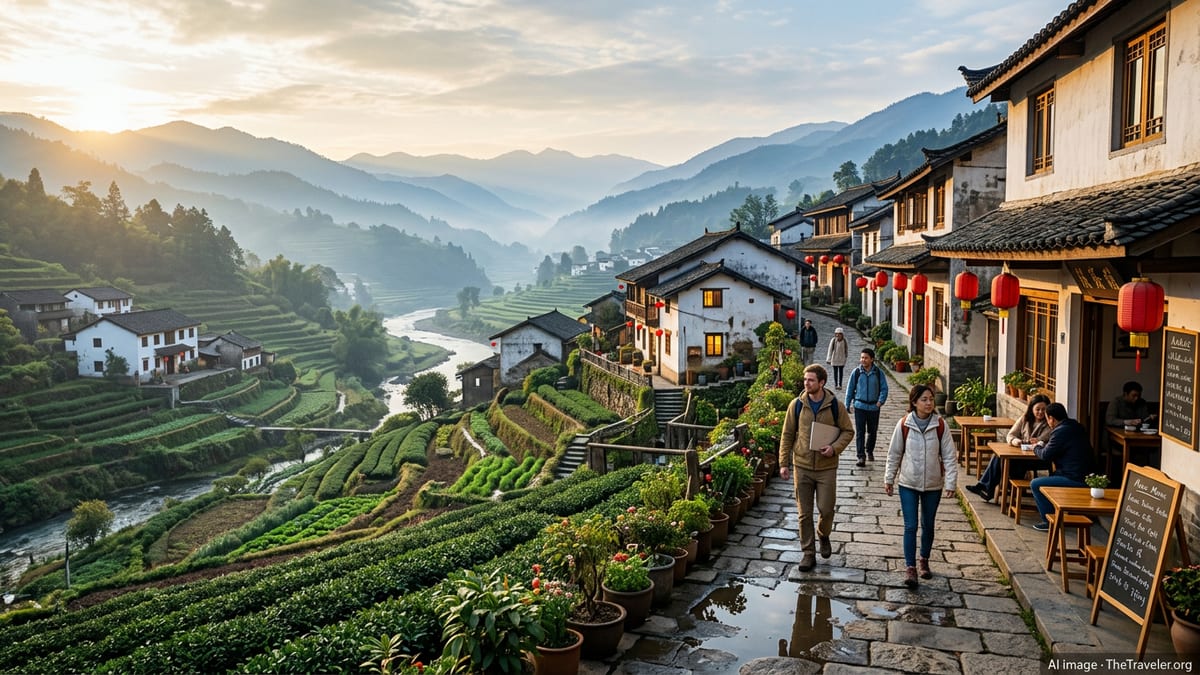
Seasonal migration is taking on a new meaning in China, where a surge of long-stay “sojourn” tourism is reshaping the landscapes of Yunnan in the southwest and Hebei in the north, drawing visitors who come not just to see the sights but to live, work and even start small businesses in local communities.
Get the latest news straight to your inbox!
From Short Getaways to Seasonal Sojourns
Publicly available data points to a rapid shift in how visitors experience Yunnan. Provincial figures cited in recent domestic coverage show that long-stay travelers to Yunnan exceeded 3.8 million in 2024, with average stays of around 80 days and spending running into tens of billions of yuan. Reports indicate that many of these visitors return year after year, treating the province less as a once-in-a-lifetime destination and more as a temporary home base.
Instead of racing through classic circuits in a week, travelers are increasingly choosing to rent apartments or homestays for one to three months in cities such as Kunming, Dali and Lijiang, or in smaller county towns. A Kunming-focused report released in March 2026 highlighted that the city led Yunnan in both visitor arrivals and long-stay travelers in 2025, underlining how urban hubs are becoming launchpads for extended rural exploration rather than endpoints in themselves.
Tourism analysts in Chinese media describe this trend as a move from sightseeing to a “life called Yunnan,” where visitors plan their stays around climate, lifestyle and community rather than bucket-list attractions. Similar language has appeared in coverage of Hebei, where provincial planners have framed cultural and rural tourism as a way to encourage longer visits around the Beijing-Tianjin-Hebei region.
For international travelers, updated visa and transit policies are also lowering barriers to entry. In 2024, Yunnan became part of China’s expanded 144-hour transit visa-free scheme, allowing eligible foreign visitors to move between multiple cities in the province without a full tourist visa, provided they continue to a third destination. While these stays are capped at six days, travel industry observers say the policy is feeding interest in longer return trips and more in-depth exploration.
Yunnan’s Climate Havens and Creative Villages
Climate and geography are central to Yunnan’s appeal. Located on the Yunnan-Guizhou Plateau, the province offers mild winters and cool summers, and domestic reports describe a “cool economy” in highland areas where visitors escape heatwaves from other parts of China. In winter, county-level destinations around the Jinsha River and in the Wumeng Mountains market themselves as sun-soaked retreats, with riverside terraces, hiking routes and wellness programs built around the clean air and comfortable temperatures.
Local government information shows heavy investment in rural tourism infrastructure, from upgraded roads to boutique homestays. In Qujing’s Hongwafang and similar villages, old farmhouses have been renovated into guesthouses with cafés, bookstores and craft studios, often managed by returnee entrepreneurs. A recent report on Songming County near Kunming described a strategy to turn “villages into scenic areas and farmhouses into guest rooms,” positioning the area as the “first stop” for long-stay visitors seeking a slower pace on the edge of the provincial capital.
Cultural immersion is another draw. Yunnan’s diverse ethnic heritage is being woven into long-stay programs that offer hands-on experiences rather than quick performances. Visitors can find multi-week packages that combine language classes, tea and coffee workshops, textile dyeing, folk music sessions and volunteering in heritage conservation projects. Beijing-based coverage in early 2026 highlighted villages in Pu’er and Lincang where guesthouses host recurring stays from the same families, who schedule their vacations around annual tea harvests or traditional festivals.
For many domestic and overseas digital workers, these environments double as extended offices. Co-living spaces in and around Dali and Kunming promote stable internet connections, shared work areas and community events, aligning Yunnan’s sojourn scene with wider global trends in digital nomadism while remaining rooted in local culture.
Hebei’s Slow-Travel Pivot Beyond the Great Wall
While Yunnan has become shorthand for long-stay lifestyles, Hebei is emerging as a quieter counterpart in northern China. Surrounding Beijing and Tianjin, the province combines sections of the Great Wall, coastal wetlands and mountain towns, and recent Chinese-language policy documents have singled out cultural and rural tourism as growth priorities. Hebei’s tourism planning is framed around drawing city dwellers into surrounding counties for longer, more frequent visits instead of brief holiday excursions.
Rural revitalization projects are at the heart of this push. Public information from Hebei’s cultural and tourism authorities points to investments in restoring traditional courtyard homes, supporting family-run homestays and improving access to hiking routes and agro-tourism sites. Mountain villages near key Great Wall segments, for example, are being repositioned as bases for weeklong or monthlong residencies where visitors can combine outdoor activities with workshops in local crafts, calligraphy or culinary traditions.
Hebei’s proximity to major transport hubs is another asset. High-speed rail and expressways extend the practical radius of weekend travel for residents of Beijing and Tianjin, making it feasible to trial a short stay before committing to a longer sojourn. Analysts writing in national outlets describe this as a “ring tourism” model, where urban professionals split time between city offices and rural rentals, gradually extending stay lengths as they build familiarity with local communities.
Compared with Yunnan, Hebei’s international profile remains relatively low, but travel industry commentary suggests that this quieter image is part of the appeal for certain visitor segments. For global travelers who want to experience everyday rural life within reach of Beijing, emerging sojourn clusters in Hebei are marketed as an antidote to crowded scenic spots, offering space to work, hike and participate in small-scale community events.
Micro-Businesses, Homestays and Local Entrepreneurs
The boom in sojourn tourism is closely tied to new forms of small-scale entrepreneurship. In Yunnan, provincial and municipal programs have encouraged residents to convert idle housing into homestays, cafés and cultural venues, sometimes with subsidies or technical training. Officially reported figures from Qujing and other cities note that the revival of rural guesthouses has created local jobs and added new income streams for farming households.
Published case studies describe how chains of homestays, bookstores and ateliers are clustering in previously under-visited villages, turning them into self-contained “lifestyle communities” where long-stay visitors can access food, accommodation and cultural activities without returning to big cities. In some locations, local cooperatives manage shared reception desks, cleaning services and marketing, while individual families run their own themed rooms or specialty kitchens.
Similar patterns are emerging in Hebei, where rural residents are adapting traditional homes for visitors and adding small-scale amenities such as coffee shops, hiking guides and farm-to-table dining. Tourism-focused research notes that these ventures tend to be modest in size but significant in their local impact, keeping spending within the community and encouraging younger residents to remain in or return to their hometowns.
For foreign travelers and Chinese digital workers, these micro-business ecosystems offer opportunities to collaborate rather than simply consume. Some long-stay guests organize language exchanges, photography workshops or short courses in marketing and design that help homestay owners upgrade their services. Public reporting on digital nomad communities in China also highlights joint projects such as pop-up exhibitions, rural innovation labs and co-created cultural festivals that sit at the intersection of tourism and grassroots development.
Policy Tailwinds and the Appeal to Global Travelers
China’s broader tourism and immigration policies are providing important tailwinds for sojourn destinations. Since late 2023, the central government has introduced or expanded visa-free entry for several European and Asian countries and upgraded transit visa-free arrangements in provinces including Yunnan. National year-end tourism reviews for 2024 and 2025 emphasize a strategy of facilitating easier short-term entry while encouraging more in-depth and higher-value travel experiences.
For global visitors, this environment creates a ladder of engagement. Travelers may first encounter Yunnan or Hebei through short-stay itineraries or 144-hour transit programs, then return on standard tourist visas for longer seasonal residencies. Travel forums and digital nomad communities increasingly discuss Yunnan as a practical base for one- or two-month stays, citing relatively affordable housing costs, temperate weather and a growing ecosystem of services familiar with remote workers.
At the same time, publicly available commentaries point out ongoing constraints, from language barriers to internet access rules and varying levels of comfort with foreign guests in more remote areas. Industry observers say that how localities address these issues through better information, training and infrastructure will influence whether today’s boom in domestic sojourn tourism translates into a lasting surge of global long-stay visitors.
What is clear from recent reporting is that Yunnan and Hebei are no longer positioning themselves solely as stopovers on broader China itineraries. Instead, they are competing to offer a version of extended, locally grounded travel that blends the comfort and connectivity sought by global travelers with the textures of everyday life in villages, market towns and second-tier cities. As long-stay tourism matures, these provinces are set to remain at the forefront of China’s evolving appeal as a place not only to visit but to stay awhile.