

More news on this day
China’s rapid expansion of visa-free access, which immigration officials project could support around 30 million such entries in 2025, is reshaping where international travelers go in the country, shifting attention from the classic Beijing–Shanghai–Hong Kong circuit toward lesser-known inland cities and new regional hubs.
Get the latest news straight to your inbox!
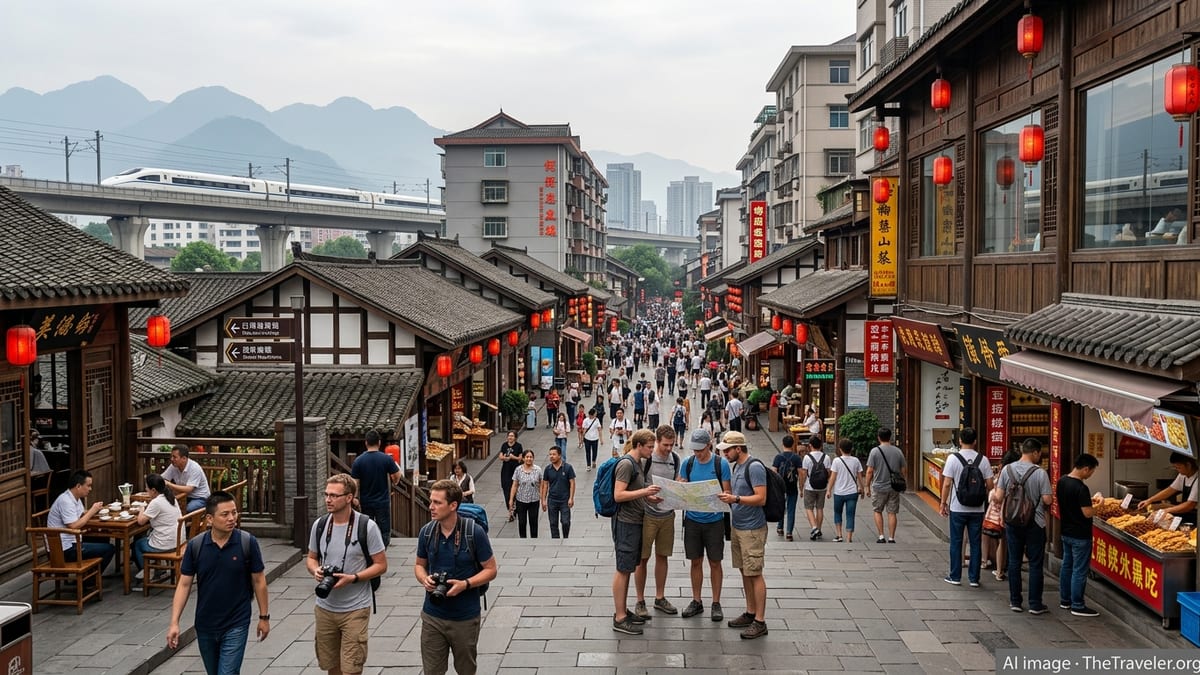
Visa-Free Expansion Sets Up a New Travel Map for 2025
Over the past two years, China has moved from tightly controlled borders to one of the world’s most extensive visa-free regimes for short-term visitors. Publicly available policy trackers show that nationals from close to 80 countries are now eligible for visa-free stays of around 15 to 30 days, alongside expanded transit-without-visa schemes covering dozens more. Analysts of cross-border tourism point out that visa-free and simplified transit entries already accounted for a substantial share of inbound arrivals in 2024, and the National Immigration Administration has highlighted sharply rising volumes of travelers using these channels.
On this trajectory, tourism researchers and industry forecasters describe 30 million visa-free entries in 2025 as a realistic threshold when combining full visa waivers, mutual exemption agreements and short-stay transit programs. That figure would mark a step change from pre-pandemic practice, when many travelers still faced lengthy consular applications to enter mainland China even for brief visits. It also aligns with broader targets laid out by Chinese tourism think tanks, which frame inbound travel as a key driver of service exports and regional development in the current five-year planning period.
The impact is not limited to raw arrival numbers. Reports from travel platforms indicate that as booking friction falls, visitors are planning more complex multi-city itineraries inside China instead of single-destination stays. With domestic high-speed rail networks and expanded air links making cross-country hops straightforward, visa-free policies function as a gateway to a much broader geography, encouraging travelers to venture beyond a handful of headline cities.
Inbound Tourism Surges and Spreads Beyond Coastal Gateways
Government statistics for 2024 showed inbound tourism rebounding strongly toward pre-2020 levels, with total inbound trips climbing by well over half compared with the previous year. While major hubs such as Beijing, Shanghai and Guangzhou still attract the largest shares, data from national and provincial tourism authorities point to a clear broadening of demand. Reports summarizing inbound flows highlight rising foreign visitor numbers in inland provinces that were previously under-represented on international tour circuits.
Industry briefings based on booking data from large online travel agencies describe a diversification of first-entry points. Cities like Chengdu and Xi’an are now appearing alongside Beijing and Shanghai in the top set of inbound destinations, especially among younger and repeat visitors who are less focused on business travel. Tourism economists note that this pattern matches experiences in other countries where easier entry conditions tend to catalyze exploration of so-called second-tier cities once initial safety and familiarity concerns are overcome.
In parallel, international organizations monitoring aviation and border flows have documented a sharp rise in passengers using China’s transit-without-visa routes. These policies allow eligible travelers to pass through and briefly enter selected Chinese cities on their way to a third country, often for up to 72 or 144 hours. The combination of visa-free short stays and transit programs increases the likelihood that long-haul itineraries will include at least one stop in mainland China, deepening its role as a regional connector and giving a wider range of cities a chance to pitch themselves as short-break destinations.
Chengdu and Xi’an Turn Inbound Interest into Regional Tourism Gateways
Chengdu, capital of Sichuan province, has emerged as one of the clearest beneficiaries of the new policy environment. Provincial government summaries drawing on Trip.com and other platforms reported that inbound visits to Sichuan more than tripled in 2024 compared with 2019, with Chengdu alone welcoming well over 1 million international arrivals for the year. Travel analysts say the city’s extensive air links, established reputation for food culture and proximity to panda conservation centers make it a natural first stop for visitors looking beyond China’s east coast.
Xi’an, long known domestically as a historic capital but less prominent on global itineraries, is seeing a parallel uptick. Tourism research reports note that international arrivals to the city climbed sharply in 2024, helped by targeted marketing of the Terracotta Warriors, the restored city walls and nearby cultural landscapes. As visa-free stays of around 30 days become more common for European, Asian and Latin American travelers, tour planners are bundling Xi’an with Chengdu or Chongqing in themed routes that combine heritage, food and nature in central and western China.
Both cities are positioning themselves as multi-day bases rather than brief excursion stops. Local tourism bureaus have promoted night-time economies, creative districts and rural homestay networks around Chengdu’s western mountains and Xi’an’s surrounding counties. Industry observers describe a feedback loop in which easier entry encourages more airlines to add or restore direct flights, which in turn justifies greater investment in multilingual signage, digital payment accessibility and experience-focused attractions tailored to overseas guests.
Guiyang and Other Underrated Cities Step Into the Global Conversation
Beyond better-known inland centers, visa-free entry is also drawing attention to cities that previously sat far from the international tourism spotlight. Guiyang, the capital of Guizhou province, is one prominent example. Once largely perceived as an industrial and data-center hub, the city is now being reintroduced in promotional materials as a cool-climate base for exploring the karst landscapes, waterfalls and ethnic minority villages of southwest China.
Publicly available booking data and provincial media coverage point to a noticeable rise in foreign visitor stays in Guiyang in 2024 and early 2025, albeit from a low starting point. Travel specialists attribute this to several factors: the perception that China is now easier to enter on short notice, better English-language promotion of nearby natural sites and growing curiosity about less commercialized destinations. As visa-free access widens to additional source markets, networks of boutique hotels, guesthouses and cultural experience operators in Guiyang and similar cities are preparing for a steadier stream of independent travelers rather than solely domestic tour groups.
Other emerging regional hubs follow a similar pattern. Cities in central and western provinces, including those connected by new high-speed rail lines or upgraded regional airports, are using the momentum from China’s visa-free expansion to pitch themselves as gateways to mountains, river gorges and minority cultures. Tourism development plans emphasize spreading foreign visitor spending beyond already saturated heritage zones, with the dual aim of supporting local economies and easing environmental pressures in iconic scenic areas.
New Opportunities and Challenges in Cultural Exchange Across the Country
The geographic shift in where international visitors travel inside China carries significant implications for cultural exchange. Researchers studying the effects of visa-free policies note that easier entry lowers barriers not only for leisure travel but also for academic cooperation, festivals and creative industries. In many inland cities, universities, museums and cultural centers are tailoring programs to international audiences for the first time, from bilingual exhibitions to cross-border design and tech events.
At the same time, the pace of change presents practical challenges. Surveys of inbound tourists in 2024 highlighted recurring concerns over issues such as foreign card acceptance, mobile payment access and city-level navigation tools in English and other languages. While large metropolises have already invested heavily in these areas, smaller and mid-sized cities are still catching up. Policy statements from national tourism bodies in late 2024 and 2025 have emphasized improvements to payment infrastructure and digital information services as priorities for sustaining inbound growth.
Environmental management is another concern as more visitors discover previously quiet destinations. Planning documents from several provinces stress the need to balance tourism promotion with conservation of fragile karst, river and alpine ecosystems. Analysts suggest that if managed carefully, the dispersal of inbound tourism enabled by visa-free and transit policies could help relieve pressure on overcrowded sites while sharing benefits more evenly across the country, reinforcing China’s goal of using tourism as a bridge between its diverse regions and the wider world.