

More news on this day
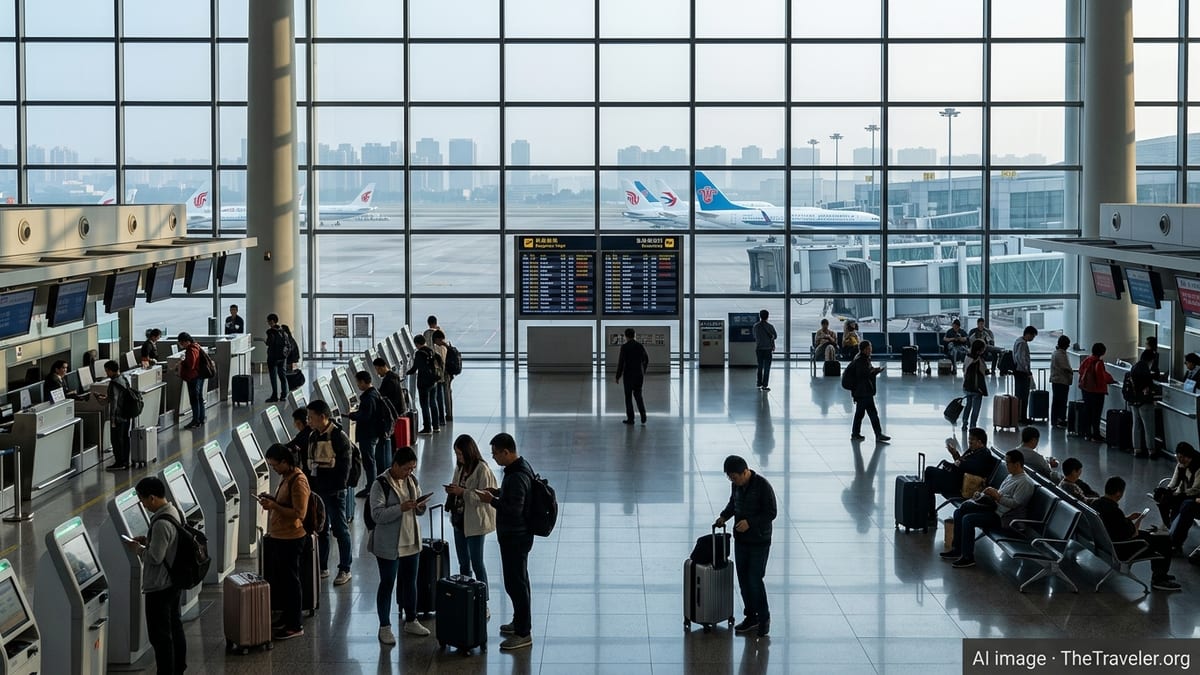
Dozens of flights operated by major Chinese carriers, including Air China, China Eastern and China Southern, have been cancelled in recent days, causing fresh disruption for travelers on routes linking Beijing, Shanghai, Guangzhou, Shenzhen, Bahrain and a range of other regional hubs.
Get the latest news straight to your inbox!
Wave of Cancellations Hits Key Chinese Carriers
Publicly available flight data and schedule notices indicate that more than 40 flights on Chinese airlines have been withdrawn or cancelled over a short period, affecting both domestic and international connections. The disruptions involve flagship carriers Air China, China Eastern and China Southern, alongside several smaller operators serving secondary cities and regional markets.
Many of the affected flights are concentrated on busy trunk routes that feed China’s largest aviation hubs, including Beijing Capital, Shanghai Pudong and Hongqiao, Guangzhou Baiyun and Shenzhen Bao’an. Additional cancellations have been reported on selected long haul and regional services, contributing to a patchwork of schedule changes that travelers are now trying to navigate.
The latest adjustments come on top of a broader pattern of timetable revisions by Chinese airlines heading into the spring and summer seasons, as carriers react to shifting demand, higher operating costs and evolving international conditions. For travelers, the result has been a noticeable increase in short-notice itinerary changes, particularly for multi segment journeys that rely on tight connections.
While the total number of cancelled flights represents only a fraction of overall capacity, the concentration on popular routes and peak travel periods has amplified the impact, filling alternative services and shrinking options for last minute rebooking.
Major Hubs in Beijing, Shanghai, Guangzhou and Shenzhen Affected
Beijing, Shanghai, Guangzhou and Shenzhen, which function as the primary gateways for China’s domestic and international air traffic, are all touched by the latest round of cancellations. Flight tracking platforms and airline schedule summaries show withdrawn departures and reduced frequencies on routes linking these cities with each other and with overseas destinations.
Travelers using Beijing Capital and Beijing Daxing are seeing changes most commonly on connecting services that feed long haul flights, where an upstream cancellation can break an entire itinerary. Shanghai’s twin hubs at Pudong and Hongqiao are similarly affected, with a mix of regional and medium haul routes subject to schedule cuts or aircraft changes that reduce available seats.
In southern China, Guangzhou Baiyun and Shenzhen Bao’an have reported cancellations on both outbound and inbound services operated by China Southern, Shenzhen Airlines and other partner carriers. Some of these adjustments are tied to network reshaping, while others appear linked to shorter term operational considerations such as crew rotations and aircraft deployment.
Because these four cities form crucial transit nodes for travelers moving between Asia, Europe, the Middle East and Oceania, even limited schedule reductions can reverberate widely, forcing passengers to reroute via alternative hubs or accept longer layovers.
Ripple Effects on International Routes, Including to Bahrain
The disruption is not confined to domestic markets. International routes connecting mainland China with the Middle East, Europe and the wider Asia Pacific region have also seen targeted cancellations, including services touching Bahrain and other Gulf destinations. Route and airport documentation listing operating carriers at major regional hubs highlight Chinese airlines as key players on several China to Middle East corridors, making any reduction in frequencies especially noticeable for business and transit traffic.
Travel industry reporting suggests that some long haul and regional links have been trimmed as airlines rebalance capacity away from underperforming routes or those facing heightened geopolitical or economic headwinds. In certain cases, flights have been cancelled in clusters across multiple days or weeks, leaving travelers with fewer alternative dates on the same carrier.
The knock on effect can be significant for passengers holding complex itineraries that combine domestic legs within China and onward long haul flights. A single cancellation on a feeder segment to Beijing, Shanghai, Guangzhou or Shenzhen can unravel a connection to Bahrain, another Gulf hub or a European destination, often requiring complete rebooking rather than a simple time adjustment.
For tourism dependent destinations and business hubs that rely on steady Chinese traffic, even modest cuts in flight numbers can translate into reduced visitor arrivals and cargo capacity, adding a layer of uncertainty to forward planning.
Travelers Confront Short Notice Changes and Limited Alternatives
Recent traveler accounts on public forums describe a growing pattern of cancellation notices arriving only days or weeks before departure, particularly for flights operated by Air China, China Eastern and China Southern on routes involving China’s major hubs. In several cases, passengers report learning of schedule changes through third party booking platforms or automated messages before updated options become visible on airline apps or websites.
Where alternative flights exist on the same day, seats are often limited, especially on popular links into Beijing, Shanghai, Guangzhou and Shenzhen. When no same day alternative is available, travelers are frequently offered rebooking on nearby dates or on different routings that may add extra stops or overnight layovers. Some travelers have opted to request refunds and switch to other carriers entirely, especially when time sensitive commitments make longer journeys impractical.
The situation has also created challenges for those coordinating rail connections, hotel stays and visa or transit arrangements around previously confirmed flight times. Cancellations that shift arrival or departure by even a few hours can invalidate carefully planned connections, leading to additional costs that are not always covered by basic tickets.
Travel advisers and consumer advocates commonly recommend that passengers monitor their bookings closely in the weeks before departure, use airline booking references to check status directly with carriers, and consider flexible or changeable fares where practical, particularly on itineraries that rely on multiple connections within China.
What Passengers Should Watch in the Coming Weeks
With airlines continuing to fine tune their schedules ahead of the northern summer season, travelers planning trips through China’s biggest hubs should expect the possibility of further adjustments. Industry observers note that carriers such as Air China, China Eastern and China Southern are still calibrating capacity in response to evolving demand patterns and broader regional dynamics, making short term changes more likely than during more stable periods.
Passengers with upcoming journeys to or from Beijing, Shanghai, Guangzhou, Shenzhen, Bahrain and other affected destinations may wish to review their itineraries regularly, paying particular attention to domestic feeder legs and onward international connections operated on separate tickets. Allowing additional buffer time between segments and avoiding extremely tight layovers can reduce the risk of missed connections if schedules shift.
Travelers are also watching how refund and rebooking policies are applied in practice, since these can differ depending on whether a cancellation is labeled as within an airline’s control or attributed to external factors. In some recent cases highlighted in public discussion, travelers have reported relatively smooth rebooking, while others have faced longer waits to secure alternative flights or refunds.
For now, the cancellations affecting more than 40 flights across multiple Chinese carriers underscore how quickly conditions can change on key Asian routes. Anyone planning to transit via China’s major hubs in the near future is being advised to stay informed, remain flexible, and build contingency plans into their travel arrangements.