

More news on this day
Thousands of air travelers have been left in limbo across China in recent weeks as a series of weather disruptions, tight capacity controls and operational bottlenecks triggered rolling flight chaos at major hubs from Beijing and Shanghai to Chengdu and Guangzhou.
Get the latest news straight to your inbox!
Storm Systems and Winter Weather Trigger Network-Wide Disruption
Recent storm systems sweeping across eastern and central China have proved to be the initial spark for much of the disruption. Publicly available aviation data and regional travel coverage indicate that severe thunderstorms and low cloud ceilings on March 10 led to more than 100 flight cancellations and hundreds of delays at Shanghai Pudong, Beijing Capital, Nanjing, Chengdu and Changsha, grounding aircraft and trapping passengers in terminals for hours at a time.
Earlier in the winter season, similar conditions produced extensive knock-on effects. Reports from January described more than 1,000 flights canceled or heavily delayed on January 20, overwhelming airports in central and southwestern hubs such as Zhengzhou, Wuhan, Chongqing, Changsha and Kunming. Those incidents left thousands of travelers sleeping in departure halls or being bused to outlying hotels as airlines struggled to reposition aircraft and crew.
In late February, additional disruptions were recorded when hundreds of flights were delayed and dozens canceled across the country’s main domestic carriers, including Air China, China Eastern and regional operators. The pattern across these events highlights how even short-lived bouts of poor visibility, heavy rain or winter conditions can swiftly turn into a national aviation problem when key hubs are already operating near capacity.
Major Hubs Buckle Under Tight Capacity and Congestion
China’s largest airports play an outsized role in amplifying disruption. Shanghai Pudong, one of the country’s busiest international gateways, has repeatedly featured in recent incident reports as a focal point for long queues, extended ground holds and delayed departures. When severe weather or air traffic restrictions constrain arrivals and departures, the airport’s packed schedule leaves little room to absorb shocks, and delays ripple through the system for hours.
Guangzhou Baiyun, a critical southern hub, has also reported some of the highest cancellation totals in the most recent wave of disruption, with travel industry tallies indicating multiple outright cancellations and several dozen delays in a single day. Passengers transiting through Guangzhou to reach Southeast Asia and Australia have been particularly exposed, as missed connections can mean waiting until the next day for an available seat.
In Beijing, both Capital and Daxing airports have seen mounting pressure as diverted and rescheduled flights converge on the capital. While not always recording the same number of cancellations as southern and central hubs, Beijing’s dual-airport system faces its own congestion challenges whenever arrival banks stack up in holding patterns or runway throughput is temporarily curtailed.
Passengers Face Long Waits, Patchy Information and Limited Alternatives
For travelers on the ground, the immediate impact has been long queues at check-in and rebooking counters, crowded boarding areas and sometimes sparse information on when flights might finally depart. Coverage from travel industry outlets and consumer advocacy groups describes passengers waiting six to twelve hours for replacement flights, with many reporting difficulties securing hotel vouchers or meal support during extended delays.
China’s hub-and-spoke network structure compounds the problem. Many domestic passengers rely on feeder flights from provincial cities to reach international departures at Beijing, Shanghai or Guangzhou. When those initial legs are canceled, travelers can lose not only their first segment but also onward connections, with few viable alternatives at similar prices. The result is a growing pool of stranded passengers competing for a limited number of rebooked seats.
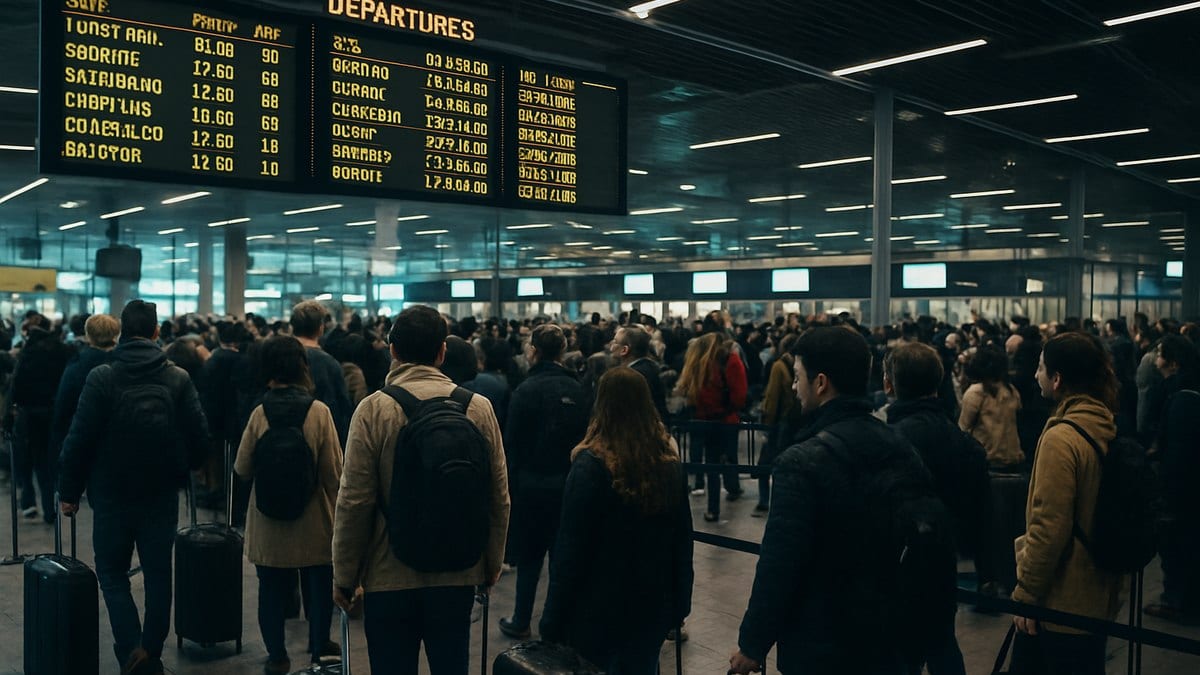
Social media posts and local news snapshots from airports such as Changsha, Chongqing and Shanghai have shown crowds gathered around departure boards and customer service desks as schedules shift repeatedly through the day. For some travelers, particularly those on tightly timed business trips or visa-limited itineraries, a missed connection can mean abandoning or radically shortening their plans.
Underlying Strains: Staffing, Scheduling and Post-Pandemic Demand
Behind the immediate weather triggers, analysts point to deeper strains in China’s aviation system. Publicly available commentary from aviation consultants and financial analysts notes that airlines have been operating with dense schedules and tight aircraft rotations, a strategy designed to capture surging demand now that domestic travel volumes have rebounded to or exceeded pre-pandemic levels.
Such lean scheduling means there is less slack in the system when something goes wrong. A delayed aircraft on one trunk route can quickly cascade into missed departures across multiple cities if there is no backup aircraft or crew ready to cover. At the same time, reports referencing air traffic management constraints suggest that certain terminal areas, particularly around Shanghai and the Pearl River Delta, are close to their operational limits during peak periods.
Staffing is another recurring concern. While large state-backed carriers have rebuilt much of their workforce, regional coverage indicates that some airports and ground-handling providers still face shortages, especially during sudden surges in disrupted passengers seeking assistance. That can leave help desks overwhelmed just when travelers most need clear guidance on rebooking, compensation rules and alternative routing.
What Travelers Can Do as Disruptions Persist
With periods of unsettled weather likely to continue through the spring travel season, industry observers expect further episodes of localized or national disruption. Travel advisories from online booking platforms and passenger-rights organizations increasingly recommend that travelers build longer connection times when routing through Beijing, Shanghai, Guangzhou and other congestion-prone hubs, especially when an international leg is involved.
Some advisories also encourage passengers to monitor flight status closely via airline apps and independent flight-tracking services, to keep boarding passes and receipts for out-of-pocket expenses, and to request written confirmation of delays or cancellations when possible. Such documentation can be important when seeking compensation from airlines or reimbursements from travel insurers.
For now, the wave of disruptions serves as a reminder that China’s rapidly growing aviation network remains vulnerable to external shocks and operational strain. Until additional capacity, more flexible schedules and improved contingency planning are in place, travelers moving through the country’s busiest hubs may need to plan for the possibility that a routine connection could turn into an unexpected overnight stay.