

More news on this day
Bohai Ferry’s strategic pivot toward freight and roll-on/roll-off services is reshaping the outlook for its long-serving cruise ship Chinese Taishan, highlighting broader shifts in China’s passenger-shipping and cruise ambitions.
Get the latest news straight to your inbox!
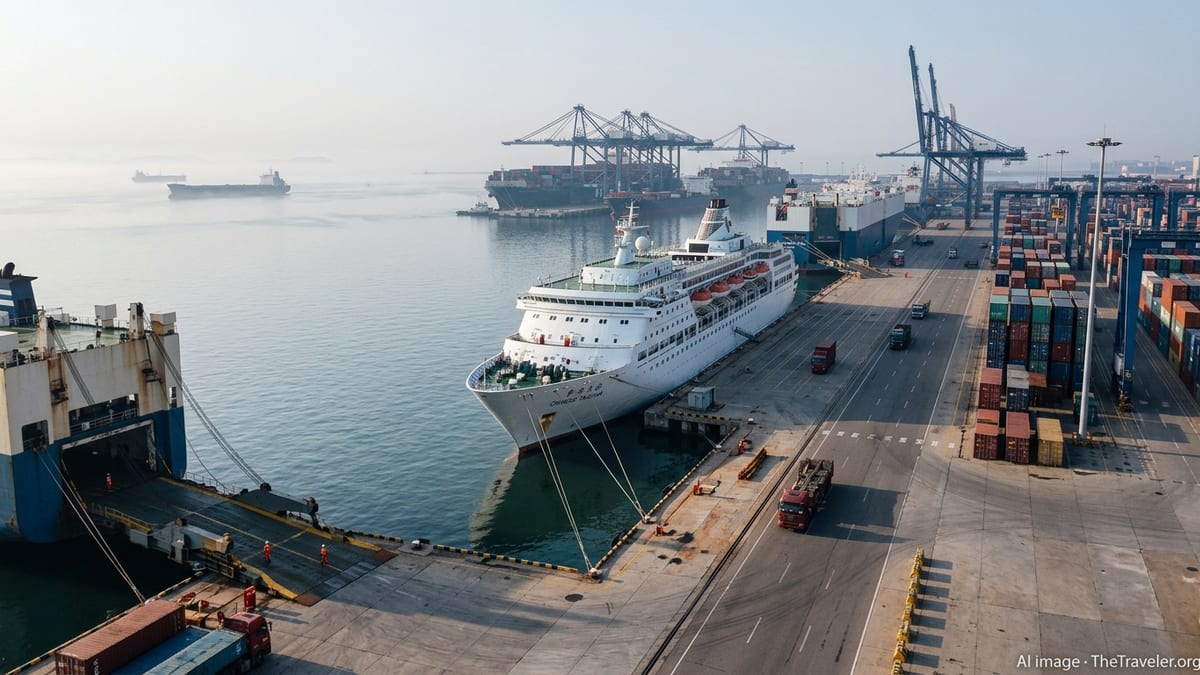
Bohai Ferry Refocuses on Core Freight and Ro-Ro Business
Publicly available corporate disclosures and industry analyses indicate that Bohai Ferry Group is concentrating investment and management attention on freight, bulk cargo and roll-on/roll-off vehicle services across the Bohai Rim. The company’s recent strategy documents emphasize expanding liner networks, deepening cooperation in commodities transport and strengthening regional feeder connections, underscoring a clear freight-first approach.
This shift reflects changing market conditions in North Asia. Trade patterns, port infrastructure upgrades and the need for more efficient logistics links between northeastern China and international markets are boosting demand for reliable freight capacity. In this environment, cruise operations, which are more volatile and discretionary, increasingly sit at the periphery of Bohai Ferry’s revenue priorities.
Industry reports suggest that the group is also positioning itself to benefit from developments in energy transport and green shipping fuels, areas that require substantial capital and operational focus. As these freight-related initiatives gain prominence, dedicated cruise products become comparatively less central to the company’s growth model.
Against this backdrop, the standalone cruise activities historically marketed under the Bohai Cruise banner appear less visible, with public information pointing to a gradual rebalancing away from pure leisure sailings and toward passenger services that complement freight and ro-ro movements.
Chinese Taishan’s Journey From Fast Cruise Liner to Regional Workhorse
Chinese Taishan entered the Bohai Ferry fleet in 2014, when the group acquired the former Costa Voyager from Carnival-linked interests and redeployed it in the Chinese market. The 180 meter vessel, built in Germany in 2000, was originally designed as a fast cruise ship, and over time sailed under several names and brands before being refitted for Chinese clientele.
After the purchase, Bohai Ferry positioned Chinese Taishan on short regional itineraries in Northeast Asia. Published coverage describes three and four day cruises linking the port city of Yantai with destinations such as Seoul and Incheon, combining leisure travel with cross-border tourism flows between China and South Korea. The ship also featured in port calls to Russian Far East gateways like Vladivostok during the pre pandemic expansion of regional cruising.
The vessel’s specifications allowed it to serve both as a contemporary cruise product and as a symbol of China’s emerging presence in the international cruise industry. Marketing materials highlighted modern cabins, entertainment facilities and the ability to operate at relatively high speeds, an attractive feature for compressed, short break itineraries popular with first time cruisers in the region.
Over the past decade, however, shifts in demand, the impact of health related travel restrictions and intensifying competition from newer tonnage in China’s coastal cruise market have complicated the economics of operating a single mid sized, aging cruise ship under a largely regional brand.
Market Pressures Push Bohai Ferry Away From Dedicated Cruising
The broader Chinese cruise sector has experienced a turbulent cycle, from rapid pre 2020 growth to prolonged suspension and gradual restart. While some state linked players continue to back purpose built new ships at domestic yards, companies with more diversified portfolios, such as Bohai Ferry, face difficult choices over whether to maintain older cruise tonnage or shift resources into more predictable cargo segments.
Industry outlook reports on China’s cruise market point to consolidation and a stronger role for larger brands that can deploy multiple ships and control distribution. In contrast, a single ship operation like Chinese Taishan can be more vulnerable to seasonal demand, regulatory changes and sudden shocks that disrupt passenger flows.
At the same time, the Bohai Rim region remains a critical freight corridor for coal, ore, vehicles and containers, all areas in which Bohai Ferry already holds experience and infrastructure. Public filings emphasize the expansion of roll-on/roll-off services and the development of international branch lines, signaling that the highest strategic returns are no longer seen in leisure cruising.
As a result, observers of the company interpret the limited recent visibility of Bohai branded cruise programs as a sign that the group is effectively exiting or at least greatly scaling back its pure cruise market participation, treating passenger services primarily as an adjunct to vehicle and cargo movements rather than a standalone tourism product.
What the Strategic Pivot Means for Chinese Taishan
The company’s evolving priorities raise questions about the long term role of Chinese Taishan. Publicly accessible maritime registers still list the vessel under Bohai affiliated ownership and management, yet there is little evidence of active deployment on traditional cruise itineraries in the current season. This suggests that the ship may be laid up, under limited charter or being evaluated for future redeployment.
Several scenarios emerge from patterns seen elsewhere in the regional market. One possibility is that Chinese Taishan could transition to mixed use operations, combining short, quasi cruise passenger services with ro-ro or charter work aligned with the parent group’s freight focus. Another is a sale to secondary markets, where older tonnage can continue trading on niche routes or be converted for alternative uses such as accommodation, training or floating hospitality.
Given the age of the ship and the accelerating introduction of newer, more efficient vessels in Asia, a full technical and commercial refurbishment for mainstream cruising would require significant investment. Weighing that against the company’s evident freight led strategy, analysts following Chinese shipping trends see limited rationale for Bohai Ferry to rebuild a competitive cruise product around a single, mature vessel.
Regardless of the eventual decision, Chinese Taishan’s trajectory illustrates the shifting balance between tourism ambitions and hard freight realities along China’s northern seaboard. The ship that once symbolized a new chapter for local cruising now stands at the intersection of evolving trade flows, port development and changing traveler behavior.
Implications for Regional Travel and Port Cities
The retreat from dedicated cruising by a player such as Bohai Ferry has local consequences for destinations once linked by Chinese Taishan’s itineraries. Ports like Yantai, which leveraged cruise calls to promote coastal tourism, shopping and short break holidays, may see fewer overnight leisure visitors arriving by sea, even as freight and vehicle traffic increase.
Regional tourism boards in Northeast Asia have been working to rebuild international arrivals, and the presence or absence of cruise traffic influences everything from shore excursion offerings to small business revenues in port districts. While major cruise brands continue to call at East Asian hubs, the loss of a homeport style operation operated by a domestic shipping group reduces diversity in the market.
For travelers, the changes narrow the options for shorter, budget friendly cruise experiences departing smaller Chinese ports. Prospective passengers may instead turn to sailings from larger hubs, such as Shanghai or Tianjin, or shift to air and high speed rail for multi day regional getaways.
As Bohai Ferry doubles down on freight and ro-ro services, the story of Chinese Taishan encapsulates a broader realignment: in today’s market, cargo capacity and logistics integration often outweigh the prestige of flying a cruise brand, leaving once prominent leisure ships to search for new futures beyond the spotlight.