

More news on this day
A once-niche sailing corridor between the Venetian port of Chioggia and Athens’ gateway of Piraeus is emerging as one of the Mediterranean’s most talked-about cruise routes, pairing under-the-radar Adriatic towns with marquee Greek destinations and reshaping how travelers experience the region by sea.
Get the latest news straight to your inbox!
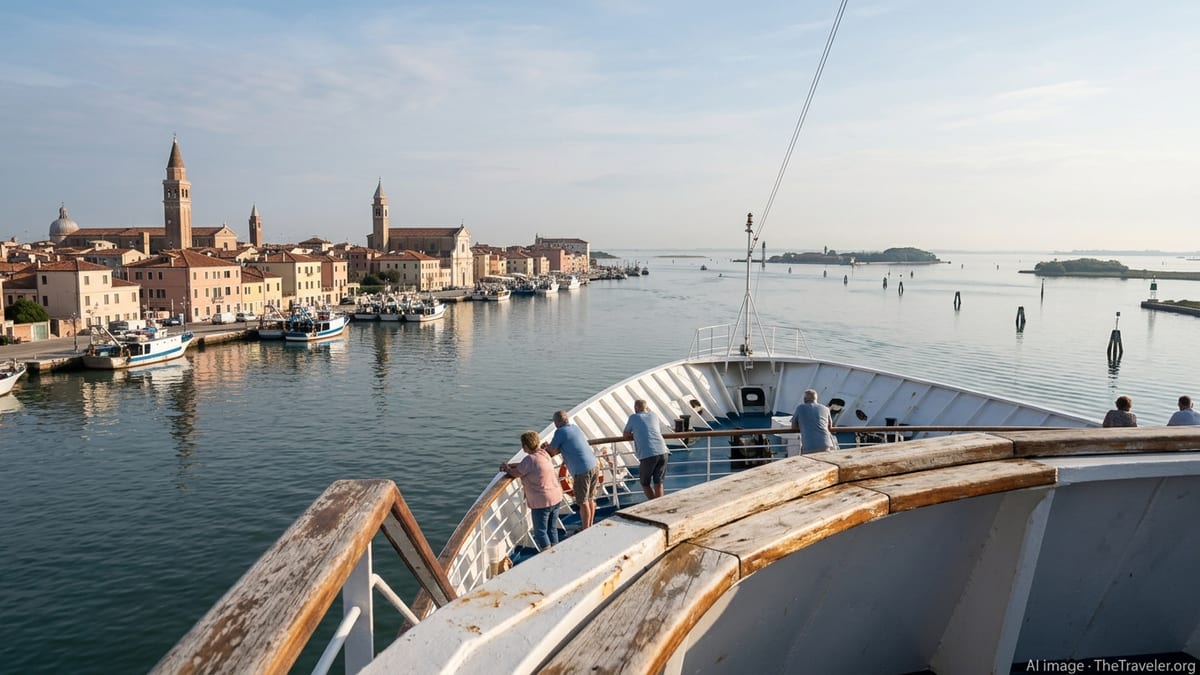
A New Axis in Eastern Mediterranean Cruising
Recent deployment announcements from premium and luxury cruise brands show a clear pivot toward itineraries that embark in or near Venice and conclude in Athens, with Chioggia increasingly positioned as a strategic starting point. Trade materials from several cruise sellers now highlight nine- and ten-night journeys branded around the Adriatic and Greece that explicitly list “Venice (Chioggia)” as the embarkation port and Athens (Piraeus) as the final stop, signaling a shift away from Venice’s historic cruise terminals and toward smaller, more flexible harbors.
Schedules published for 2025 and 2026 include sailings marketed as Adriatic “wonders” or “empires” voyages, typically tracing a one-way path from Chioggia to Athens. These routes capitalize on strong demand for culturally intensive itineraries while responding to evolving port regulations and capacity constraints in the Venice lagoon. Publicly available booking pages point to a steady expansion of these offerings, with departures already loaded into the market for mid- and late-decade seasons.
Industry data circulated by European cruise and port associations further indicate that Chioggia’s role is set to grow within the broader “Venice area” cruise ecosystem. While larger industrial terminals near Venice absorb mass-market megaships, Chioggia has become attractive for small and mid-sized vessels seeking a more traditional lagoon approach and easier access to compact historic centers.
Chioggia: The Quieter Venetian Gateway
For travelers, Chioggia effectively functions as a quieter, less congested alternative to Venice while still offering a classic lagoon atmosphere. The compact fishing town, often described in consumer coverage as a “little Venice,” features canals, stone bridges, and a working harbor that create a markedly different pre-cruise experience than a large industrial port. Cruise-focused transfer operators already advertise dedicated services linking Chioggia’s cruise pier with Venice’s Marco Polo Airport, underscoring the city’s practical role in cruise turnarounds.
Travel reports suggest that passengers embarking in Chioggia are increasingly combining a night or two in Venice proper with time exploring the local market streets, seafood restaurants, and waterfront promenade of this lesser-known town. For many, the embarkation day becomes the first “hidden gem” moment of the journey, with embarkation logistics generally perceived as more manageable than navigating Venice’s former cruise terminals.
From an operational standpoint, Chioggia’s emergence aligns with a broader trend of dispersing cruise traffic across multiple ports in the northern Adriatic. As Venice manages visitor flows and restricts larger ships in the historic lagoon, Chioggia has become part of a patchwork that also includes Ravenna, Fusina, and Trieste, each serving specific ship sizes and itinerary types while maintaining the overall draw of the Veneto region.
Hidden Gems Along the Adriatic and Ionian Seas
The Chioggia to Athens route is being marketed around its mix of lesser-known coastal towns and a curated set of marquee stops. Sample itineraries published for 2026 and 2027 feature calls in smaller Adriatic ports such as Zadar and Šibenik in Croatia, Kotor in Montenegro, or boutique harbors on the Dalmatian coast, paired with Greek islands that sit slightly off the main mass-market circuit. Booking brochures reference ports like Katakolon for access to ancient Olympia, as well as secondary Greek harbors that provide a slower-paced alternative to the busiest island capitals.
In consumer-facing descriptions, these stops are framed as opportunities for “immersive” exploration rather than quick photo stops. Narrow medieval streets, Venetian fortifications, and waterfront promenades dominate the visual storytelling used to promote the sailings, with emphasis on walkable historic centers and local food culture. The combination appeals to experienced cruisers looking for a fresh Mediterranean narrative that still includes the comfort and predictability of a structured itinerary.
At the same time, the route leverages the natural drama of the Adriatic and Ionian seas. Marketing images highlight sail-ins past limestone cliffs, island-dotted horizons, and fortified harbors at sunrise or sunset, positioning days at sea as scenic experiences rather than simple transit between headline ports.
Athens and Piraeus Anchor the Journey
On the southeastern end of the route, Athens and its port of Piraeus serve as the historic anchor for these one-way sailings. Cruise line deployment documents for upcoming winter and shoulder seasons repeatedly list Piraeus as either embarkation or debarkation point for itineraries spanning Greece, Italy, and the wider Mediterranean, reinforcing Athens’ status as a primary cruise gateway. For Chioggia-originating voyages, Piraeus functions as the culmination of a north-to-south cultural arc, connecting Venetian maritime heritage with the classical sites of Greece.
Travel advisories and consumer guides routinely describe the transfer between Piraeus and central Athens as straightforward, with metro, taxi, and organized transfer options making it viable for passengers to extend their stay. This ease of access encourages travelers to book pre- or post-cruise nights in the Greek capital, visiting the Acropolis, Plaka district, and key museums, and effectively turning the Chioggia–Athens journey into a broader land-and-sea itinerary.
Published trip reports also emphasize the appeal of combining the calmer pace of Adriatic coastal towns with the urban intensity of Athens at the end of the voyage. For many passengers, this sequencing feels like a narrative build: starting in working harbors and medieval cores, then concluding amid the monumental architecture and nightlife of a major European capital.
Why the Route Is Being Viewed as a Game-Changer
Several structural trends help explain why the Chioggia to Athens corridor is attracting outsized attention in the cruise and travel trade. First, it offers cruise lines a way to maintain the enduring appeal of Venice and Athens while adjusting to environmental, regulatory, and capacity pressures at both ends. Using Chioggia as a homeport allows operators of small and mid-sized ships to continue selling a Venetian experience, while Piraeus remains a well-equipped, year-round hub for Eastern Mediterranean deployment.
Second, the route aligns with growing traveler interest in “slow” and culturally focused cruising. Instead of a rapid circuit of large ports, itineraries between Chioggia and Athens are being assembled around a chain of smaller harbors, historic towns, and select marquee sites. Trade brochures for 2025 to 2027 highlight longer port days, overnight stays in key cities, and reduced sea days, all marketed as features that deliver deeper local engagement.
Finally, the north–south trajectory neatly connects several high-demand regions in a single voyage: the Venetian lagoon, the Dalmatian coast, the Ionian islands, and Athens. For travel advisors and tour operators, this creates a compelling product that can be paired with overland stays in Italy or Greece, rail travel within Europe, or back-to-back cruises. As more lines publish deployment through the latter half of the decade, the Chioggia–Athens route is poised to remain a centerpiece of Eastern Mediterranean cruise planning.