

More news on this day
A seven-night cruise itinerary linking the Venetian lagoon town of Chioggia with Athens is emerging as one of the Mediterranean’s more intriguing new routes, blending boutique ports and marquee capitals in a way that underscores how quickly Europe’s cruise geography is shifting.
Get the latest news straight to your inbox!
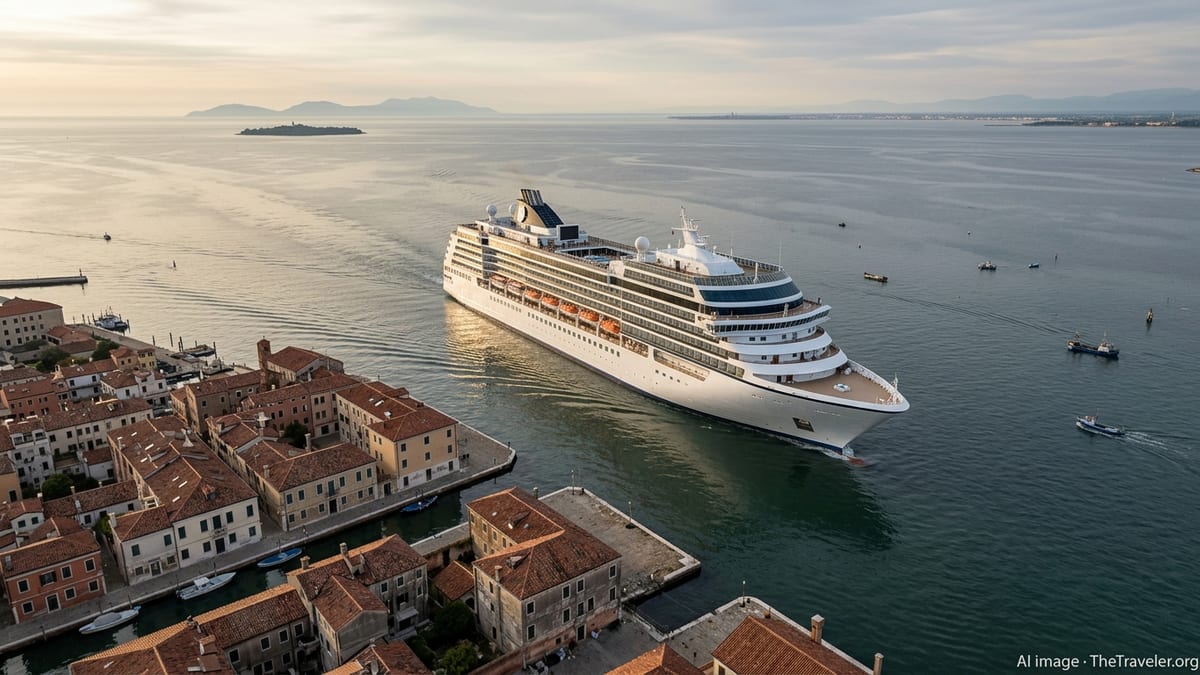
Chioggia Steps Into the Spotlight as a Venice Alternative
The historic fishing town of Chioggia, long overshadowed by nearby Venice, is gaining traction as a embarkation point for smaller luxury and premium ships charting new courses toward the eastern Mediterranean. Port authority material and recent trade coverage indicate that Chioggia has been positioning itself as a niche hub for upscale lines, capitalizing on restrictions that limit larger vessels from sailing directly into Venice’s historic center.
While Venice Marghera remains the primary gateway for many big-ship itineraries, Chioggia is steadily attracting vessels that prioritize a quieter, lagoon-front setting and easier access for turnaround operations. The town’s compact waterfront, colorful canals and working-fleet atmosphere provide a distinctly different pre-cruise experience from the crowds around St. Mark’s Square, which many travelers now visit by excursion instead of as a direct cruise call.
Industry guides and schedule aggregators show a growing list of one-way sailings using Chioggia as a starting point, with itineraries stretching south through the Adriatic before turning toward the Aegean and Piraeus, the main port serving Athens. These routes typically run seven to nine nights, a duration that appeals to European travelers seeking a shorter holiday as well as long-haul visitors pairing the cruise with land stays.
Travel planners note that Chioggia’s rise also reflects broader shifts across northern Adriatic ports, with Trieste, Ravenna and Marghera each competing for cruise calls that once clustered almost exclusively around Venice. For now, Chioggia’s advantage lies in its small scale and its ability to host ships that market themselves on intimate atmospheres and destination-focused itineraries.
A One-Way Adriatic and Aegean Route With Boutique Flair
The emerging seven-night Chioggia-to-Athens pattern taps into a string of Adriatic ports that have rapidly moved from niche to mainstream in the past decade. Sample itineraries published by online cruise schedule platforms feature stops in Dalmatian and Croatian ports such as Split or Dubrovnik, together with calls in Montenegro or the Ionian Islands before ships turn east toward the Greek mainland.
Unlike traditional round-trip circuits that double back to the same departure port, this open-jaw configuration allows ships to chart a more linear course, reducing backtracking and opening space for longer days in port. Travel agents say the format is particularly attractive to repeat Mediterranean cruisers who have already sailed classic western routes from Barcelona or Civitavecchia and are now looking for slower-paced coastal experiences farther east.
For passengers, one-way itineraries typically mean more complex logistics on either end, yet reports indicate that this has not dampened interest. Many travelers are opting to fly into Venice, transfer by coach or water transport to Chioggia for embarkation, then depart from Athens or continue their journey into the Greek islands or mainland after disembarkation in Piraeus.
On board, the focus tends to lean toward regional food, wine and culture rather than sea days and resort-style attractions. Marketing material for comparable Adriatic and Aegean voyages highlights vineyard visits, old-town walking tours and UNESCO-listed historic centers, positioning the cruise as a curated journey through smaller coastal communities rather than a simple string of big-city calls.
Why the Itinerary Feels Different in a Crowded Med Market
With the Mediterranean remaining one of the world’s busiest cruise regions, standing out has become increasingly challenging for operators. Analysts point out that the Chioggia-to-Athens concept carves out a distinctive niche by linking two historically significant maritime hubs through a series of mid-sized and small ports that can feel less saturated than the classic western Med circuit.
Publicly available data on port throughput shows that while Venice and Piraeus handle substantial passenger volumes, many of the intermediate Adriatic and Ionian stops still receive far fewer calls than marquee destinations such as Barcelona, Marseille or Naples. For well-traveled guests, that relative quiet can translate into easier access to old towns, less congestion at key viewpoints and a more relaxed pace ashore.
The route also benefits from timing. After years of discussions around sustainability and heritage protection in Venice, operators have been under pressure to rethink how they feature the lagoon city within their programs. Departing from Chioggia allows lines to offer a pre- or post-cruise visit to Venice while shifting the operational focus to a different port, which can help reduce the visibility of large ships in the historic basin and align more closely with evolving local regulations.
Meanwhile, Athens continues to grow as a major turnaround port for eastern Mediterranean itineraries, with Piraeus serving as a hub for cruises to the Cyclades, Dodecanese and beyond. Positioning a one-week sailing between Chioggia and Piraeus places passengers within easy reach of onward island-hopping or Peloponnese road trips, adding flexibility that traditional round-trips may lack.
New Hubs, New Patterns for European Cruise Travel
The rise of itineraries starting in Chioggia underscores a broader recalibration of cruise patterns across Europe, as operators respond to infrastructure limits, environmental concerns and changing traveler behavior. Recent port authority statements for the northern Adriatic region highlight investment in terminals, transport links and visitor-management tools designed to accommodate growth without overwhelming historic centers.
For destinations along the route, the trend offers both opportunities and challenges. Smaller ports see economic benefits from higher-spending passengers drawn by luxury and premium brands, particularly when ships stay longer into the evening. At the same time, local officials and community groups are increasingly focused on managing visitor flows, protecting waterfront neighborhoods and ensuring that cruise calls support rather than distort existing economies.
For travelers, the net effect is a Mediterranean cruise landscape that looks and feels more varied than it did even a few years ago. A seven-night Chioggia-to-Athens voyage encapsulates this shift: starting in a lesser-known corner of the Venetian lagoon, threading through Adriatic outposts and arriving in the Greek capital, it offers a version of the region that is more route-driven and experience-focused than ship-led.
As more lines test combinations of emerging and established ports, itineraries like this one are likely to become a reference point for how the industry can balance demand for glamorous escapes with the realities of operating in some of Europe’s most fragile and celebrated coastal environments.