

More news on this day
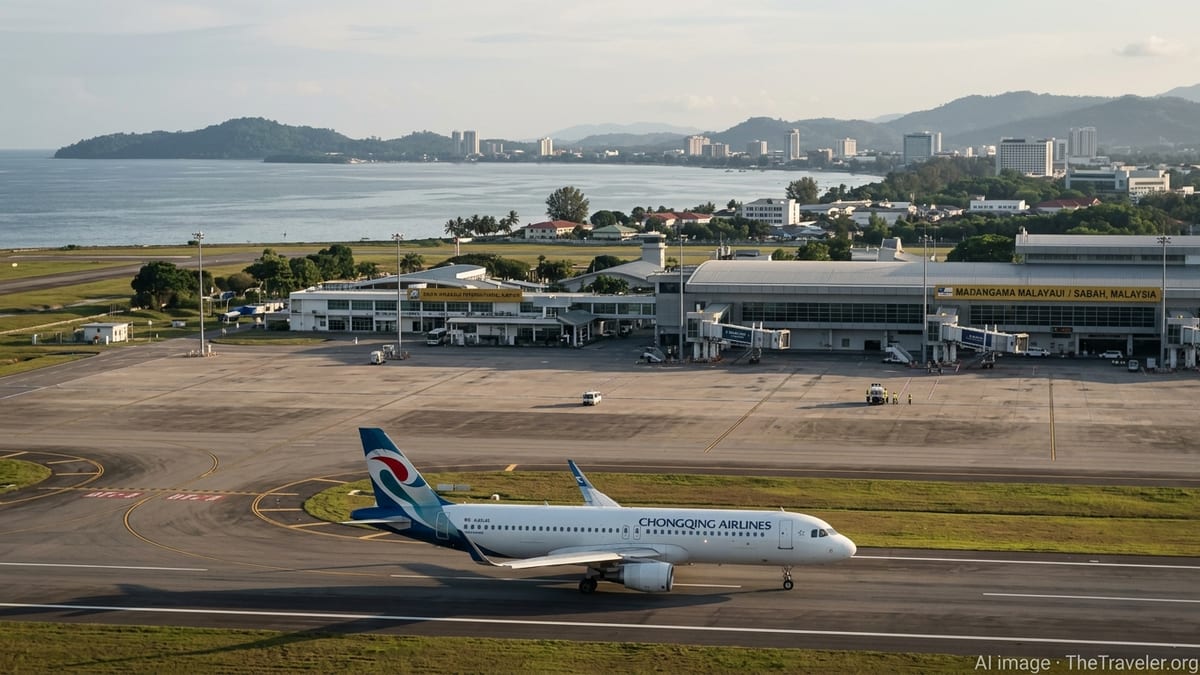
Sabah’s tourism ambitions for Visit Malaysia 2026 are receiving a lift with Chongqing Airlines launching a new direct service between Chongqing and Kota Kinabalu, expanding the state’s growing network of air links to China and reinforcing Borneo’s position on regional travel maps.
Get the latest news straight to your inbox!
New Direct Connection Between Western China and Sabah
Publicly available flight information indicates that Chongqing Airlines is adding Kota Kinabalu to its international network from March 19, 2026, with a direct service from Chongqing Jiangbei International Airport. The route places Sabah’s capital in easier reach of travelers from one of western China’s largest urban centers, home to tens of millions of residents and a fast-rising middle class.
The new service is understood to operate three times weekly, providing a regular pipeline of visitors into Kota Kinabalu International Airport. This added frequency is expected to complement existing links from multiple Chinese cities served by other carriers, gradually restoring and expanding Sabah’s pre-pandemic connectivity to China.
Timings and operating days are designed to support both leisure trips and group travel, which remains a key segment in Chinese outbound tourism. Travel planners are likely to see the route as an opportunity to package Sabah’s islands, nature attractions, and city stays with wider itineraries through western China.
Industry observers note that direct air connections are often decisive for destination choice among Chinese travelers, who generally favor point-to-point routes over complex transfers. The Chongqing–Kota Kinabalu sector therefore places Sabah in a stronger position to compete with other Southeast Asian beach and nature destinations.
Boost for Sabah’s China-Focused Tourism Strategy
The introduction of the Chongqing route aligns with Sabah’s broader strategy of deepening ties with the Chinese market in the run-up to Visit Malaysia 2026. Recent tourism updates highlight a series of new and returning services from China into Sabah’s airports, including both scheduled and charter operations into Kota Kinabalu and secondary gateways such as Tawau.
Reports indicate that Chinese arrivals have been steadily rebuilding, and destination marketing campaigns continue to promote Sabah’s marine parks, rainforests and cultural attractions. The new Chongqing link adds another source city in China’s vast domestic aviation grid, offering more diversified access beyond traditional coastal hubs like Guangzhou and Shenzhen.
Travel industry analysis suggests that western China’s outbound market is under-served compared with coastal regions but is growing quickly as incomes rise and travel restrictions ease. By tapping into Chongqing’s large catchment area, Sabah gains access to travelers who may be looking for a first-time overseas beach holiday or nature-focused break within a relatively short flight time.
Local stakeholders in accommodation, tours and transport are expected to benefit from a broader mix of Chinese visitors, from packaged tour groups to independent travelers. This diversification may support higher average stays and spending, particularly when itineraries extend beyond Kota Kinabalu to interior and east coast destinations.
Strengthening Air Connectivity for Visit Malaysia 2026
Malaysia has positioned Visit Malaysia 2026 as a major national tourism milestone, and Sabah features prominently in promotional narratives emphasizing nature, culture and adventure. The expansion of international air links into Kota Kinabalu is viewed as a central pillar of these efforts, ensuring that marketing campaigns are backed by practical, well-timed flight options.
Route announcements over the past year reflect a gradual rebuilding of capacity from key Asian markets, particularly China, Singapore and other parts of Southeast Asia. The arrival of Chongqing Airlines into the Kota Kinabalu market adds another carrier to the mix and increases overall seat capacity at a time when demand projections are trending upward.
A stronger aviation network also supports multi-destination travel within Malaysia. Travelers arriving on the Chongqing–Kota Kinabalu route can connect onward to other Malaysian states, while domestic visitors from Peninsular Malaysia gain additional options for linking Sabah with wider regional itineraries via Chongqing.
Industry commentary points out that air connectivity improvements tend to generate knock-on effects across sectors, from meetings and incentives to eco-tourism and community-based experiences. As airlines commit aircraft and marketing budgets to new routes, destinations often receive additional visibility in digital search results, travel agency platforms and social media content.
Positioning Kota Kinabalu as a Borneo Gateway
Kota Kinabalu has long promoted itself as a natural gateway to Borneo, with easy access to islands, coral reefs, tropical rainforests and the granite peak of Mount Kinabalu. The new Chongqing connection reinforces this positioning by shortening travel time for visitors from inland China who might previously have routed through multiple hubs to reach Sabah.
Travel guides commonly highlight the city’s waterfront, night markets and growing café scene as a relaxed base for exploring Sabah’s interior and coastal attractions. With additional flights from China, local operators are expected to refine products that appeal specifically to Chinese travelers, such as Mandarin-language guided tours, halal and Chinese cuisine options, and family-friendly itineraries.
Beyond traditional sightseeing, Sabah’s emerging eco-tourism and cultural experiences are likely to feature more prominently in packages targeting the Chongqing market. Birdwatching, community-based rainforest stays and cultural villages around Kota Kinabalu are increasingly promoted in regional travel media as lower-density, nature-rich alternatives to more urbanized resort destinations.
Observers note that growing interest in sustainable travel among younger Chinese tourists may align well with Sabah’s emphasis on conservation areas, marine parks and responsible wildlife experiences. Direct access from Chongqing could therefore help channel demand toward itineraries that distribute visitor spending more evenly across rural and coastal communities.
Outlook: Gradual Capacity Build-Up Toward 2026
While the new Chongqing Airlines service is currently scheduled at three flights weekly, aviation analysts suggest that successful load factors could encourage frequency increases or seasonal adjustments closer to Visit Malaysia 2026. Carriers commonly fine-tune capacity based on performance, fuel prices and competitive dynamics on overlapping routes.
For Sabah, the near-term priority is likely to center on ensuring that hospitality and tourism services are ready to meet higher expectations from international guests. This includes language capabilities, digital booking systems, ground transport options and the overall visitor experience from airport arrival to onward travel.
As 2026 approaches, additional route announcements and schedule refinements into Kota Kinabalu are anticipated, particularly from Asian markets showing strong outbound growth. The Chongqing–Kota Kinabalu launch is viewed as one of several building blocks in a wider connectivity strategy aimed at supporting Malaysia’s national tourism goals.
For travelers, the new direct flight offers a clearer and more convenient path between western China and the beaches and rainforests of Sabah. For the destination, it represents another step in a long-term effort to position Kota Kinabalu as a must-visit hub in Southeast Asia as Visit Malaysia 2026 draws closer.