

On a recent swing through southern Vancouver Island, I split my time between Duncan and Victoria to figure out which one actually works better as a base for a short trip.
On paper they are only about an hour apart by car, yet they feel like different worlds: one a compact Cowichan Valley town wrapped in farms and forests, the other a busy provincial capital built around a postcard harbour. After a few days in each, I came away with a much clearer sense of who should stay where, what surprised me, and what I would do differently next time.
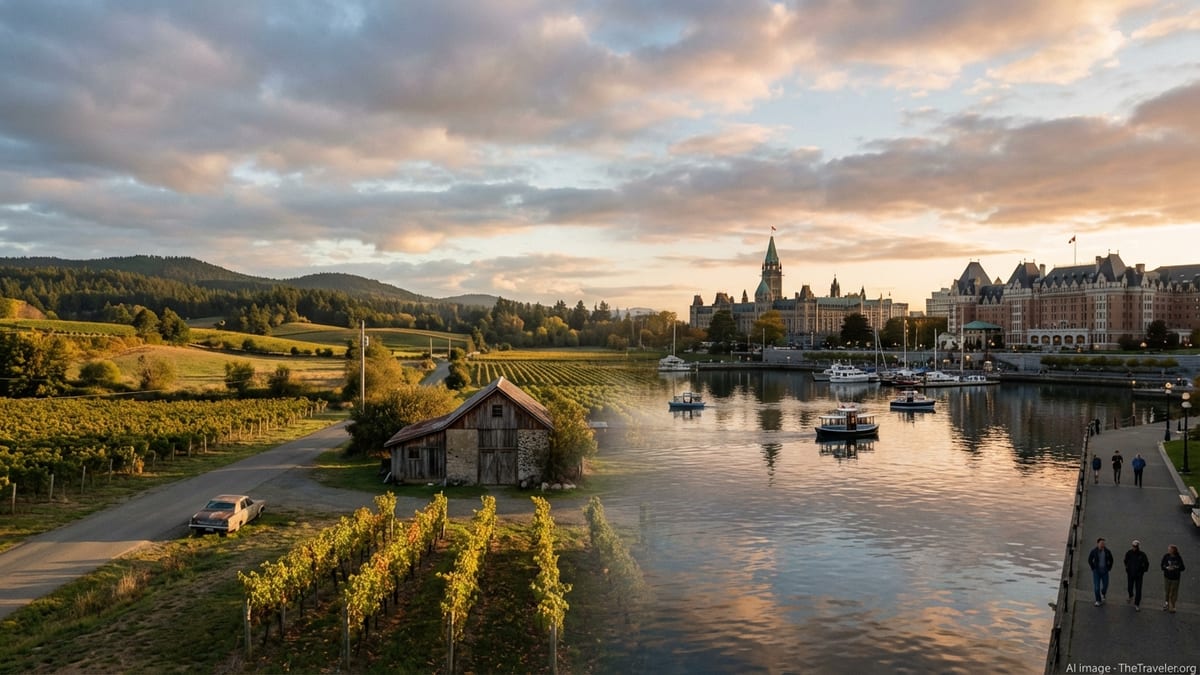
Getting Oriented: Two Very Different Bases an Hour Apart
Duncan and Victoria sit only about 60 kilometres apart along Highway 1, with driving times typically around 50 to 60 minutes depending on Malahat traffic. That sounds trivial when you look at a map, and before this trip I underestimated how much that stretch of road would shape each day. Once I was actually doing the drive, the difference between being based in one versus the other started to matter more than I expected.
Victoria felt like a classic hub city stay. My hotel near the Inner Harbour meant I could walk to the Parliament Buildings, the Royal BC Museum, Bastion Square and the waterfront in a few minutes. Ferries, whale watching tours and harbour taxis were right in front of me. It was easy to settle into a rhythm of stepping out the door and having options without touching the car.
Duncan was the opposite in a mostly good way. The town itself is small and straightforward, centered on the Trans Canada Highway and surrounded by farmland and low forested hills. From there, though, it was surprisingly quick to reach Cowichan Bay, wineries, the BC Forest Discovery Centre, The Raptors and trailheads around Cowichan Lake. It felt like a base camp for day trips rather than a place you linger in all day, and I liked that balance more than I thought I would.
My first real decision moment was the order in which to do them. I chose Victoria first, then Duncan, thinking I would decompress after the city. In hindsight I would probably flip that: start in Duncan for the outdoors and slower pace, then finish in Victoria for a bit more buzz and restaurant choice before leaving the island.
Access and Transport: How Much Do You Want to Drive?
Transport is where the choice between Duncan and Victoria really hardens. With a car, the drive between the two is straightforward: Highway 1 over the Malahat, about 38 miles and just under an hour in normal conditions. Multiple route planners put it around 49 to 58 minutes without stops, which matched my experience almost exactly. Without a car, things change, and in 2025 and early 2026 public transit between the Cowichan Valley and Victoria has been inconsistent thanks to labour disruptions in the regional bus system. I felt that uncertainty planning my days and I would not want to rely fully on buses for a tight itinerary.
Based in Victoria, I barely needed the car once I had parked it. The Inner Harbour area is dense and walkable, and local buses and taxis cover the rest of the city. Day trips up the Saanich Peninsula or to places like Butchart Gardens are easy, though traffic can be slow at peak times. I did one day where I never moved the car at all and still felt like I saw a lot, which is rare in smaller Canadian cities.
In Duncan I had the opposite problem. Around town I could walk to coffee, groceries and a couple of casual restaurants, and there are local buses serving nearby communities, but nearly every activity I cared about required a drive of 10 to 30 minutes. Wineries, The Raptors, Cowichan Bay, Kinsol Trestle and Lake Cowichan all meant getting behind the wheel. The driving itself was not stressful, but it meant planning my days with more intention. When I tried to sketch out a bus-only version of my Duncan days, it quickly looked impractical for a short stay, especially given that regional routes into and out of the Cowichan Valley can be limited or disrupted.
If you are arriving by ferry or plane and do not plan to rent a car, Victoria is the clear winner. You can reasonably fill three or four days without once needing to drive. If you enjoy scenic drives and do not mind that most things are spread out, Duncan becomes a much more sensible and rewarding base, especially if your focus is the Cowichan Valley rather than the capital city sights.
Cost, Crowds and Accommodation: Where the Money Actually Goes
Accommodation prices were where I felt the biggest shock. Victoria has both a strong tourist season and a constrained historic core, and room rates in and around the Inner Harbour reflect that. Even in shoulder season I was paying noticeably more per night than in Duncan for a comparable quality of room. In peak summer, friends who booked in 2024 reported that harbourfront hotels and popular boutique properties often sell out well in advance and command premium rates, which lines up with what I saw when browsing availability close to my travel dates.
In Duncan, I found midrange hotels and motels at prices that would barely get you a basic room in Victoria. The tradeoff was atmosphere. None of the places I looked at or stayed in had the historic charm or waterfront views you can find in Victoria; they were practical, clean and forgettable, often lining the highway. What made Duncan a better value for me was that I could redirect that savings into experiences: a winery lunch I might have skipped, an extra tasting flight, or a guided tea walk at Westholme Tea Company in the Cowichan Valley instead of counting every dollar.
Crowds were another stark contrast. Victoria’s Inner Harbour and surrounding blocks are busy for large parts of the year. Cruise ship days make a visible difference. I had one morning at the Royal BC Museum that felt almost too packed to enjoy certain galleries at my own pace, and the queue for afternoon tea at a well known hotel pushed me to skip it entirely. The upside is energy: buskers in Bastion Square, people milling around the Parliament Buildings, patios full late into the evening.
Duncan, by contrast, rarely felt crowded. Even at popular spots like local wineries or Cowichan Bay on a sunny afternoon, the number of people never approached what I saw in Victoria. That made casual stops feel relaxed and spontaneous. On the flip side, it sometimes felt a bit too quiet in the evenings. If you want nightlife, late dinners or bar hopping, Duncan simply does not compete. My nights there were more about sunsets over the valley and early starts the next morning than about staying out late.
Things to Do: Museums and Harbour vs Wineries and Forests
In Victoria, most of my time gravitated to the harbour and cultural sites. The Royal BC Museum, even with some galleries in transition, remains one of the most substantial museums in the province, and I happily lost hours in the natural history and Indigenous collections. The Parliament Buildings offer tours when the legislature is not in session, and just walking the grounds gives a sense of why the city draws so many visitors. Bastion Square, with its historic buildings and seasonal public market, added a nice layer of street life and history during the day.
Water defines a lot of what you actually do in Victoria. Whale watching tours leave from the Inner Harbour and nearby docks, harbour ferries zip back and forth, and even a simple evening walk along the waterfront delivers the feeling of being somewhere distinct and coastal. Seasonal festivals, including the return of large music and symphony events around the harbour, can turn the area into a genuine spectacle in summer. The flipside is that much of this activity is concentrated into a few blocks; once you step away from the inner core, Victoria quickly becomes more like a typical Canadian city with residential areas and shopping strips.
Duncan’s strength is the variety of experiences scattered around the wider Cowichan region. Within a short drive I visited the BC Forest Discovery Centre, rode the little train through the grounds, walked through logging and forestry exhibits and watched families make a full day out of it. The Raptors, a birds of prey centre, delivered one of the most memorable hours of my trip, with close up encounters and flying demonstrations that were both touristy and genuinely educational. Out toward Cowichan Lake, the forest suddenly feels wilder, and walking across the massive wooden Kinsol Trestle was a highlight I had nearly skipped.
Food and drink are another strong point around Duncan. The Cowichan Valley has the highest concentration of wineries on Vancouver Island, and several near Duncan are easy to combine into a relaxed day of tastings and vineyard lunches if you have a car and a designated driver. Westholme Tea Company, Canada’s first commercial tea farm, turned out to be a surprisingly rich stop; taking part in one of their guided tea walks taught me far more about tea cultivation in this microclimate than I expected. Compared to Victoria’s more polished, urban experiences, Duncan’s activities felt rooted in landscape and agriculture, and that contrast helped me appreciate both.
Seasonality, Weather and Practical Timing
Southern Vancouver Island generally enjoys a milder climate than much of Canada, with cool wet winters and relatively dry, warm summers. That broader pattern plays out differently in Duncan and Victoria when you are actually visiting. Victoria, being right on the Strait of Juan de Fuca, often feels breezier and a bit cooler on the water, especially in the evenings. The harbour can be magical at sunset in summer, but I found I needed a warm layer even when the forecast looked benign.
Duncan and the Cowichan Valley sit slightly inland, and the region is known for something close to a Mediterranean style microclimate. In practical terms, that meant warmer afternoons during my stay and a noticeably drier feel compared with other coastal parts of the island. Vineyards, farms and frequent roadside stands make more sense when you realize how much sun this valley often gets. The flip side is that some hikes and outdoor activities felt hot in midsummer, and I was grateful for earlier starts to avoid the peak heat on exposed trails and trestles.
Seasonality also affects crowds and prices. Victoria’s high season runs roughly from late spring through early fall, with peak months in summer driven by cruise ships, festivals and school holidays. During that window, waterfront hotels and tours are busiest, and you may need to book popular experiences in advance, including whale watching and high demand museum time slots. In shoulder seasons like early spring and late fall, you trade some liveliness and long evenings for lower prices and a more relaxed pace in the city.
Around Duncan, I noticed that weekends in late spring to early fall get busy at specific attractions like wineries, The Raptors and popular lake access points, but the region as a whole never felt overrun. Many places operate on more limited hours outside peak months, though, so a shoulder or winter visit requires closer attention to opening times and seasonal closures. This was another decision moment: I had one day that could have gone either to a Victoria museum or to a Cowichan winery lunch. Knowing that some valley tasting rooms slim down their hours in the off season tipped me toward doing that day in Duncan while everything was clearly in full operation.
Comfort, Atmosphere and Everyday Convenience
Comfort on a trip is more than the bed in your room. In Victoria, the historic core gave me plenty of charm: heritage buildings, the Parliament silhouette at night, and the constant backdrop of the harbour. Cafes and restaurants were on nearly every block around downtown, and I never struggled to find a last minute dinner. That convenience came with a few tradeoffs. Street noise on busy nights was noticeable, especially on weekends, and parking near the harbour can be tight and occasionally expensive if your accommodation does not include it.
Duncan offered a more utilitarian comfort. The town is compact and car friendly, and parking was free and easy almost everywhere I went. Groceries, pharmacies and practical shops are close together, which made it simple to stock up before heading out on day trips. The atmosphere is not especially pretty in the way Victoria’s harbour is; much of the main drag hugs the highway and feels more functional than romantic. That said, the totem poles scattered around town and the small downtown streets reward a bit of wandering, and I appreciated the lack of tourist gloss.
Safety never felt like a major concern in either place, but the vibe changed with time of day. Victoria’s downtown includes pockets where public drug use and street disorder are visible, particularly in certain corridors off the main tourist routes. It never felt threatening, but it did occasionally break the illusion of a purely polished capital city getaway. In Duncan, evenings were so quiet that I rarely saw more than a handful of people after dark, and walking back to my accommodation felt low key if a little empty. The main caution there is driving on rural roads at night, where wildlife and low lighting make extra attention necessary.
In terms of daily rhythm, Victoria suits travelers who like to lace together multiple small experiences without much planning: a museum here, a harbour walk there, spontaneous shopping and a late dessert. Duncan and the Cowichan Valley reward setting a loose plan each morning, deciding on a cluster of nearby spots, and then allowing for discovery in between. I personally found the Duncan days more satisfying, but I missed being able to just walk out into a lively street scene at night.
Real Trip Decisions and What I Would Do Differently
Several practical decisions shaped how I felt about both bases. The first was where to spend more nights. I initially split the trip evenly between Duncan and Victoria, but by the end I wished I had given one extra night to Duncan. The city breaks and attractions there are easy to sample in two days, while the surrounding areas of the Cowichan Valley could have easily filled another couple of relaxed ones with more wineries, trails and small town visits.
The second decision was about day trip direction. On one bright day I debated driving from Victoria back up toward Duncan and the valley or staying south and focusing on Victoria and the Saanich Peninsula. I chose to stay around Victoria, visiting local gardens and smaller coastal spots, and saved the valley for the Duncan segment. That turned out to be the right call, as stringing Duncan day trips off a Victoria base would have meant repetitive drives over the Malahat and a lot of time in the car. Keeping those valley days anchored in Duncan kept everything compact.
A third big choice involved where to spend for comfort. Victoria tempted me to splurge on a harbour view room. The rate difference was large enough that I hesitated, especially since I was traveling in a period when city prices were already elevated. In the end I booked a comfortable but non waterfront hotel within walking distance of the harbour and then allowed myself more generous spending on meals and activities in both places. I do not regret that tradeoff. Watching the harbour from public spaces in Victoria satisfied the same itch, and I was much happier having the budget to say yes to a guided experience at Westholme, a couple of strong restaurant meals, and a last minute winery stop.
If I were planning the same general trip again, I would keep Victoria as a two night city break, use it mainly for walking, museums and one water based activity, and then shift to Duncan for three or four nights focused on the Cowichan Valley. I would also be more explicit about needing a car; trying to piece this trip together on regional buses and taxis would have been stressful, especially given recent service variability between Duncan and Victoria. For travelers dead set against driving, I would tell them to base entirely in Victoria and treat Cowichan as an optional add on through organized tours if and when those are operating.
The Takeaway
After staying in both Duncan and Victoria on the same trip, I stopped thinking of them as interchangeable Vancouver Island bases and started seeing them as complementary tools. Victoria is the obvious choice if you want a lively, walkable city with strong cultural sights, an iconic harbour, and minimal need for a car. You will pay more and share your days with more people, but you get the classic capital city experience, plus easy access to ferries and flights.
Duncan, on the other hand, is a practical and surprisingly rich base for exploring the Cowichan Valley. It is cheaper, quieter and far more car dependent, but the reward is quick access to wineries, farms, forests, lakes and low key coastal communities like Cowichan Bay. If your picture of the trip involves birds of prey swooping over open fields, walking across huge wooden trestles and sipping local wine in the afternoon sun, then Duncan will likely serve you better than trying to commute from Victoria each day.
For a short trip, my honest recommendation is this: if you have no car and limited time, stay in Victoria and make peace with focusing your energy there. If you do have a car and at least four or five days, split your stay or even lean toward Duncan, using Victoria as a concentrated city stop at the beginning or end. Both are worth visiting, but they shine in different ways. Knowing that up front is what turns a pleasant island visit into a trip that actually matches your expectations.
FAQ
Q1. Is Duncan or Victoria better if I will not have a car?
Victoria is clearly better without a car. You can walk between most major sights, use local buses or taxis and still have a full itinerary. In Duncan, almost all the best experiences in the wider Cowichan Valley require driving, so being car free would feel limiting on a short trip.
Q2. How long does it actually take to drive between Duncan and Victoria?
In normal conditions it usually took me about 50 to 60 minutes each way by car along Highway 1 over the Malahat. Online routing tools give similar figures. Traffic, road work or bad weather can add time, so I would not plan tight schedules that assume a perfectly smooth 49 minute drive.
Q3. Which base is cheaper overall for a few nights?
In my experience Duncan was cheaper for accommodation and parking, and that freed up budget for food and activities. Victoria had a wider range of hotel types but higher average room rates near the harbour and downtown. Once you add in paid parking and pricier restaurants, a few nights in Victoria generally cost more than the same number in Duncan.
Q4. If I only have two nights, where should I stay?
With just two nights I would stay in Victoria unless you are specifically interested in wineries and outdoor activities around the Cowichan Valley. From Victoria you can see key city sights on foot and avoid spending a big chunk of your limited time driving back and forth over the Malahat.
Q5. Is Duncan a good base for visiting Victoria on day trips?
Technically you can do it, but I found it inefficient. Driving nearly an hour each way to spend the day in Victoria felt like unnecessary backtracking, especially with ferry schedules and city traffic in the mix. If your focus is Victoria itself, stay there. Use Duncan as a base when your main goal is exploring the Cowichan region.
Q6. Are there enough things to do around Duncan for three or four days?
Yes, if you enjoy outdoor activities, food and drink, and small town exploring. Between wineries, The Raptors, BC Forest Discovery Centre, Cowichan Bay, trails and lake access, I easily filled several days without repeating much. It is not a nightlife destination, but for slow travel and day trips, Duncan works very well.
Q7. How far in advance should I book accommodation in Victoria and Duncan?
For peak summer or holiday weekends in Victoria, I would book as early as you can once your dates are firm because central hotels near the harbour can fill quickly. In Duncan I found more last minute availability, but I would still secure a room a few weeks ahead in busy seasons, especially if you have specific standards or want to be close to town rather than out on the highway.
Q8. Which location feels safer for solo travelers?
Both felt generally safe to me. Victoria’s downtown has more visible street life and the occasional rough edge, but staying in central, well lit areas and walking normal routes around the harbour felt fine. Duncan is much quieter at night, which can feel either peaceful or a little empty depending on your comfort level. In both places, the usual travel precautions are sufficient.
Q9. What is the best season to base in Duncan versus Victoria?
Late spring through early fall works well for both. If your priority is outdoor activities, wineries and lake time, Duncan and the Cowichan Valley really shine in warm, dry months. If you care more about museums, restaurants and urban atmosphere, Victoria is enjoyable year round, with shoulder seasons offering a good balance of liveliness and lower prices.
Q10. If I split my stay, how many nights would you give each place?
On a five night trip with a car, I would likely do two nights in Victoria for museums and the harbour, then three in Duncan for the Cowichan Valley. If you have seven nights, you could stretch that to three and four respectively. That balance gave me enough time in the city without short changing the valley experiences that make Duncan such a useful base.