

On a lonely stretch of Hudson Bay coastline, where the boreal forest fades into open tundra and sea ice locks the horizon each winter, Churchill sits at the edge of the Canadian North. This tiny Manitoba town has quietly become one of the world’s great wildlife and sky-watching destinations, famous for dense autumn gatherings of polar bears, luminous northern lights, and summers filled with beluga whales and migratory birds. Visiting Churchill is not a typical vacation. It is an immersive Arctic experience shaped by weather, wildlife and a resilient northern community that has learned to live alongside one of the planet’s most powerful predators.
Churchill at a Glance
Churchill lies on the western shore of Hudson Bay, roughly 1,000 kilometers north of Winnipeg, at the juncture of three major ecosystems: boreal forest, Arctic tundra, and marine environment. This convergence concentrates wildlife in remarkable ways, from polar bears and beluga whales to foxes, wolves and hundreds of bird species. With a population of only around 900 residents, the town feels closer to an outpost than a resort, yet it supports a surprisingly robust tourism industry that peaks in summer and autumn.
There are no roads connecting Churchill to the rest of Manitoba. Visitors arrive either by plane or by the storied rail line that links Churchill to the provincial capital. The lack of road access helps preserve its remote character and the fragile environment surrounding it. At the same time, it means that logistics must be carefully planned, from booking flights and accommodation to choosing guided excursions well in advance during peak seasons.
Churchill’s appeal is built around three main draws: polar bears, northern lights and beluga whales. Polar bear viewing is most reliable in October and November, when the bears congregate near the coast waiting for Hudson Bay to freeze. Northern lights experiences are strongest during the cold, clear nights of winter and late autumn, and beluga whale trips are centered on the relatively mild months of July and August. Many operators now tailor multi-day itineraries around these seasonal spectacles.
Culturally, Churchill sits on Treaty 5 land, home to Cree, Dene, Inuit and Métis communities whose histories in the region predate European settlement by millennia. Modern tours increasingly incorporate Indigenous perspectives, from storytelling and traditional knowledge of the land to artwork and locally guided excursions, giving visitors a more complete sense of where they have traveled.
Getting There and Getting Oriented
Most travelers start their Churchill journey in Winnipeg, Manitoba’s capital. From there, regularly scheduled commercial flights connect to Churchill in around two hours, operated seasonally by regional carriers. Seats during peak polar bear or northern lights seasons can sell out months ahead, so early booking is strongly advised. Some tour companies package flights, accommodation and excursions into single itineraries that simplify planning and often include knowledgeable guides from the moment you depart Winnipeg.
The legendary Winnipeg–Churchill train is another option for those with time and patience. The journey typically takes around two full days each way, crossing prairies, boreal forest and subarctic peatlands before reaching the Hudson Bay coast. Trains can be delayed by weather or track conditions, so this mode of travel suits flexible itineraries rather than tightly scheduled trips. The reward is a slow, atmospheric introduction to the vastness of northern Manitoba.
On arrival, visitors find a compact town with a small cluster of hotels, lodges and guesthouses, along with a few restaurants, a grocery store and basic services. Accommodation ranges from simple motels to atmospheric log lodges and, for some polar bear packages, remote tundra or Bay-side lodges accessible only by specialized vehicles or aircraft. In recent years, operators have continued to refine these offerings, adding new northern lights viewing facilities and, in some cases, underwater beluga viewing boats that allow guests to watch whales from below the surface.
Within town, most places are walkable in fair weather, though winter temperatures and wind can be severe. During polar bear season, residents and visitors are strongly discouraged from walking beyond central areas without a vehicle due to the presence of bears near the outskirts. Local guides, shuttle services and tour vehicles provide safe transport to viewpoints, historic sites and wildlife viewing areas, allowing travelers to experience the landscape without unnecessary risk.
Polar Bear Capital of the World
Churchill is widely known as the “Polar Bear Capital of the World,” and for good reason. Each autumn, hundreds of polar bears migrate along the coast as they wait for the sea ice of Hudson Bay to form, concentrating the bears in numbers that are rarely seen elsewhere. This seasonal gathering provides one of the world’s most accessible opportunities to observe polar bears in the wild, under the guidance of seasoned local operators who have refined viewing practices over decades.
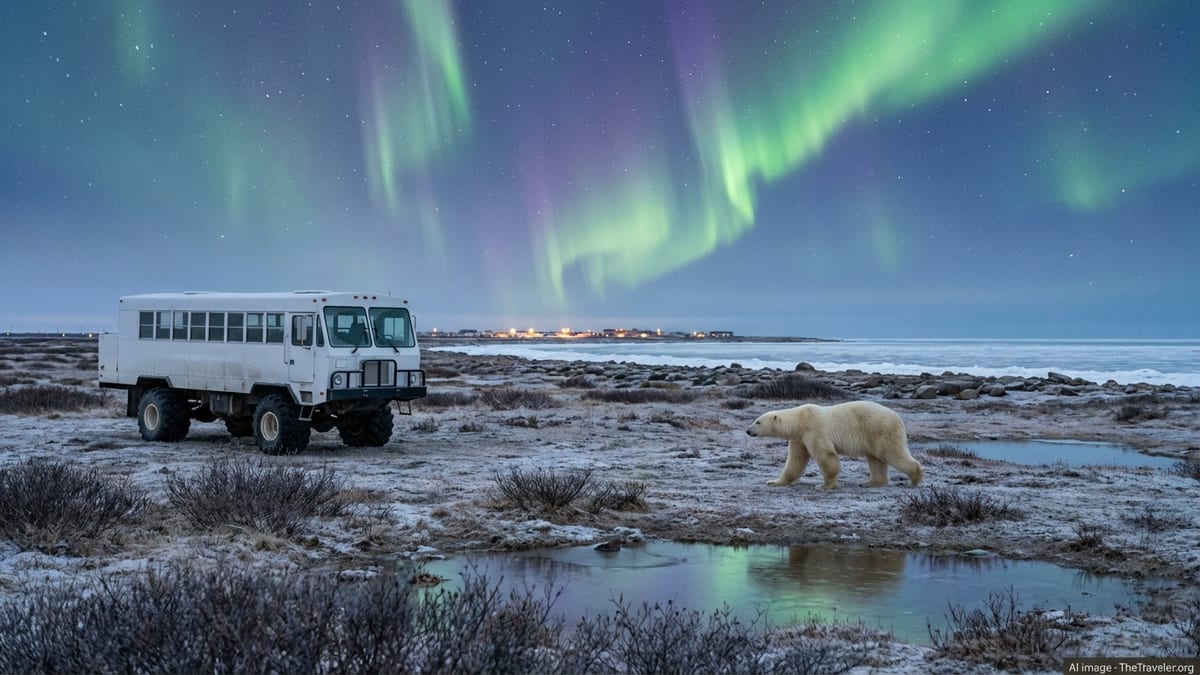
Most polar bear excursions take place in the Churchill Wildlife Management Area or adjacent coastal regions, reached on large, elevated vehicles known as tundra buggies or polar rovers. Companies such as Frontiers North Adventures, Great White Bear Tours and others operate custom-built vehicles with oversized tires and high, secure viewing decks designed to keep guests safely above the bears while still offering close viewing opportunities. Some multi-day tours include overnight stays in mobile tundra lodges or remote facilities where guests can watch bears wandering the frozen landscape outside their windows.
Peak polar bear season generally runs from early October through mid to late November, when temperatures drop and the Bay begins to freeze. During this period, visitors may see bears sparring playfully in the snow, mothers with older cubs traversing the tundra, or solitary males pacing the coast. On guided town and coastal drives, there are also chances to spot foxes, Arctic hares and a variety of birds. Day trips from southern Canadian cities, including chartered excursions from Winnipeg and some western hubs, have grown in popularity, allowing wildlife enthusiasts to experience Churchill’s bears in a single, intensive day when conditions cooperate.
While the bears are the main draw, safety and respect for wildlife are central to Churchill’s tourism model. Local authorities maintain a polar bear alert program that includes patrols, deterrence measures and, when necessary, temporary holding facilities for so-called “nuisance bears” that wander too close to town. Visitors are briefed on safety guidelines and are expected to follow their guides’ instructions at all times. Viewing from recognized operators not only protects travelers but also helps minimize stress and disturbance to the bears themselves.
Northern Lights and Winter Magic
Churchill’s location directly beneath the auroral oval gives it some of the most consistent northern lights activity on the planet. While auroras can appear at almost any time of year when skies are dark and clear, the best viewing conditions typically occur from late January through March, and again during the colder nights of late autumn when daylight hours are shorter and cloud cover often thin. Tour companies have increasingly developed dedicated aurora packages, combining evening sky-watching with daytime activities on the tundra and in town.
Aurora-viewing experiences range from simple outings to dark areas beyond the town’s lights to fully equipped northern lights lounges where guests can relax indoors and step outside when the sky begins to glow. Some operators use heated yurts, remote cabins or specially adapted vehicles, allowing photographers to set up tripods while warming between displays. Night skies in midwinter can be intensely cold, with wind chills plunging well below freezing, so proper clothing is essential even on short excursions.
Typical northern lights tours last several hours and are highly weather-dependent. Guides monitor aurora forecasts and local conditions, shifting schedules when needed to maximize viewing chances. A calm, clear night might bring pale bands of green dancing across the sky; on particularly active evenings, visitors might see intense curtains of color that ripple from horizon to horizon, occasionally tinged with purple or red. Even moderate displays can be impressive against the stark winter landscape of snow, ice and low, silhouetted trees.
Beyond auroras, winter and late autumn in Churchill offer dog mushing, snowshoeing, cultural presentations, and, for extreme athletes, events such as the Polar Bear Marathon held along the frigid Hudson Bay coast in late November. These activities showcase the community’s resilience and its creative adaptation to harsh conditions, offering visitors insight into what day-to-day life looks like at the edge of the Arctic.
Summer Belugas, Birdlife and Soft Adventures
Although polar bears dominate Churchill’s image, summer brings a very different kind of wildlife spectacle. From roughly July through August, tens of thousands of beluga whales migrate into the warmer, shallower waters of the Churchill River estuary to feed and give birth. This annual movement creates one of the world’s great beluga-watching hotspots, with pods of curious white whales often approaching boats and kayaks.
A number of operators run zodiac cruises, larger boat trips and, increasingly, vessels equipped with underwater viewing windows that let guests watch belugas from below the surface. Some companies also offer guided kayaking or stand-up paddleboarding experiences among the whales in suitable conditions, typically using drysuits or thick wetsuits to offset the chilly water. Regulations and ethical guidelines are in place to reduce disturbance to the whales, and reputable tour providers emphasize slow, respectful approaches and minimal noise.
Summer also reveals Churchill’s value as a birding destination. More than 250 bird species have been recorded in the region, taking advantage of rich feeding grounds created by wetlands, coastal flats and tundra. Visitors might encounter tundra swans, sandhill cranes, jaegers, snowy owls and a variety of shorebirds. Specialized birding tours operate during peak migration windows, while general wildlife and sightseeing journeys commonly include time to observe and photograph avian life.
For those who prefer gentler adventures, summer provides milder temperatures and long daylight hours for hiking, coastal walks and historical explorations. Guided outings visit sites such as the 18th-century stone fortress of Prince of Wales Fort across the river, the grounded cargo plane known locally as Miss Piggy, and the rusting hull of the Ithaka shipwreck. Some local guides also offer nature walks focused on tundra plants, geology and the subtle colors that arrive during late summer and early autumn, when the landscape briefly erupts into reds, golds and deep greens.
Culture, History and Life in the North
Beyond its wildlife and night skies, Churchill has a layered human story that enriches any visit. Indigenous peoples have lived along this coast for thousands of years, following seasonal movements of caribou, seals and whales, and leaving traces in archaeological sites scattered across the region. Hudson’s Bay Company traders arrived in the early 18th century, establishing fortified posts that would become central to the fur trade, while later decades brought military installations and modern transportation links.
Visitors today can explore this history through guided town tours and key cultural institutions. The Itsanitaq Museum holds an important collection of Inuit carvings, tools and ceremonial items, offering insight into traditional lifeways and artistic expressions from across the Canadian Arctic. Interpretive displays around town and at historic structures provide context on the fur trade, early European exploration and the evolution of Churchill as a strategic port and community.
Public art has become a striking part of Churchill’s streetscape. Large-scale murals, many created during recent art initiatives, transform building walls into vivid depictions of Arctic wildlife, environmental themes and local stories. Walking through town, visitors encounter polar bears, belugas, ravens and human figures rendered in bold colors, often with messages about climate change, stewardship and cultural pride.
Daily life in Churchill is shaped by isolation, weather and the ever-present possibility of wildlife encounters. Residents follow practical protocols, such as avoiding leaving food outdoors and remaining vigilant during bear season. At the same time, community events, small cafes, and friendly interactions between locals and visitors give the town a welcoming, lived-in feel. Spending time in local businesses, from coffee shops to craft outlets selling Indigenous art, offers a glimpse into the rhythms of a place that must balance global interest with the needs of a small northern population.
Planning Your Trip: Seasons, Safety and Practicalities
Churchill is a destination where timing shapes the entire experience. Travelers focused on polar bears should aim for October and November, when specialized vehicles operate regularly in the Churchill Wildlife Management Area and bears are most concentrated along the coast. For northern lights, late winter and early spring, especially February and March, often offer clear, dark skies and high auroral activity, while still allowing for daytime outings. Those drawn to belugas and milder conditions will likely favor July and August, when boats and kayaks can reliably access the river and estuary.
Regardless of season, clothing and safety preparation are crucial. Temperatures can swing quickly, and wind off Hudson Bay intensifies the cold. Layering with moisture-wicking base layers, insulated mid-layers and windproof, waterproof outer shells helps maintain comfort. Quality boots, gloves, hats and face protection are particularly important during late autumn and winter. Many tour operators provide packing lists tailored to the conditions expected during your trip, and some supply specialty gear for activities such as kayaking or snowshoeing.
Wildlife safety is a defining feature of Churchill travel. Polar bears are powerful, unpredictable animals, and visitors should never attempt to approach bears on foot or drive unescorted into backroads and coastal tracks. Official guides understand bear behavior, local regulations and emergency protocols. Joining established tours is both safer and more likely to produce rewarding sightings than attempting independent exploration. In town, paying attention to posted advisories, obeying local instructions and avoiding solitary walks on the outskirts during bear season are basic but vital precautions.
Because Churchill is remote, services are limited compared with urban centers. Restaurant options, while gradually expanding, remain few, and reservations are advisable in peak months. Groceries and supplies can be more expensive due to transportation costs. Travel insurance that covers weather-related disruptions is sensible, particularly for itineraries with tight connections. With thoughtful planning, however, these logistical challenges become part of the adventure rather than obstacles.
The Takeaway
Churchill offers a rare combination of accessibility and true Arctic character. It is one of the few places on Earth where travelers can look a wild polar bear in the eye from the safety of a tundra vehicle, listen to a chorus of beluga whales in the midnight sun, and stand under vast curtains of green aurora, all in the span of a single extended trip across seasons. The town’s small size and isolation foster an intimacy with the landscape and community that is hard to replicate in more heavily developed destinations.
For responsible travelers, Churchill is also a front-row seat to some of the most pressing environmental stories of our time, from changing sea ice patterns to the shifting ranges of Arctic wildlife. Local operators and residents are increasingly focused on sustainability, emphasizing small-group travel, careful wildlife viewing practices and meaningful engagement with Indigenous culture and knowledge.
Whether you come for the polar bears of late autumn, the shimmering skies of winter or the beluga-filled estuary of summer, Churchill rewards those who arrive prepared, curious and respectful. This is not a destination of polished resort experiences and predictable schedules, but a place where weather, wildlife and community shape every day. Embrace that unpredictability and you will find in Churchill an unforgettable journey to the edge of the Arctic world.
FAQ
Q1. When is the best time to see polar bears in Churchill?
The most reliable polar bear viewing typically occurs from early October through mid or late November, when bears gather along the coast waiting for Hudson Bay to freeze.
Q2. When are northern lights most visible in Churchill?
Auroras can appear year-round, but clearest viewing conditions are usually from late January to March and again in late autumn, when nights are long and skies are often cold and clear.
Q3. What is the best season to see beluga whales?
Beluga whales are most abundant in the Churchill River estuary from roughly July through August, when they migrate into the warmer, shallower waters to feed and give birth.
Q4. How do I get to Churchill if there are no roads?
Most visitors fly from Winnipeg on scheduled regional flights. Others take the multi-day train from southern Manitoba, which can be atmospheric but slower and more weather-dependent.
Q5. Is Churchill safe for independent exploration during polar bear season?
Within central town, it is generally safe when you follow local guidance, but independent hiking or driving outside town in bear season is strongly discouraged. Guided tours are the safest way to explore.
Q6. Do I need special clothing for Churchill?
Yes. Sturdy, layered clothing is essential, including insulated boots, warm hats and gloves, and windproof outerwear. Winter and late autumn visitors should be prepared for severe cold and wind.
Q7. How far in advance should I book a Churchill trip?
For peak polar bear, beluga or northern lights seasons, booking several months to a year ahead is wise, especially for packaged tours and limited-space lodges or tundra accommodations.
Q8. Can I see polar bears, northern lights and belugas on one trip?
It is difficult to combine all three at their absolute peak in a single short visit, but shoulder-season itineraries and multi-trip strategies can blend two of the three highlights effectively.
Q9. Are Churchill tours suitable for children?
Many tours welcome families, particularly summer wildlife and cultural trips. Cold temperatures, long days and late-night aurora excursions mean that winter and bear-season trips suit older, well-prepared children best.
Q10. How can I travel responsibly and support the local community?
Choose established local or long-term operators, respect wildlife guidelines, shop from local artisans, learn about Indigenous history and culture, and follow all community safety and environmental recommendations.