

More news on this day
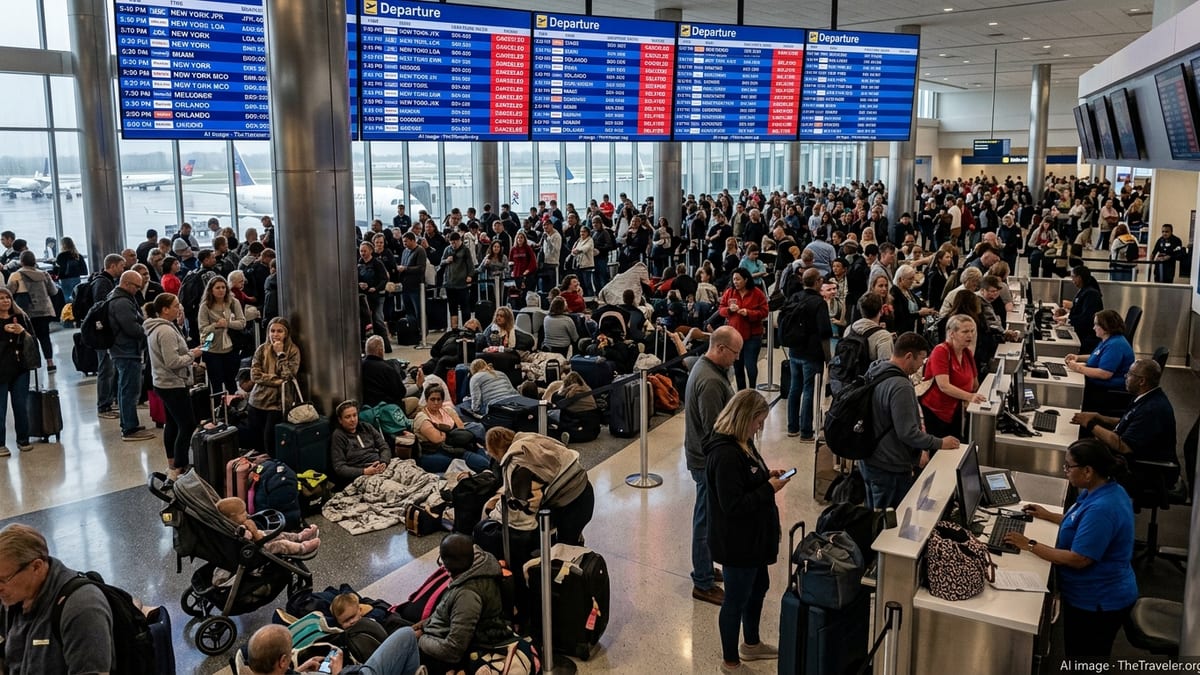
Hundreds of passengers at Cincinnati/Northern Kentucky International Airport faced a day of turmoil this week as a wave of abrupt flight cancellations to New York, Miami and Orlando left travelers stranded, ticket counters overwhelmed and rebooking options in short supply.
Get the latest news straight to your inbox!
Storm Disruptions Ripple Through Cincinnati’s Air Network
The disruption at Cincinnati/Northern Kentucky International Airport, commonly known as CVG, comes amid a broader spell of unstable weather and operational strain across the United States. Recent storms linked to a powerful late-winter system have triggered thousands of cancellations nationwide, with major hubs in the Northeast and along the East Coast particularly affected.
Publicly available aviation and weather data for March indicate that the latest round of cancellations is tied to a complex of storms sweeping from the Midwest toward the Atlantic seaboard, producing snow, strong winds and dangerous crosswinds at several large airports. New York-area airports, including those serving LaGuardia and John F. Kennedy routes, have seen especially heavy disruption, which in turn has cascaded into secondary airports such as Cincinnati.
Reports from flight-tracking services show that dozens of flights touching CVG were grounded or delayed as schedules unraveled over several days. Connections to major leisure destinations in Florida, notably Miami and Orlando, were hit hard, compounding the effect on families, tour groups and spring break travelers who rely on those routes.
While Cincinnati is not the largest hub in the region, its role as a connector means that cancellations on key routes can quickly strand passengers from multiple cities. When flights to New York and Florida are removed from the schedule at short notice, rebooking windows narrow and downstream connections often become impossible to salvage.
New York, Miami and Orlando Routes Among the Hardest Hit
Flight schedules reviewed on Wednesday show that some of the most affected departures from CVG were those bound for New York, Miami and Orlando, three of the busiest and most strategically important markets for the airport’s airlines. These routes typically support a mix of business travelers, cruise passengers, family visitors and international connections.
New York-bound flights have been especially vulnerable during this period, as high winds and low visibility periodically constrained operations at major New York airports. When arrival slots tighten there, airlines often preemptively cancel or consolidate inbound flights, including those originating in Cincinnati, in order to avoid crowding aircraft and crews at capacity-strained terminals.
In Florida, Miami International and Orlando International have both been coping with surging spring travel, with social media posts and local coverage describing packed concourses and long lines as weather and staffing issues ripple through the system. A canceled CVG departure to either city often leaves passengers facing limited same-day alternatives, particularly on peak days when seats are already sold out.
For Cincinnati travelers, that has meant last-minute changes to vacations, missed cruise departures from Florida ports and disrupted business trips that depended on same-day connections in New York. With large numbers of affected routes converging on a small set of destinations, the pool of available rebooking options has quickly been exhausted.
Scenes of Congestion and Confusion Inside CVG
Inside the terminal, the cascading cancellations produced familiar scenes of crowding and frustration. Airline customer service counters saw long lines as travelers attempted to secure rebooked flights, hotel vouchers or meal support, while gate areas filled with passengers waiting for clarity on whether their flights would depart.
Travelers posting on social platforms from Cincinnati and from downstream airports such as Orlando and Miami described hours-long waits, repeated gate changes and uncertainty over whether flights would actually take off once boarding began. Some reported boarding aircraft multiple times only to be asked to disembark again when weather or air traffic control constraints made departures impossible.
Airport displays shifted rapidly as airlines adjusted schedules in real time, with some flights canceled outright and others delayed in rolling increments. Families with young children and elderly travelers appeared particularly affected as they tried to manage long waits with limited seating and amenities near crowded gates.
Even when flights were not directly canceled, extended delays created a second wave of disruption, causing passengers to miss onward connections in New York and Florida. Those missed links added to the number of stranded travelers seeking overnight accommodation or alternative routing from CVG and other hubs.
What Stranded Travelers Need to Know Right Now
For those caught up in the latest wave of cancellations, airline customer policies and federal rules can make a significant difference in how quickly travel plans recover. Publicly available guidance from major U.S. carriers indicates that when a flight is canceled, travelers are generally entitled to be rebooked on the next available flight with the same airline at no additional cost, or to request a refund if they choose not to travel.
In many recent disruption events, airlines have also issued flexible travel waivers allowing passengers to change dates or routings without standard change fees, particularly when extreme weather is a contributing factor. Checking for such waivers on an airline’s official channels and within mobile apps has become essential, as it can open options to reroute through less congested hubs or shift travel by a day or two.
Passengers stranded in Cincinnati have been advised by consumer advocates and travel experts to document all expenses related to cancellations, including hotel stays, meals and ground transportation, in case partial reimbursement is later offered. In addition, monitoring real-time flight data and airport status pages can help travelers avoid waiting at the gate for flights that are likely to face further delays or eventual cancellation.
Those with tight connections to cruises, tours or special events may need to consider alternative modes of transportation when feasible, such as last-minute car rentals to reach Florida from nearby states, or rail and bus options for trips connected through New York. Flexibility in routing and timing has become one of the most valuable tools for minimizing the worst impacts of these rolling disruptions.
How to Prepare for Ongoing Volatility in Spring Travel
The chaos at Cincinnati is part of a wider pattern affecting U.S. air travel this spring, combining volatile late-season storms with heavy leisure demand and a system still sensitive to staffing and scheduling imbalances. Published analyses of national flight statistics show spikes in cancellations whenever major storm systems intersect with peak travel days, particularly around weekends and school holidays.
Travel planners are increasingly recommending that passengers build more slack into itineraries, especially when flying through weather-prone regions or relying on tight connections to New York, Miami or Orlando. Booking earlier departures, avoiding the last flight of the day on critical legs and, where possible, opting for nonstop routes instead of multiple connections can all reduce exposure to cascading delays.
Purchasing travel insurance that explicitly covers trip interruption and cancellation has also become more common among frequent travelers. Policies vary widely, so careful reading is required, but some plans may help recover nonrefundable costs when disruptions stretch into multiple days or cause missed cruise departures and prepaid resort stays.
Looking ahead to the rest of March and into April, forecasters note that additional storm systems are possible as temperature gradients remain sharp across large parts of the country. For travelers passing through Cincinnati or connecting to New York, Miami and Orlando, staying informed, building flexibility into plans and acting quickly when schedules begin to unravel may be the best defense against another sudden wave of airport chaos.